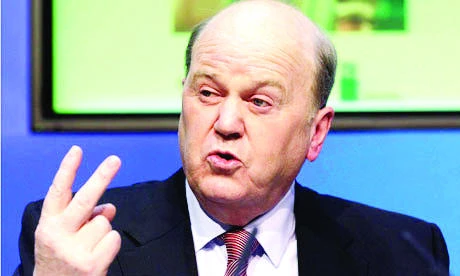
DUBLIN: Ireland's senior coalition party would favor increasing current and capital spending at more than twice the rate of tax cuts if it returns to power at elections expected next month, Finance Minister Michael Noonan said on Saturday.
Noonan's Fine Gael favored cutting spending over hiking tax when it entered government amid a financial crisis five years ago.
The coalition has split the recent unwinding of some of those measures evenly between taxation and expenditure.
However, with an economy and population growing faster than any other in the EU, pressure is building on infrastructure and services. Opposition parties are also campaigning to restore funding that was slashed during the crisis.
"The economy is growing so strongly now, we have about 12 billion euros that we can use either for extra expenditure or reducing tax," Noonan told national broadcaster RTE, referring to the amount of free budgetary space over the next five years.
"We're going to use about 30 percent of it to reduce tax, the other 70 percent will be used for other purposes, principally for extra expenditure, whether on day-to-day spending or investment expenditure."
Fine Gael proposes cutting tax by abolishing the Universal Social Charge, an unpopular addition tax levied on income, and would offset part of the 4 billion euro cost by clawing back some income from those earning more than 100,000 euros a year.
Noonan also reiterated that when Ireland's budget deficit is eliminated in 2017, he would use the extra budgetary leeway to boost infrastructure spending, which is currently set to only gradually increase until 2021.
Prime Minister Enda Kenny is expected to call the election for late next month and opinion polls suggest his coalition with the Labour Party would fall short of a majority, meaning Ireland could become the latest euro zone country to face political deadlock.
A year ago Noonan raised the prospect of forming a majority with Labour and independent candidates, but with support for Fine Gael on the rise he said the coalition could still be returned on their own.
Irish finance minister favors increasing capital spending