PARIS: The OECD has called on the world’s leading countries to step up measures to support flagging global growth, in particular urging the ECB to overcome its reluctance and undertake quantitative easing.
It made the appeal in an early update to its global economic forecasts before G20 leaders hold a summit next week in Australia.
Noting that risks to the global economy remain high and market volatility may rise, OECD chief Angel Gurria warned of an increasing risk of stagnation in the eurozone that would further darken already gloomy global economic skies.
“Countries must employ all monetary, fiscal and structural reform policies at their disposal to address these risks and support growth,” he said.
The Organization for Economic Cooperation and Development, which provides economic analysis and advice to its industrialized country members, lowered its forecast for global growth this year by a tenth of a percentage point to 3.3 percent.
For 2015 it cut the forecast by two tenths of a point to 3.7 percent growth. It left in place its forecast for the 18-nation eurozone to grow by 0.8 percent this year and by 1.1 percent in 2015.
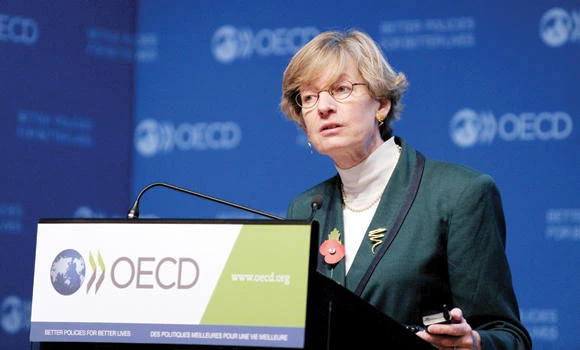
The OECD’s chief economist Catherine Mann warned that “overall, the euro area is grinding to a standstill and poses a major risk to world growth...”
The organization urged the European Central Bank to expand its monetary stimulus program given the very weak economy and the risk of deflation.
“This should include a commitment to sizeable asset purchases (’quantitative easing’) until inflation is back on track,” it said, adding that the purchases could include government bonds, which the ECB has so far shunned due to political sensitivities in Europe about the central bank underwriting government spending.
The purchase of government bonds was the main element of the recently ended quantitative easing program by the US Federal Reserve, and Japan last week stepped up its asset purchases in order to support growth.
OECD urges countries to step up support for fragile growth