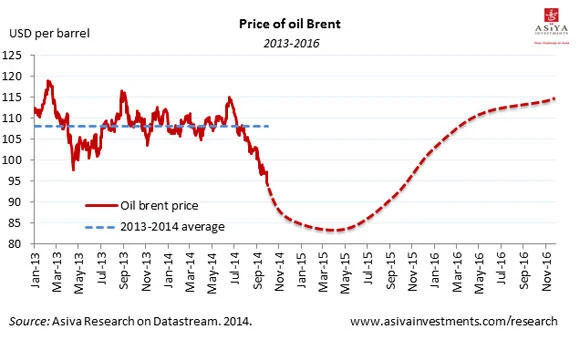
The current decline in oil prices is not strange. Supply has been rising steadily since the 2008 crisis. According to EIA, total production of crude oil and liquid fuels rose by 10 percent in the last five years, from 83.3 million barrels per day (bpd) in early 2009 to 91 million bpd in mid-2014.
Additionally, in recent years, demand has been losing strength.
The US, Europe and Japan have reduced their consumption of oil since 2008 by around 10 percent or four million bpd, due to improvements in energy efficiency and low GDP growth.
Demand from emerging economies keeps rising, but growth is weaker than in previous years.
China, the main source of additional demand, is using every year an extra 300,000 bpd, but that number is stagnating, even coming down slightly in 2014.
A similar pattern is taking shape in Africa and Latin America: Africa added 100,000 barrels per day in 2013, but growth will come down in 2014 and in 2015.
Latin America used almost 200,000 bpd in addition in 2013, but in 2015 additional consumption will be closer to 150,000 bpd.
But these trends have been ongoing for years now. Why did prices hold? Oil remained above the $100 level because markets have been saddled with uncertainty in two fronts.
First, a feeling of general tension prevailed about the possibility of conflict involving global powers that could affect global investment and trade.
Tension between Russia and Western countries about Ukraine is the most recent example but last year, geopolitical instability in the East and South China seas involving Korea, Japan, Philippines, Vietnam and China also added pressure to prices.
Overall, the sentiment of insecurity was quite widespread.
According to the Global Terrorism database of the University of Maryland, the number of oil-related terrorist attacks in 2013 was close to 200, more than twice the amount registered only in 2011.
The second source of uncertainty came from the oil supply side. A number of countries traditionally considered “less reliable” suppliers started to deliver in a consistent manner.
Iraq and the Kurdistan region are losing ground to terrorist organizations in the north of the country. Libya never managed to get full control of the country after the Arab Spring.
Nigeria is rampant with strikes and disruptions due to theft and poor maintenance. Iran is burdened with poor infrastructures and international sanctions and South Sudan remains a highly volatile country with common disruptions.
Yemen and Syria are now close to be considered failed states. In early 2012, all countries mentioned above produced around 1 million bpd.
Since then, even though most issues remain unresolved, the combined output more than trebled to 3.5 million bpd by the summer of 2013 and has sustained that level.
Finally, the steady supply weighed down on prices.
But even if this period of relative peace lasts, it is unlikely that prices continue to fall consistently well above current levels.
Two key producers, US and Saudi Arabia, will probably reduce supply if prices keep declining.
In the case of the US, the reduction in output would come due to the fact that extraction costs in the new shale fields are too high to remain competitive after a period of low prices.
In the case of Saudi Arabia, rising domestic consumption will utilize a growing share of the country’s output.
In fact, the Middle East is expected to register the fastest growth in global consumption in 2014, rising from 200,000 additional bpd demanded in 2013 to 300,000 bpd expected next year by the FGE consultants.
Furthermore, rising breakeven prices in Saudi Arabia have reduced the country’s fiscal flexibility.
The IMF estimates that Saudi Arabia needs more than $80 a barrel to be able to balance the budget. Incentives to cut production to support prices are higher now than in previous periods of low prices.
A few months of prices below current levels will probably reduce output and support prices back to previous levels.
— Prepared by Francisco Quintana, head of research at Asiya Investments.
Oil prices ‘will not drop in the long run’