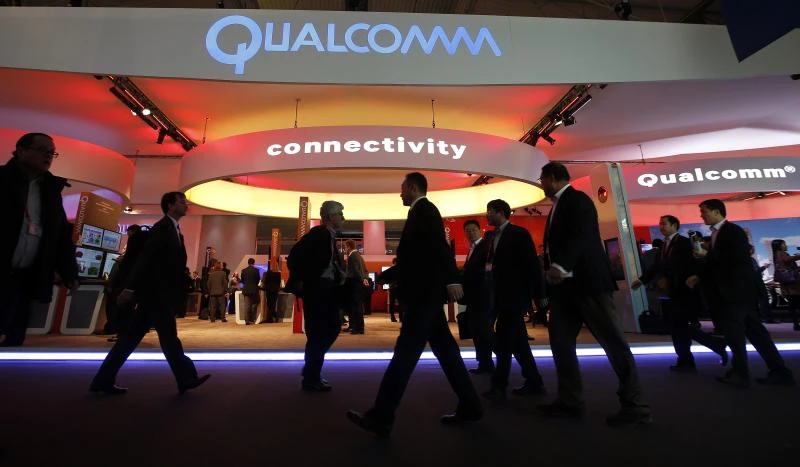
SAN FRANCISCO: Qualcomm, the world’s largest maker of mobile-phone chips, forecast fiscal third-quarter sales and profit that may miss analysts’ estimates as handset makers sell fewer phones based on older technology.
Revenue in the three months ending in June will be $6.2 billion to $6.8 billion, the company said Wednesday in a statement. That compares with an average analyst estimate of $6.6 billion, according to data compiled by Bloomberg. Profit will be $1.15 to $1.25 a share, compared with an average projection of $1.25.
While Qualcomm is seeing strong demand for chips that will appear in new phones, licensing revenue has fallen short of the company’s forecasts as customers pare inventory of older handsets before the rollout of faster, long-term evolution networks in China, which will make those older devices obsolete, CEO Steve Mollenkopf said in an interview.
“The launch of LTE in China is very important to Qualcomm, and it’s difficult to predict,” Mollenkopf said.
In a filing Wednesday, Qualcomm said it received a notice from the US Securities and Exchange Commission last month that the agency recommended enforcement action related to bribery allegations in China.
The company said it’s cooperating with inquiries at the SEC and the US Department of Justice.
Second-quarter net income rose to $1.96 billion, or $1.14 a share, from $1.87 billion, or $1.06 a share, the company said. Sales in the period that ended March 30 rose 4 percent to $6.37 billion, the slowest increase since 2010. Analysts on average had predicted earnings of $1.05 a share on revenue of $6.48 billion.
Before the profit warning, shares of Qualcomm gained less than 1 percent to $80.71 at the close of Wednesday’s regular trading, leaving it up 8.7 percent this year.
San Diego-based Qualcomm benefits from the sale of handsets even when they don’t use its chips.
The company’s ownership of code-division multiple-access technology, or CDMA, allows it to charge royalties on many phones connected to modern data networks.
As a greater number of phone-service subscribers in emerging markets shift from call-only handsets to more expensive devices that surf the Internet, the number of people using Qualcomm’s technology is increasing. Licensing provides the company with the majority of its profit, while sales of modems and processors contribute the largest portion of its revenue.
Qualcomm’s sales might miss estimates as licensing sales slow