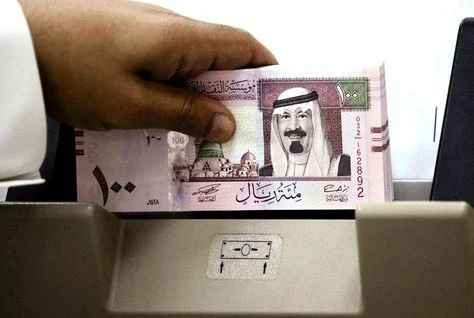
Saudi Arabia’s M3 money supply growth decelerated to 13.3 percent year-on-year at the end of April from 13.6 percent in the previous month, which was the fastest rate since August 2013, data from Saudi Arabian Monetary Agency (SAMA) showed.
Bank lending growth to the private sector eased to 11.8 percent in April, the slowest clip since January 2012, from 12.8 percent in March, a Reuters report that cited the date said.
SAMA’s net foreign assets climbed to a record high of SR2.732 trillion ($728 billion) in April, up 9.0 percent from a year ago, the lowest rate since February 2011.
In a recent report, National Commercial Bank (NCB) said the Kingdom’s large revenue stream owed to recent years’ oil returns has created a tendency toward economic diversification and increased support for the private sector.
Therefore, the level of growth in the monetary system accelerated in tandem with the fiscal expansionary policy, benefiting from the currently low inflationary pressures, according to NCB’s Economic Review for May 2014.
It said the monetary base (M0) recorded a 10.1 percent upturn compared to last year, mostly due to an 11.3 percent rise in bank reserves.
“Deposits with SAMA represent over half of the monetary base, and thus we can attribute the bottom line figure change to SAMA’s liquidity management,” said the NCB researchers.
Given the highly liquid state of the Saudi market, required reserves have been gradually increasing since December 2008, reaching an all-time high of SR85.6 billion.
The liquidity absorption mechanism of SAMA is also pronounced in open market operations whereby T-bills reached SR480.6 billion, a 10.5% annual upturn.
The report said headline inflation in March receded further to 2.63 percent down from 2.79 percent a month earlier, which is the lowest rate since May 2012.
Housing and utilities exerted upside price pressure rising by 4.1 percent followed by food stuff which gained 3.8 percent year-on-year.
Record: SAMA’s net foreign assets reach SR2.732 trillion