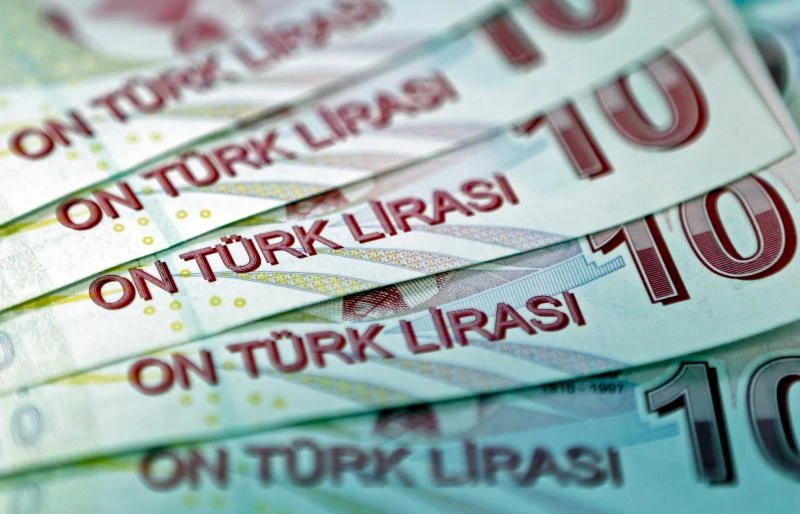
ISTANBUL: The Turkish lira slid to a three-week low, pummelled again by investor concerns the ruling AK Party may struggle to form a single-party government after June 7 elections.
The lira, one of the worst-performing emerging market currencies this year, has been at the whim of voter opinion polls in recent weeks.
The lira was at 2.6765 to the US dollar at 1319 GMT, having hit its weakest since May 12, before recouping some losses.
The currency is down around 15 percent this year, according to Thomson Reuters data.
The lira was initially bolstered last month on forecasts the ruling party would secure a simple majority, ensuring continuity without giving the government enough seats to hand greater power to President Tayyip Erdogan.
But those expectations — and the lira — have unraveled with polls in recent weeks that showed the AKP may have to form a coalition government.
Deputy Prime Minister Ali Babacan conceded on Tuesday a coalition could be on the cards.
“A single-party government is the strongest probability but one shouldn’t ignore the other possibilities,” he said in an interview with broadcaster Bloomberg HT.
A coalition is seen as a negative for markets as it could lead to policy uncertainty.
Some analysts also cited concerns about the possibility of greater power for Erdogan, seen an authoritarian figure who brooks little dissent.
“Turkey’s political backdrop is set to become less predictable and stable than it has been since 2002,” Wolfango Piccoli, a managing director at Teneo Intelligence said in a note.
“There is no ‘sweet-spot’ scenario as an increasingly authoritarian President Recep Tayyip Erdogan will continue to control the countryís politics for the foreseeable future, resisting any attempt to limit his power if the outcome denies him the majority needed to amend the constitution.”
Turkish lira slides to 3-week low