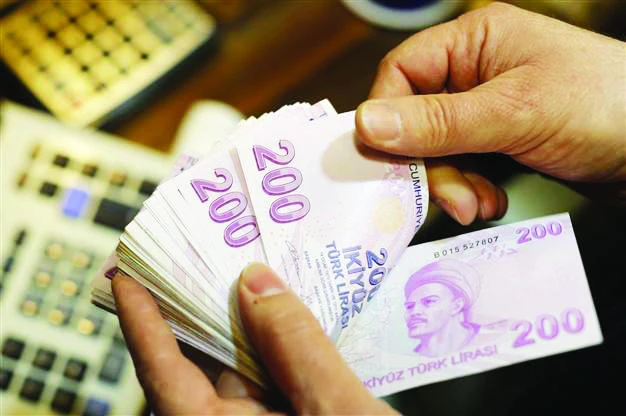
ISTANBUL: The lira’s weekly losses against the dollar reached almost 4 percent on Friday as Turkish air strikes in Syria and nationwide police raids on militants fueled investor concerns about Turkey’s security risks.
Fears of a snap election if efforts to form a coalition government fail also weighed on sentiment, with the two-year benchmark bond yield rising above 10 percent for the first time since mid-June.
Central bank steps to support the lira provided some support to markets. Shares edged higher after sharp losses on Thursday.
The lira hit 2.7500 against the US currency by 1028 GMT, marking a 3.6 percent loss on the week — far underperforming the currency’s emerging market peers and the biggest weekly loss since the June 7 election.
The lira rebounded temporarily during the morning after the central bank cut its US dollar one-week deposit rate to 3 percent from 3.5 percent and raised the remuneration rate which it pays on forex required reserves to 0.21 percent from 0.15.
Bankers said such measures alone would not be enough to eliminate selling pressure but it was important that the bank showed it was ready to act.
“We do not think that banks will tap that (depo) facility now,” said BGC Partners chief economist Ozgur Altug, noting that it was last used by banks in late 2012 but saying the rate was starting to normalize.
“Until today the interest rates of this facility were relatively high. Now they started to make some sense,” he said.
The latest central bank moves came after it kept key interest rates on hold for a fifth straight month on Thursday, avoiding any mention of political uncertainty and focusing on food and energy prices.
Investors were also keeping an eye on coalition talks between Davutoglu’s AK Party and the main opposition Republican People’s Party (CHP), with delegations from the two parties set to meet on Friday afternoon for low-level talks.
Turkish lira suffers greatest losses since June 7 poll