TRIPOLI: Libya’s deputy intelligence chief was kidnapped outside Tripoli airport on Sunday, two security sources said, days after clashes between rival militias and protesters in the capital killed at least 45 people.
Mustafa Noah, the head of agency’s espionage unit, was pulled into a vehicle in the car park, and had no bodyguards with him at the time, one of the sources said, without going into further details on the attackers or their motives.
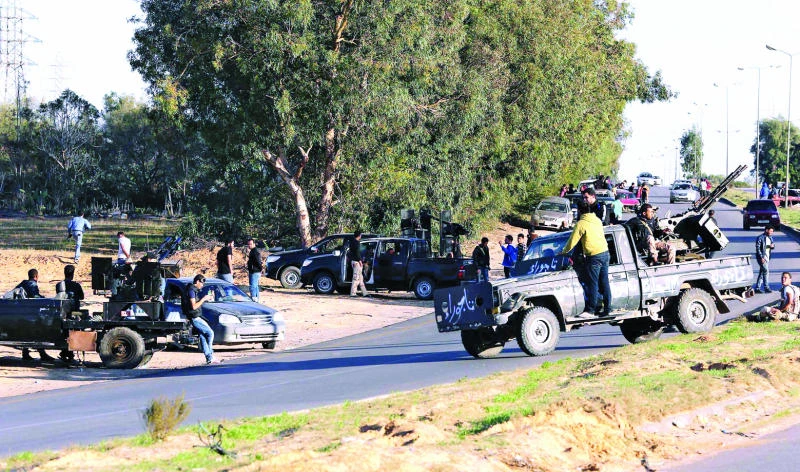
Libya’s government is struggling to keep order as rival militias and hard-liners refuse to disarm two years after they helped oust Muammar Qaddafi in a NATO-backed uprising. No group claimed responsibility for the abduction, but militias have snatched officials in the past to get political leverage. Prime Minister Ali Zeidan was abducted by a government-payrolled militia group last month, but freed unharmed after a few hours.
Tripoli city leaders on Sunday called for street protests and strikes at shops, schools and universities to press Libya’s government to drive out militiamen blamed for the clashes.
Violence broke out on Friday when militiamen from the coastal city of Misrata opened fire on protesters marching on their brigade quarters in Tripoli to demand they leave the capital. Dozens of people were killed in the fighting that followed — the deadliest street violence in Tripoli since Qaddafi’s fall. Misrata gunmen and rival militias clashed again on Saturday to the east of the capital, killing one more.
Many stores, schools and universities were closed in the capital on Sunday — normally a working day in Libya. Residents set up barricades of metal, wood and tires to protect their streets and join the protest.
Meanwhile, Tripoli began a three-day strike Sunday to mourn dozens killed in clashes at the anti-militia protest over the weekend. Most businesses in Tripoli were shuttered on Sunday, with the exception of a handful of grocers and cafes. Banks were closed, as well as many schools and universities.
“Unfortunately, many schools are closed today,” education ministry spokesman Samir Jarnez told AFP, adding that he did not have an exact figure for the closures. Tripoli’s city council had announced the three-day strike “in all private and public sectors” late Saturday, saying it was intended to express mourning and solidarity with the victims of the latest violence.
The city council urged citizens to exercise “calm and restraint,” and to give mediators a chance to resolve the conflict.
Hanan Salah, a researcher with the US-based Human Rights Watch, said the latest clashes “showcase the extent of the reckless acts of unaccountable militias these past two years, and the government’s lack of ability to control them.”
Libyan deputy spy chief abducted