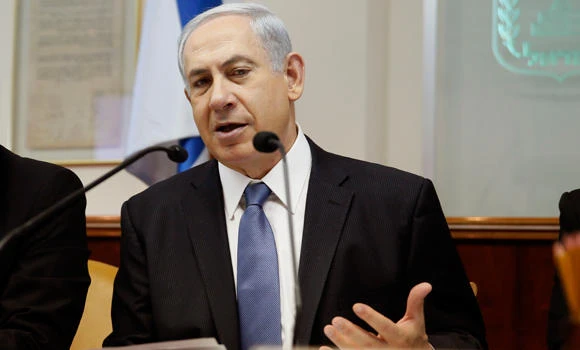
EILAT, Israel: Prime Minister Benjamin Netanyahu, displaying on Monday what Israel said were seized, Iranian-supplied missiles bound for militants in Gaza, urged the West not to be fooled by Tehran’s diplomacy on its nuclear program.
Last week the Israeli navy captured a ship in the Red Sea carrying arms that the military said included forty M-302 surface-to-surface rockets manufactured in Syria and capable of striking most of Israel from the Gaza Strip.
Along with the missiles, some 180 mortar shells and 400,000 rifle rounds were laid out in neat piles on a pier in the southern port of Eilat. A navy missile boat that took part in the raid was docked behind the display.
Netanyahu was briefed by intelligence officers during a live broadcast on the weapons and shipping documentation that connected the stockpile to Iran.
Iran and Gaza’s Islamist Hamas rulers, both hostile to the Jewish state, rejected the Israeli findings as fabrications.
“(The world) wants to delude themselves that Iran has changed its intention to obtain nuclear weapons,” Netanyahu said. “All I heard was a handful of soft condemnations of Iran from the international community in response to this murderous cargo.”
“But we were witness to the smiles and handshakes of Western representatives with the leaders of the Iranian regime in Tehran, at the exact same time these missiles were unloaded in Eilat,” he said.
The hawkish Israeli premier was referring to a visit to Tehran by European Union foreign policy chief Catherine Ashton.
Iran and six world powers, represented by Ashton, struck a deal on Nov. 24 under which Tehran curbed some sensitive nuclear activities for six months in return for limited relief from sanctions. Meanwhile the two sides will try to hammer out a long-term agreement on the scope of Iran’s nuclear program.
Iran has repeatedly rejected allegations that it is seeking a nuclear weapons capability. Israel, widely believed to have the Middle East’s sole nuclear arsenal, says a nuclear-armed Iran would pose a mortal threat to its existence.
“Before it is too late, the world must awake from the illusion it is currently in and prevent Iran from achieving the capability to develop nuclear weapons,” Netanyahu said.
World reaction subdued
Netanyahu’s visit to this Red Sea port capped a six-day PR blitz aimed at persuading world powers to toughen their position in nuclear talks. So far, the international reaction has been subdued, illustrating the uphill battle the Israeli leader faces in his efforts to change the minds of world leaders about Iran’s outreach to the West.
“There are those who would prefer that we not hold this news conference here today, they feel uncomfortable that we show what is really happening inside Iran,” Netanyahu said.
“Iran, a brutal regime, has not abandoned its deep involvement in terrorism, its systematic efforts to undermine peace and security throughout the Middle East and its ambition to destroy the state of Israel,” Netanyahu said. “What is new is not Iran’s deeds or its lies, but the desire of many in the international community to bury their heads in the sand.”