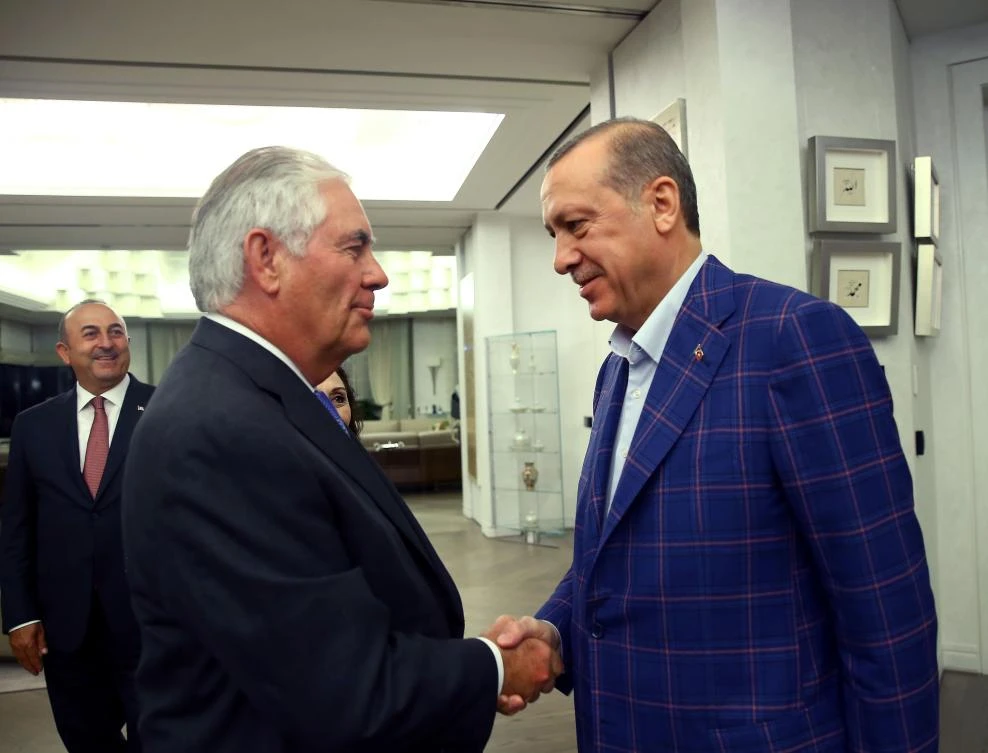
ISTANBUL: The US is starting to rebuild the trust that was lost in its relationship with key NATO ally Turkey after a series of disputes, Secretary of State Rex Tillerson said Monday after meetings with Turkish leaders.
Tillerson had held several hours of talks the day earlier with President Recep Tayyip Erdogan in Istanbul, hoping to smooth out the two countries’ ties.
He acknowledged that the US’ relationship with Turkey had “been under some stress for some time.”
“I hope we are beginning to put it on the mend,” he told staff members at the US Consulate in Istanbul in a speech to wrap up his two-day visit.
Turkey’s relations with Washington plummeted in the final months of Barack Obama’s administration but Ankara has hoped for an improvement under President Donald Trump.
But ties are still being eroded by disputes ranging from Syria to the extradition of the alleged organizer of last year’s failed coup to the fate of a US pastor jailed in Turkey since October.
Tillerson, a former Exxon Mobil chief, said he believed that each time he met Erdogan “things are getting a little better in terms of the tone between us.”
“I think we’re beginning to rebuild some of that trust that we lost in one another, they lost our trust to a certain extent, we lost theirs.
“So I think we are working very hard to rebuild that level of trust and that is the basis for any relationship,” he said.
But Turkey is furious that Trump has continued and even expanded Obama’s policy of supporting the Kurdish People’s Protection Units (YPG) as the main fighting force on the ground in Syria against Daesh.
Ankara considers the YPG a terrorist group and the Syrian branch of the Kurdistan Workers’ Party (PKK), which has waged an insurgency inside Turkey since 1984.
But Washington is openly arming the YPG and the group is heavily involved in the US-backed operation to oust Daesh from their stronghold of Raqqa.
But Tillerson said Washington hoped it could “replicate” the success of the anti-Daesh operation in Raqqa in some areas in northern Syria in cooperation with Turkey. He did not elaborate further.
“I hope that will also form a basis for improving the trust as well,” he said.
The Trump administration also has persisted in resisting Turkey’s demand that it extradite Fethullah Gulen, a cleric who lives in Pennsylvania and is accused by Erdogan of masterminding a failed military coup in July 2016.
A decision by US prosecutors last month to charge a dozen Turkish security and police officers after an attack on protesters during Erdogan’s visit to Washington also angered Ankara.
Muslim-majority Turkey has NATO’s second-largest standing military and its Incirlik Air Base is critical to US military operations in the Middle East, serving as the base from which the US-led coalition has been staging strikes in support of the offensive being waged against Daesh in Raqqa.
Tillerson’s comments, however, sharply contrasted with comments by Erdogan two weeks ago.
“The ones who think they are tricking Turkey by saying they are going to get back the weapons that are being given to this terrorist organization will realize that they are making a mistake eventually,” he told members of his ruling AK Party.
“But it will be too late for them,” he added, saying that if violence spilled over Syria’s border into Turkey, Ankara would hold to account anyone who supplied arms to the YPG.
Tillerson had held several hours of talks the day earlier with President Recep Tayyip Erdogan in Istanbul, hoping to smooth out the two countries’ ties.
He acknowledged that the US’ relationship with Turkey had “been under some stress for some time.”
“I hope we are beginning to put it on the mend,” he told staff members at the US Consulate in Istanbul in a speech to wrap up his two-day visit.
Turkey’s relations with Washington plummeted in the final months of Barack Obama’s administration but Ankara has hoped for an improvement under President Donald Trump.
But ties are still being eroded by disputes ranging from Syria to the extradition of the alleged organizer of last year’s failed coup to the fate of a US pastor jailed in Turkey since October.
Tillerson, a former Exxon Mobil chief, said he believed that each time he met Erdogan “things are getting a little better in terms of the tone between us.”
“I think we’re beginning to rebuild some of that trust that we lost in one another, they lost our trust to a certain extent, we lost theirs.
“So I think we are working very hard to rebuild that level of trust and that is the basis for any relationship,” he said.
But Turkey is furious that Trump has continued and even expanded Obama’s policy of supporting the Kurdish People’s Protection Units (YPG) as the main fighting force on the ground in Syria against Daesh.
Ankara considers the YPG a terrorist group and the Syrian branch of the Kurdistan Workers’ Party (PKK), which has waged an insurgency inside Turkey since 1984.
But Washington is openly arming the YPG and the group is heavily involved in the US-backed operation to oust Daesh from their stronghold of Raqqa.
But Tillerson said Washington hoped it could “replicate” the success of the anti-Daesh operation in Raqqa in some areas in northern Syria in cooperation with Turkey. He did not elaborate further.
“I hope that will also form a basis for improving the trust as well,” he said.
The Trump administration also has persisted in resisting Turkey’s demand that it extradite Fethullah Gulen, a cleric who lives in Pennsylvania and is accused by Erdogan of masterminding a failed military coup in July 2016.
A decision by US prosecutors last month to charge a dozen Turkish security and police officers after an attack on protesters during Erdogan’s visit to Washington also angered Ankara.
Muslim-majority Turkey has NATO’s second-largest standing military and its Incirlik Air Base is critical to US military operations in the Middle East, serving as the base from which the US-led coalition has been staging strikes in support of the offensive being waged against Daesh in Raqqa.
Tillerson’s comments, however, sharply contrasted with comments by Erdogan two weeks ago.
“The ones who think they are tricking Turkey by saying they are going to get back the weapons that are being given to this terrorist organization will realize that they are making a mistake eventually,” he told members of his ruling AK Party.
“But it will be too late for them,” he added, saying that if violence spilled over Syria’s border into Turkey, Ankara would hold to account anyone who supplied arms to the YPG.