On June 12, the Philippines commemorates the 121st anniversary of its independence. The theme of this year’s national day celebrations is “Courage of the Nation, Compassion for the People.” It highlights the bravery, patriotism and collective sacrifices of the Filipino people in the struggle for the country’s independence, from the past’s colonial experience to today’s challenges to nation-building including poverty, threats to national security, and many more.
The 121st Philippine Independence Day anniversary coincides with the 50 years of diplomatic relations between the Philippines and Saudi Arabia, which can best be described as “thriving, productive and mutually beneficial.”
Since the 70s up to today, the Kingdom has been a top destination for overseas Filipino workers (OFWs). Currently, there are an estimated 800,000-plus OFWs working in Saudi Arabia, contributing to the Kingdom’s socio-economic development and the Philippines’s phenomenal economic growth in recent years. In this regard, the Philippines is grateful to the government of Saudi Arabia for opening new channels to safeguard the rights and welfare of foreign migrant workers, including the establishment of a call center hotline, which includes Filipino as a language in the system; the establishment of Labor Disputes and Household Violations Settlement Committees in all areas and provinces of the Kingdom; and the establishment of the Support Protection Office by the Ministry of Labor and Social Development as a means to provide protection, welfare and support to household workers in the Kingdom, among others.
Besides being the Philippines’ top source for its oil needs, Saudi Arabia remains a significant economic partner of the Philippines.
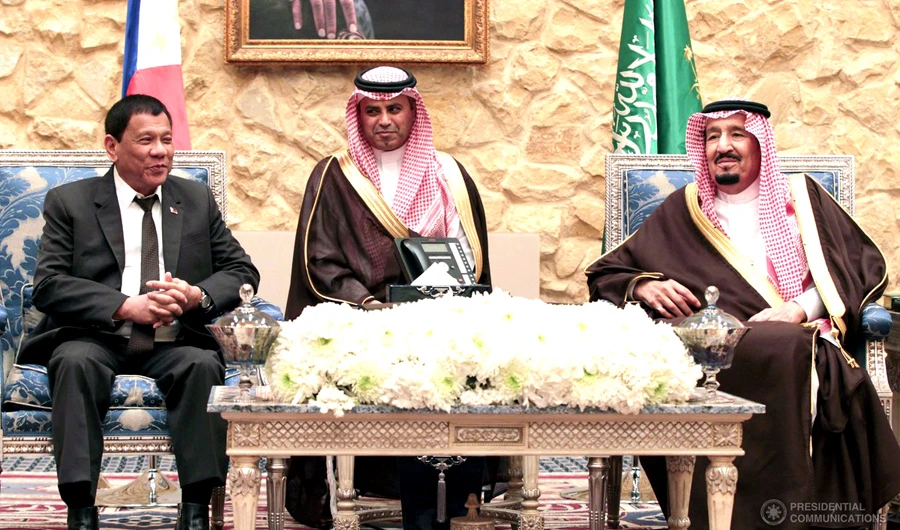
In 2017, the Philippines and Saudi Arabia further enhanced their relations through various initiatives and agreements entered into during the successful state visit of President Rodrigo Duterte to the Kingdom in April of that year. The relationship has since diversified to include other areas, including peace and security. Today, the Philippines and Saudi Arabia are active partners in the global fight against terrorism and violent extremism.
The Philippines and Saudi Arabia are both guided by long-term national visions. In the case of the Philippines, the vision is enshrined in the AmBisyon Natin 2040 — a 25-year vision for development planning for the Philippines, which will guide its government toward the achievement of the vision and aspiration of a prosperous, predominantly middle class society where Filipinos enjoy a strongly rooted, comfortable, and secure life by the year 2040 or earlier.
On the other hand, the Kingdom has Saudi Vision 2030 under which it envisages the Saudi economy to be less dependent on oil, with more opportunities for non-oil industries, as well as a more open policy for foreign investors and tourism that will spur growth and development in the country by 2030. The Philippines hopes for the success of Saudi Vision 2030 and stands ready to support it anyway it can.