RIYADH: The UAE is planning to double its foreign direct investments to 240 billion dirhams ($65.35 billion) annually by 2031 — up from the 112 billion dirhams it saw in 2023.
As part of the nation’s newly approved National Investment Strategy, the scheme aims to grow the country’s total FDI stock from 800 billion dirhams to 2.2 trillion dirhams over the coming years, with a focus on key sectors such as industry, logistics, and financial services, as well as renewable energy and information technology.
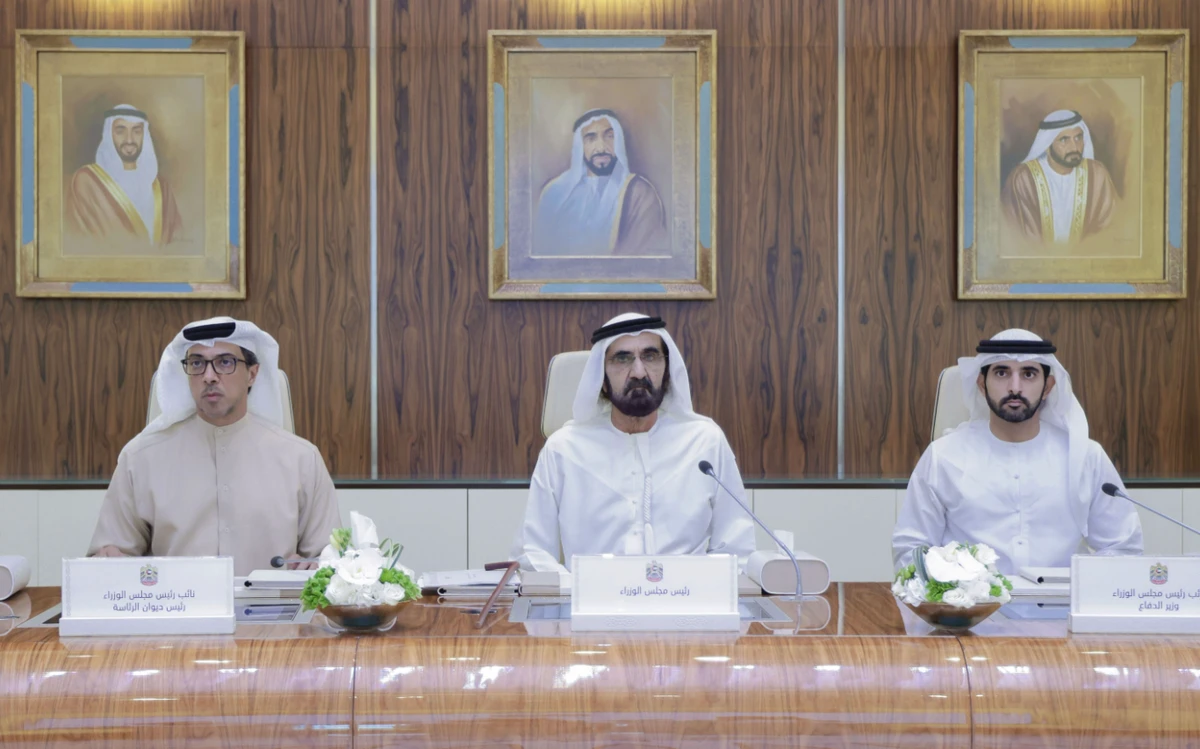
Sheikh Mohammed bin Rashid Al-Maktoum, vice president, prime minister, and ruler of Dubai, chaired the UAE cabinet meeting at Qasr Al Watan in Abu Dhabi, where the investment strategy was approved, according to a report by the Emirates News Agency.
“The UAE continues to develop its economy, expand global markets, attract investments, and create the most business-friendly environment in the world,” the vice president said.
The strategy comprises of 12 new programs and 30 initiatives, including the Financial Sector Development Program, the One-Market Program, and InvestUAE, aimed at enhancing investment promotion and economic diversification.
The cabinet also reviewed the UAE’s strategic partnerships with African nations, reporting that 95 percent of previously approved initiatives have been implemented.
As a result, total trade volume with sub-Saharan Africa has increased from 126.7 billion dirhams in 2019 to 235 billion dirhams over five years, marking an 87 percent rise.
“The UAE will continue to build new economic bridges across the world and reinforce its role as a global trade hub, connecting markets worldwide,” Al-Maktoum said.
The cabinet reviewed progress on the National Digital Economy Strategy, which seeks to raise the sector’s contribution to the gross domestic product from 9.7 percent to 19.4 percent over the next six years.
The meeting also addressed advancements in industrial technology, approving the Industrial Technology Transformation Index, a first-of-its-kind indicator designed to measure specialized progress and sustainability practices in UAE factories.
“The UAE now has more than 13 licensed transplant centers, with a 30 percent increase in transplant procedures. Kidney, liver, heart, lung, and pancreas transplants are now being performed in the UAE,” Sheikh Al-Maktoum said.
The body also approved the restructuring of the Emirates Research and Development Council, chaired by Sheikh Abdullah bin Zayed Al Nahyan, with a mandate to define national research priorities and enhance collaboration between government entities, the private sector, and academia.
In social affairs, the government announced an increase in the social support budget by 29 percent to 3.5 billion dirhams, with a 37 percent rise in beneficiaries, while 3,200 individuals have transitioned from financial aid recipients to the workforce.
A new remote work system for federal government employees outside the UAE was also approved, allowing the country to leverage global expertise for specialized tasks and projects.
Additionally, the cabinet ratified 28 international agreements, including comprehensive economic partnership agreements with Malaysia, New Zealand, and Kenya, alongside security, logistics, and government cooperation pacts with various nations.
As part of its sustainability initiatives, the cabinet launched the National Green Certificates Program for buildings, a voluntary classification system to certify sustainable structures across commercial, industrial, hospitality, and residential sectors.
Other regulatory approvals included new laws on plant variety protection, commercial fraud prevention, and the practice of health care professions by non-physicians and pharmacists.
Al-Maktoum reaffirmed the UAE’s commitment to economic growth and global engagement, stating: “The teams continue their work, our growth trajectory accelerates, and every day, we witness our nation’s future becoming greater, stronger, and more prosperous — driven by the dedication of thousands of exceptional teams across all sectors.”