- Disarmament is a domestic matter, we cannot compel Israel to do anything: Barrack
- Source tells Arab News Lebanon is afraid of what happened in Syria, extremely concerned about its borders
LEBANON: Lebanon has delayed the implementation of arms restrictions, Arab News has learned, amid growing concerns over developments in neighboring Syria — though it remains committed to disarming non-state militias, including Hezbollah.
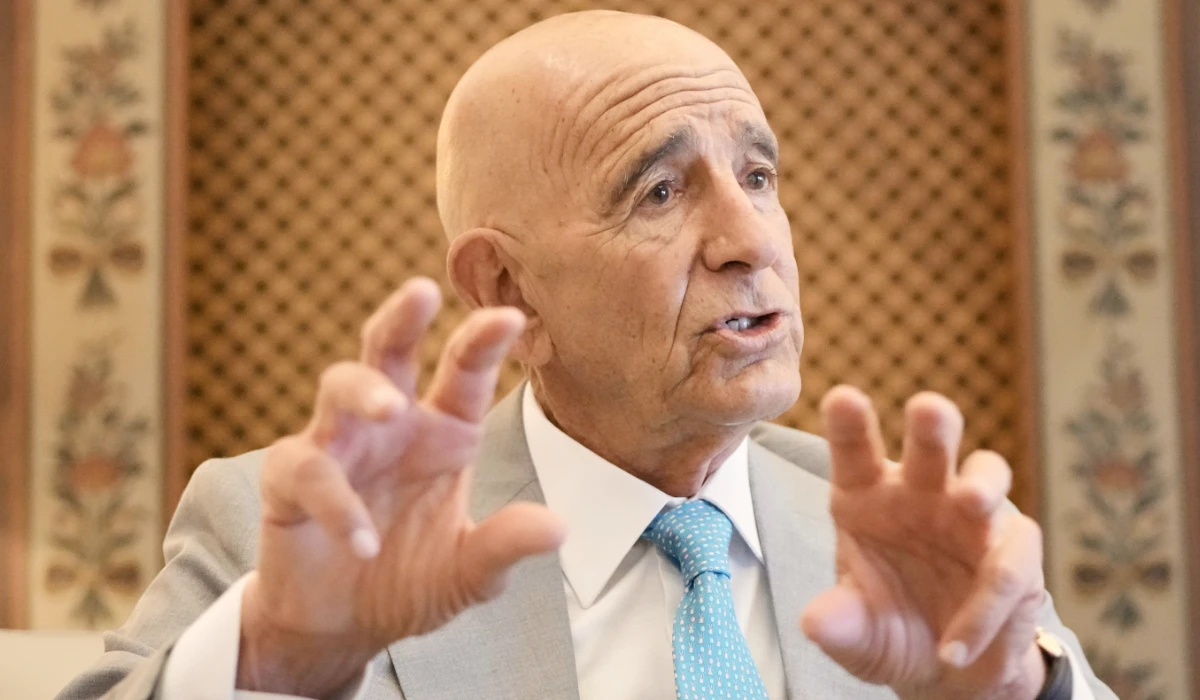
US Special Envoy Tom Barrack, speaking from Beirut on Monday, said the issue of Hezbollah’s disarmament remains a domestic Lebanese matter.
“As far as the US is concerned, Hezbollah is a foreign terrorist group that we have no direct dealings with, and we are discussing this file with the Lebanese government,” said Barrack, who called on the Syrian government “to take responsibility for the developments that occurred in Sweida,” considering that “part of that responsibility may lie in the failure of communication between all Syrian components.”
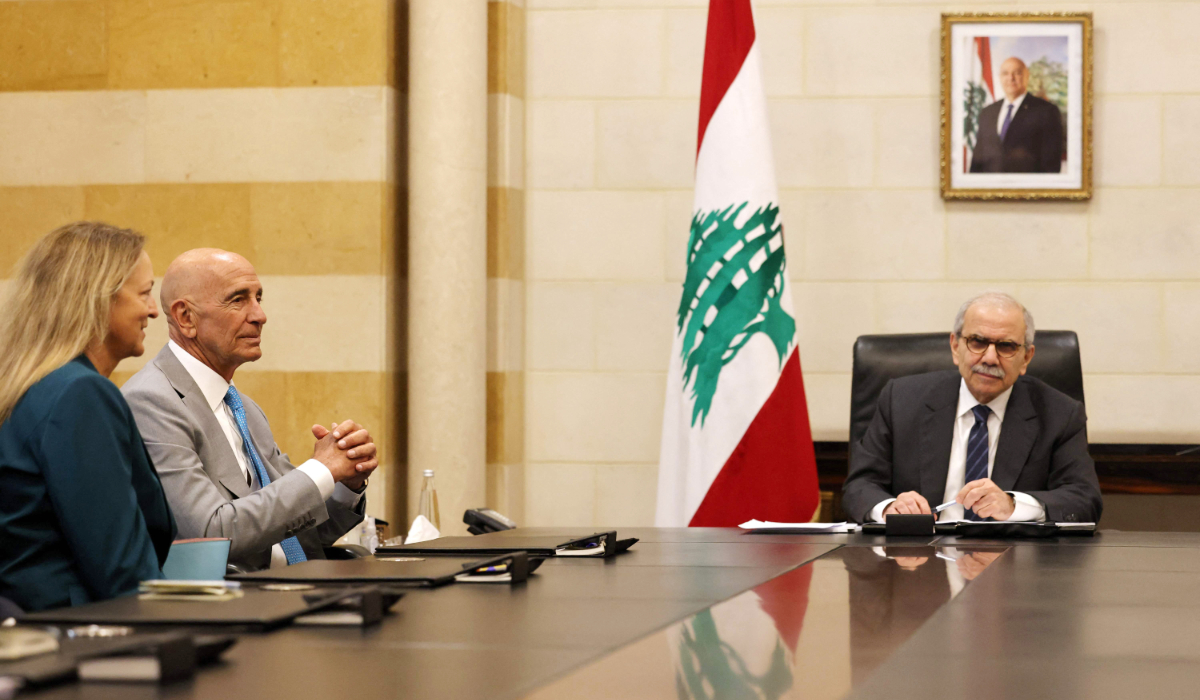
Barrack, who returned to Beirut on his third visit to Lebanon as part of his mission to establish a mechanism to implement the ceasefire agreement, including the withdrawal of Hezbollah’s weapons, expressed, after his meeting with Prime Minister Nawaf Salam, “the US’s disappointment if no agreement is reached on the issue of arms and the failure of the ceasefire agreement.” He warned that when it comes to guarantees, “the US cannot compel Israel to do anything.”
Barrack began his meetings with officials by meeting President Joseph Aoun in the presence of the US Ambassador to Lebanon Lisa Johnson. Aoun handed him, “on behalf of the Lebanese state, the draft comprehensive memorandum for the implementation of Lebanon’s commitments, starting from the declaration of Nov. 27, 2024, through the ministerial statement of the Lebanese government, and the presidential inauguration speech,” according to a statement issued by the presidency’s media office.
The statement clarified that “the draft memorandum centered on the urgent need to save Lebanon through the extension of the Lebanese state’s authority over its entire territory by its own forces alone, the exclusive possession of arms by the Lebanese armed forces, affirming the Lebanese constitutional institutions' sole authority over decisions of war and peace.
“This would go in parallel with preserving Lebanese sovereignty across all its international borders, reconstruction efforts, and launching economic recovery; all with the guarantee and support of Lebanon’s brothers and friends around the world, in a way that safeguards the safety, security, and dignity of all Lebanon and all Lebanese.”
A Lebanese political source told Arab News that “the Lebanese response handed to Barrack did not include a timeline for addressing the weapons issue, as the situation has changed in light of the developments in Syria.”
The source explained that Barrack’s meeting with Parliament Speaker Nabih Berri on Tuesday, who is negotiating on behalf of Hezbollah, will be key to understand the next steps following the recent developments which “have raised more questions.”
The source continued: “The American document includes demands not only related to Hezbollah’s weapons, but also to Lebanon’s relationship with Syria and the border issue.”
it added: “The American side indeed wants a clear timeline for arms withdrawal, but in light of what happened in Sweida, will there be repercussions on Lebanon? Lebanon is afraid of what occurred and extremely concerned about its borders. It is demanding a halt to the entry of Syrians into its territory, including refugees and the potential approach of militants.”
In a press conference held after he met with Salam, Barrack said that the reason for his return to Beirut was “President Donald Trump’s great interest in achieving regional stability,” stressing that Beirut remains “at the center” of the process.
“As we have said before, Lebanon is the key to this experiment that began long ago with the emigration of religious minorities and political parties, who have succeeded around the world. The idea is to restore that success.”
Barrack said his return to the region comes amid instability in Syria, where government forces were recently deployed to contain deadly clashes between Bedouin and Druze communities that left hundreds dead last week.
“However, we must stress the need to focus and restore stability to Lebanon and hope to the region, and we will continue down this path. We will follow up on our meeting with your leaders, who have been more than helpful in reaching the conditions and solutions that will resolve this situation, not only for Lebanon but for all the issues happening simultaneously. We are bringing hope along with economic reforms and prosperity, and this is what we will work on.”
Barrack said: “There is a cessation of hostilities agreement that came into effect, but it has not succeeded. There are reasons for its failure, and that is part of what we are all trying to resolve. Failure would be disappointing to the US. There are no consequences, just disappointment. We are trying to help, influence, guide, and bring parties together; just some kind of influence to return to the model you all want to see: prosperity and peace for your children in the region.”
As for whether there are guarantees for Lebanon, Barrack argued that the US in “not here to impose anything on anyone, and we cannot compel Israel to do anything.”
He said: “We are here to use our influence and leverage to help reach an outcome. The matter is up to the government and everyone. When you grow tired of squabbling and rivalries, then everyone reaches the conclusion that there must be greater understanding and peace with neighbors so life can be better.”
Regarding the possibility of imposing sanctions on Lebanese officials, Barrack reiterated that “Sanctions against Lebanese officials is an extremely complicated issue.
“It exists and is sensitive, but it is not under consideration now,” he said. “What we are trying to do is bring peace and stability, not throw more fuel on the fire.”
On developments in Syria and the issue of minorities in Lebanon, Barrack said that US “feels great concern, sorrow, and sympathy toward all the events in Syria, and is offering support.
“There is recognition that the new parties trying to govern the country must understand the importance of accommodating minorities, engaging in dialogue, and coordinating with neighbors, including Israel, and pushing all these pieces together.”
Barrack argued that 15 years of civil war have left the country in dire conditions and its ethic minorities deeply divided.
“The situation in Lebanon is different; there is an existing government working with minorities and the army. There is a stable army understood by the people. In Syria, however, there is a new government, and minorities and tribes who spent most of their childhood in chaos and in the absence of government. What is happening is the result of tribal, individual, and familial clashes. What is happening is undoubtedly horrific, and a quick solution must be found.”
On Monday, Barrack toured and met with Maronite Patriarch Bechara Al-Rahi, Metropolitan Elias Audi of the Greek Orthodox Archdiocese of Beirut and its Dependencies, Army Commander Gen. Rodolphe Haikal, former leader of the Progressive Socialist Party Walid Jumblatt, and met with several MPs during a dinner at the US embassy.
Hezbollah Secretary-General Sheikh Naim Qassem, in a speech delivered on July 18, warned Barrack that he is “handing over Lebanon to Israel.” He asked: “Do they want Lebanon to be divided between Israel and Syria? The weapons are an obstacle because they enabled Lebanon to stand on its feet and prevented Israel from expanding.”
Qassem warned in his speech that “armed groups in Syria may launch an attack on eastern Lebanon,” saying: “All sects in Lebanon are under threat. Once we remove the danger, we are ready to discuss the defense strategy and the national security strategy.”