Lebanon says busts international drug network, seizes hashish, captagon

Lebanon says busts international drug network, seizes hashish, captagon
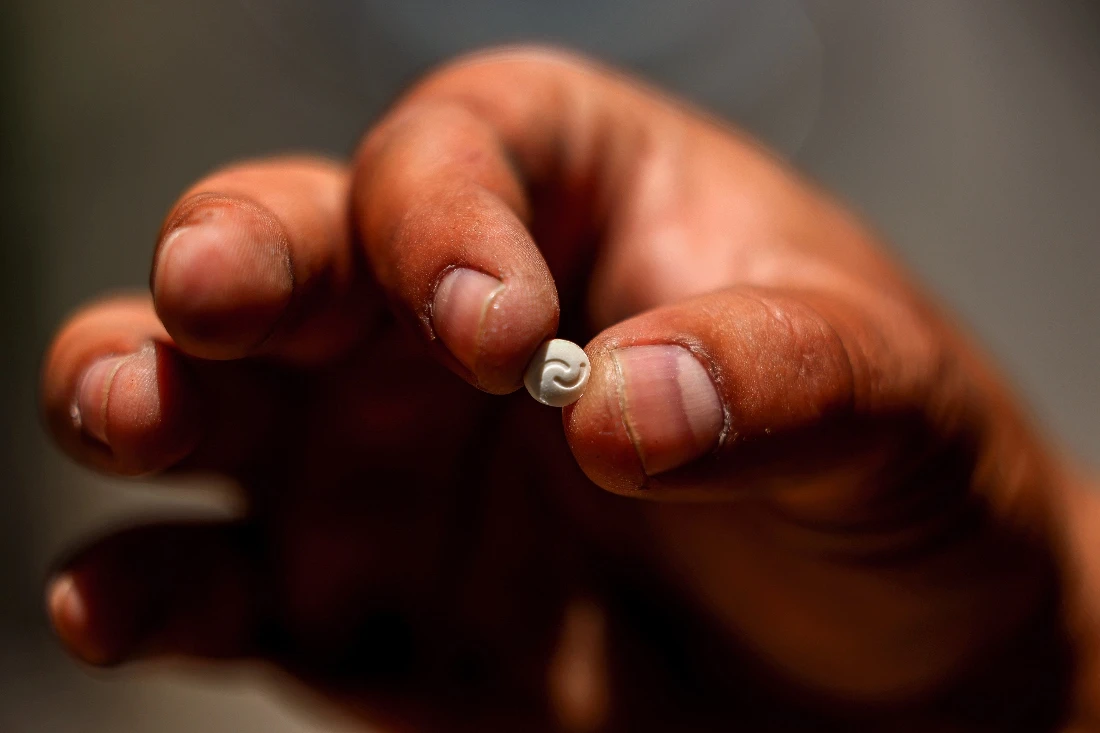
A Lebanese security official holds a single Captagon pill in his hand in Zahle, Lebanon. (AFP)
Short Url
Updated 15 September 2025
Follow

Lebanon says busts international drug network, seizes hashish, captagon

Lebanon says busts international drug network, seizes hashish, captagon
  • Lebanon has faced pressure from Gulf states to counter the production and trafficking of drugs, particularly the amphetamine-like narcotic captagon, for which the conservative monarchies are a major market

BEIRUT: Lebanese Interior Minister Ahmad Al-Hajjar said Monday that authorities dismantled a network that was preparing to smuggle hashish and the illicit stimulant captagon to Saudi Arabia.
Lebanon has faced pressure from Gulf states to counter the production and trafficking of drugs, particularly the amphetamine-like narcotic captagon, for which the conservative monarchies are a major market.
Hajjar said authorities dismantled the network, which mainly sought to smuggle captagon and hashish, and arrested its head and a number of other people.
“This network had foreign links, with people in Turkiye, people in Australia” and was preparing to connect with operatives in Jordan, he said.
Lebanese authorities “seized 6.5 million captagon pills and 720 kilograms (1,500 pounds) of hashish which were being prepared... for shipment toward the Kingdom of Saudi Arabia,” Hajjar said.
The operation was thwarted before it reached Beirut port for shipment, he said, adding that fighting the drug trade “is one of the main priorities” of the Lebanese state.
Last week, Hajjar said authorities had seized some eight million captagon pills worth more than $90 million from a warehouse in northern Lebanon and arrested several suspects.
Captagon became neighboring Syria’s largest export following the eruption of the civil war in 2011, and a key source of illicit funding for former president Bashar Assad’s government.
In Lebanon, Assad’s ally Hezbollah faced accusations of using the captagon trade for financing.
The drug has flooded the region, with neighboring countries occasionally announcing captagon seizures and asking Lebanon and Syria to ramp up efforts to combat the trade.
Iraqis vote in a parliamentary election marked by tight security and a major political boycott

Iraqis vote in a parliamentary election marked by tight security and a major political boycott
Updated 11 min 43 sec ago
Follow

Iraqis vote in a parliamentary election marked by tight security and a major political boycott

Iraqis vote in a parliamentary election marked by tight security and a major political boycott
  • The election is taking place against the backdrop of major shifts in the region over the past two years

BAGHDAD: Iraqis headed to the polls on Tuesday to vote in a parliamentary election marked by tight security and a boycott by a major political bloc.
A total of 8,703 polling stations were open across the country for the general election. Members of the security forces and displaced people living in camps cast their ballots in early voting on Sunday.
Turnout was sparse in the early hours Tuesday at polling stations visited by Associated Press journalists. Initial results were expected on Wednesday.
Only 21.4 million out of a total of 32 million eligible voters updated their information and obtained voter cards ahead of the polling, a decrease from the last parliamentary election in 2021, when about 24 million voters registered.
The election is taking place against the backdrop of major shifts in the region over the past two years — including the wars in Gaza and Lebanon after the Oct. 7, 2023 Hamas-led attacks on southern Israel, the Israel-Iran war in June, and the fall of Syrian President Bashar Assad last December.
These developments come as US pressure intensifies on the Iraqi government to curb the influence of Iran-aligned armed factions, some of which have candidates participating in Tuesday’s vote.
The popular Sadrist Movement, led by influential Shiite cleric Muqtada Al-Sadr, is boycotting the polls. Al-Sadr’s bloc won the largest number of seats in the 2021 election but later withdrew after failed negotiations over forming a government, amid a standoff with rival Shiite parties. He has since boycotted the political system.
At the entrance to Sadr City — a sprawling stronghold of the Sadrist movement on the outskirts of Baghdad — security was noticeably tighter than in other parts of the Iraqi capital. Iraqi special forces and federal police were deployed across the area, with armored vehicles and Humvees stationed along the main roads, manned by heavily armed soldiers.
A large banner showed Al-Sadr wearing military fatigues and holding a weapon, with the words, “My people in Sadr City are boycotting.” On a main Sadr City street, all shops were shuttered, and posters of slain Sadr loyalists lined the walls.
Polling station were open but were almost completely empty. At one, which serves 3,300 voters, station director Ahmed Al-Mousawi said a few hours into the balloting that fewer than 60 people had voted.
“The Sadrist boycott has had a major impact,” he said. “In previous elections, there used to be long lines from the early morning hours, but today the difference is dramatic.”
Sabih Dakhel, a 54-year-old voter who came with his wife, said they had decided to vote in hopes that new elected officials might improve living conditions for people like them.
“We were able to vote freely today, but the Sadrist boycott has deeply affected participation,” Dakhel said. “Sadr City feels almost like a lockdown because of Muqtada Al-Sadr’s call for his followers to stay home.”
The election results could also face legal challenges. The head of Iraq’s Supreme Judicial Council wrote in a statement published on the council’s website that the election date set for Tuesday is unconstitutional, noting that the vote was originally scheduled for Nov. 24.