- Earlier on Monday, Al-Sharaa met with US Secretary of State Marco Rubio in New York
- Trump had previously eased sanctions long imposed on Syria in a bid to ensure the country becomes a stable player in the Middle East
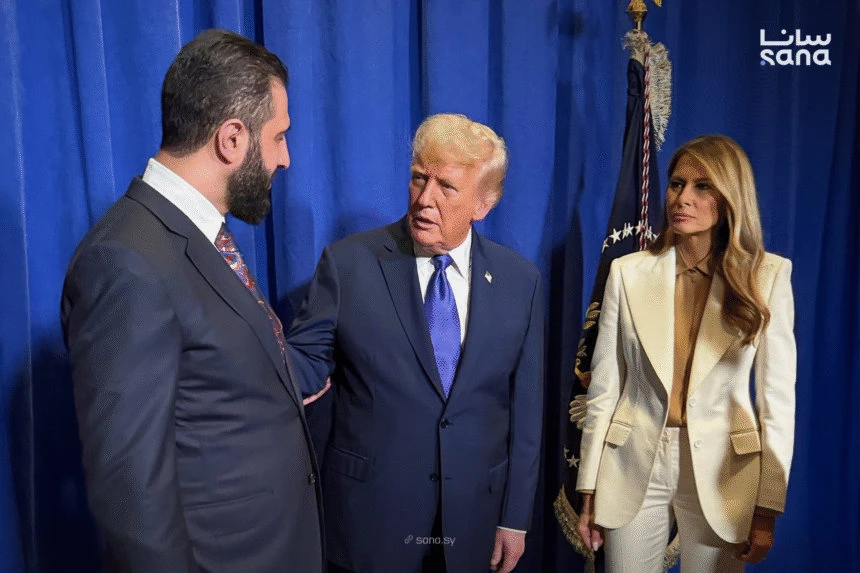
Syrian President Ahmed Al-Sharaa met with US President Donald Trump on the sidelines of the United Nations General Assembly in New York, the Syrian state news agency SANA said early on Thursday.
SANA released a photograph showing Al-Sharaa shaking hands with Trump, with First Lady Melania Trump also present. The agency provided no further details.
This was the second meeting between the two leaders, following their meeting in the Saudi capital, Riyadh, in May.
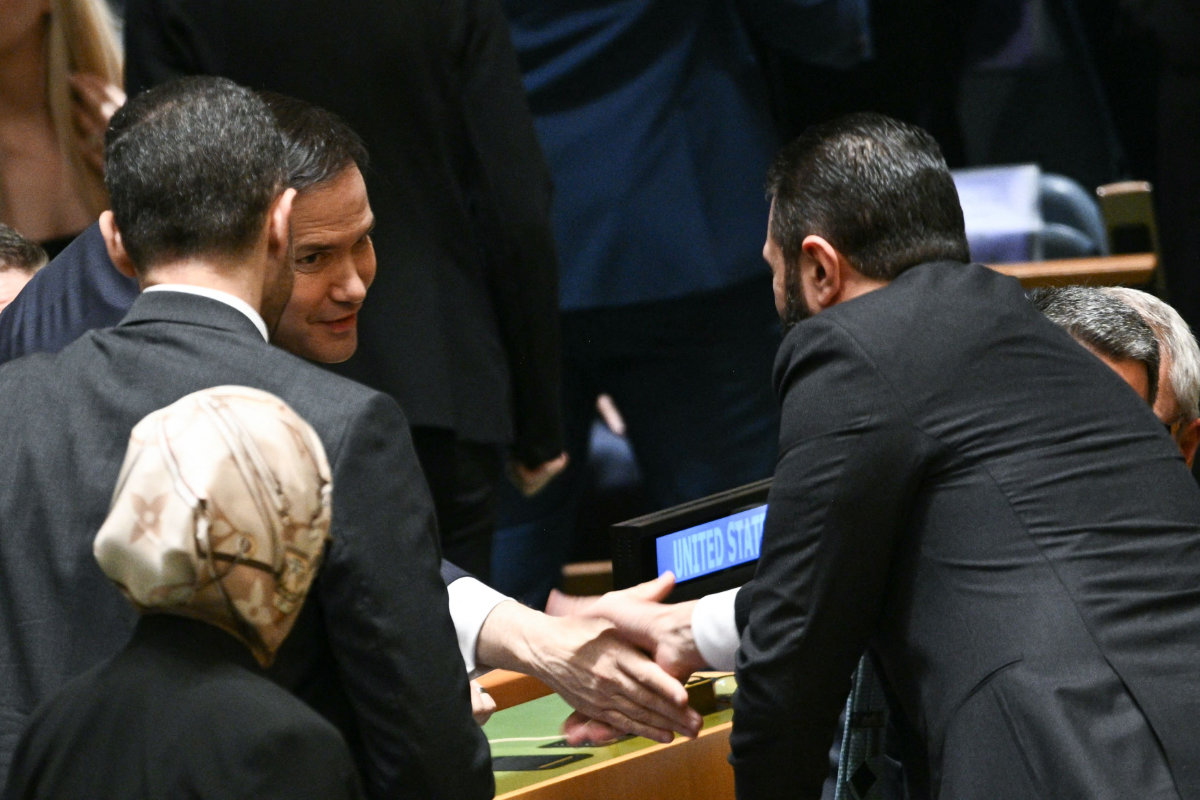
Earlier on Monday, Al-Sharaa met with US Secretary of State Marco Rubio in New York, expanding relations with the West and further easing his country’s isolation. He also became Syria’s first leader to take part in a UN high-level meeting in nearly 60 years.
The last time a Syrian head of state attended the UN General Assembly gathering of world leaders was in 1967 — before the 50-year rule of the Assad family dynasty. A lightning insurgent offensive led by Al-Sharaa ousted Bashar Assad in December and brought nearly 14 years of civil war to an end.
Since then, Al-Sharaa has sought to restore ties with Arab countries and the West, where officials were initially wary of his past ties with the Al-Qaeda militant group. The rebel group he formerly led, Hayat Tahrir Al-Sham, was previously designated by the United States as a foreign terrorist group.
President Trump’s administration has erased that designation and eased sanctions long imposed on Syria in a bid to ensure the country becomes a stable player in the Middle East following its global isolation under Assad.
Rubio “underscored this opportunity for Syria to build a stable and sovereign nation following President Trump’s historic announcement earlier this year on sanctions relief for the Syrian people,” the State Department said in a statement.
“They discussed ongoing counterterrorism efforts, efforts to locate missing Americans, and the importance of Israel-Syria relations in achieving greater regional security,” the department said.
However, Al-Sharaa again expressed doubt that Syria would join the Abraham Accords, which saw several Arab states normalize relations with Israel during Trump’s first term. That is even as Syria is in talks with the US and Israel over a potential security arrangement that could be finalized as early as this week.
“There’s a big difference between Syria and those members in the Abraham Accords,” he said earlier Monday at the Concordia Annual Summit, a global affairs forum in New York. “Syria is different. And those who are part of the Abraham Accords are not neighbors to Israel. Therefore, Syria as a neighbor has been subjected to over 1,000 raids, strikes and Israeli incursions.”
He added that “Syria has to be respected in this new era. There are different phases of negotiations with Israel to go back to the truce of 1974.”
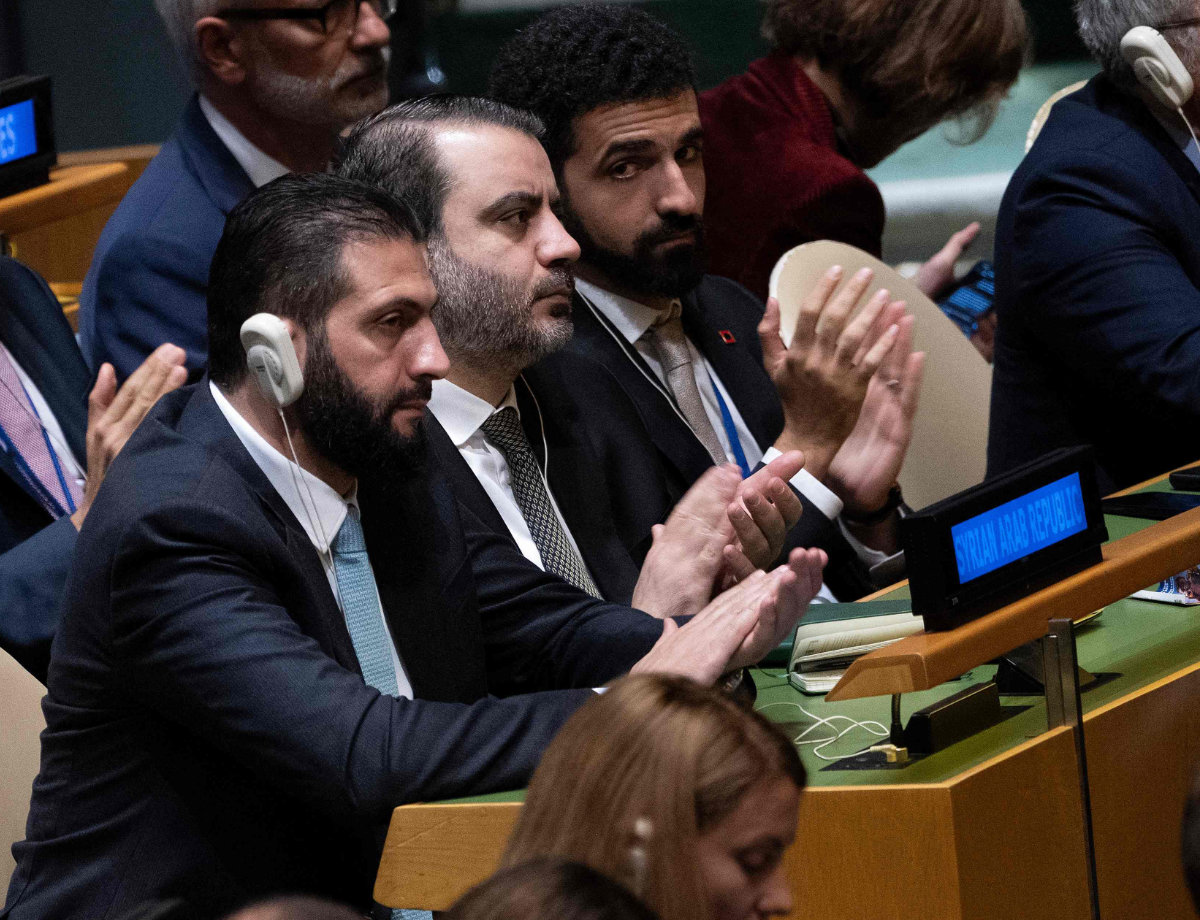
The comments from Al-Sharaa came in a conversation with retired Gen. David Petraeus, who commanded troops in the wars in Afghanistan and Iraq and previously served as CIA director.
They met in a New York conference hall after fighting on opposite sides of the US-led war in Iraq two decades ago. Al-Sharaa was an Al-Qaeda militant imprisoned by American forces, while Petraeus was the architect of a military strategy that for a time succeeded in suppressing the extremist group.
At the forum, Al-Sharaa praised Trump, whom he met in Saudi Arabia in May, for taking a “bold decision” on lifting many sanctions against Syria. “I think Syria deserves a new opportunity,” Al-Sharaa said.
However, some sanctions remain, and the State Department had to waive Assad-era visa restrictions on Syria for Al-Sharaa and his delegation so they could participate in the UN meeting of world leaders, which kicks off Tuesday.
Al-Sharaa urged the United States to remove the remaining sanctions, saying Syria needs help as it comes out of war and crisis.
“The Syrian people should not be killed another time through the sanctions,” he said. “The Syrian people love work. Lift the sanctions, and don’t worry about them.”
He also met in New York with Sen. Jeanne Shaheen and Rep. Gregory Meeks, ranking Democrats on the foreign relations committees, and Shaheen emphasized that Congress should pass legislation she is co-sponsoring to lift penalties still in place, according to a statement from the Senate committee.
Asked about atrocities committed against members of minorities in the coastal region and the southern province of Sweida that have caused alarm in the US and elsewhere, Al-Sharaa said “there was major chaos and everyone made mistakes.”
He noted that for the first time in 60 years, Syria has allowed international fact-finding teams into the country.
“The Syrian state will work on accountability against those found guilty even if they were the closest people to us,” he said.