- Interim government claims to have arrested a Hezbollah-linked cell, but the group firmly denies any presence inside Syria
- Analysts suggest Damascus may be signaling cooperation with Israel, with arrests announced days before Al-Sharaa’s UNGA visit
LONDON: Syria’s interim authorities announced earlier this month that they had dismantled a cell linked to Lebanon’s Hezbollah. The Iran-backed group, which fought alongside the ousted Bashar Assad regime during the civil war and more recently clashed with Israel, denies any presence in Syria.
If the allegations are true, the Sept. 11 arrests raise a pressing question: Why would Hezbollah, still nursing wounds from its mauling by Israel in 2024, seek to maintain a foothold in Syria now that its old regime allies have been removed from power?
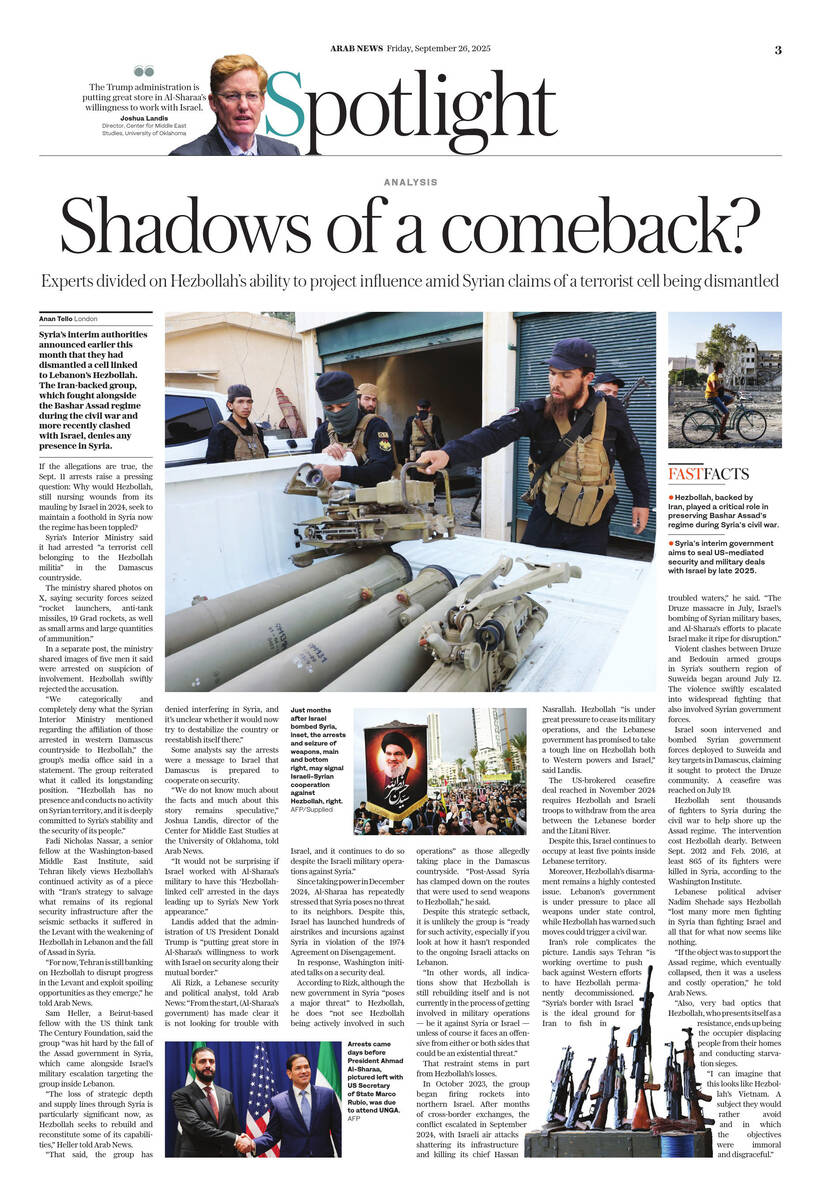
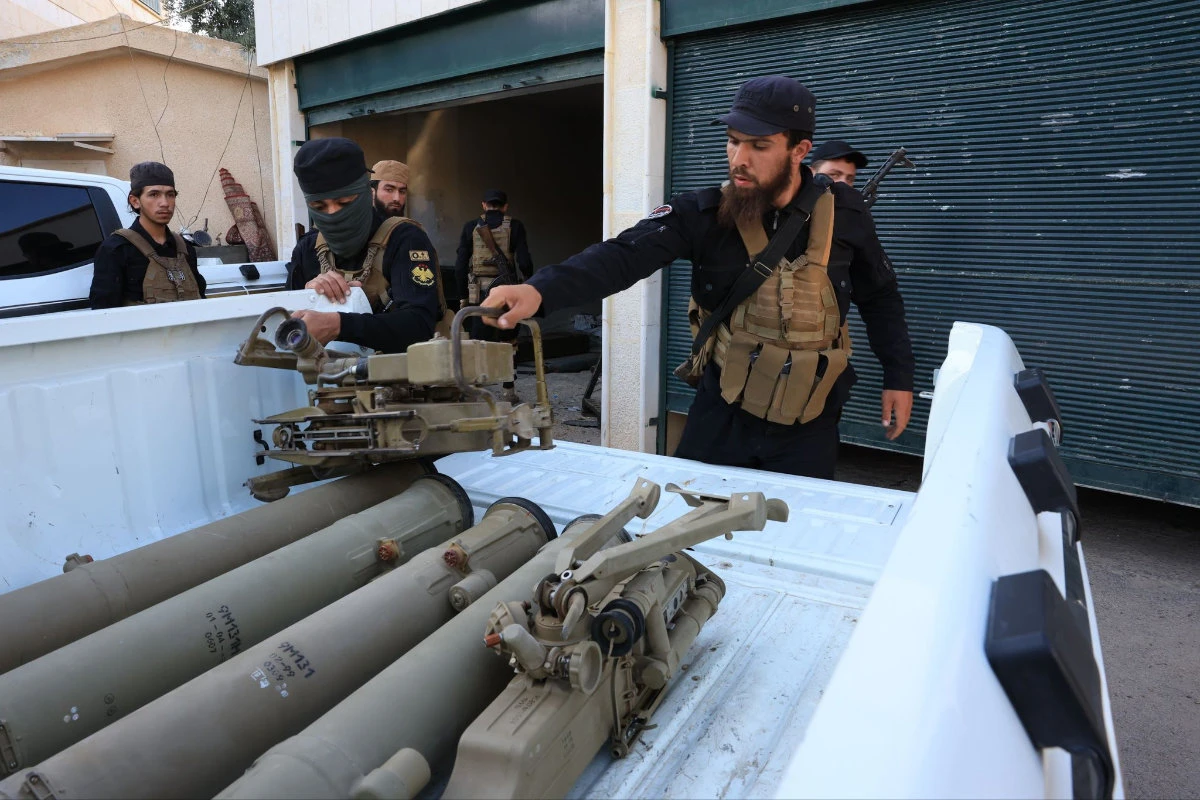
Syria’s Interior Ministry said in a statement that specialized units, working with the general intelligence service, had arrested “a terrorist cell belonging to the Hezbollah militia” in the Damascus countryside.
The ministry shared photos on X, saying security forces seized “rocket launchers, anti-tank missiles, 19 Grad rockets, as well as small arms and large quantities of ammunition” during raids in the towns of Saasaa and Kanaker in western rural Damascus.
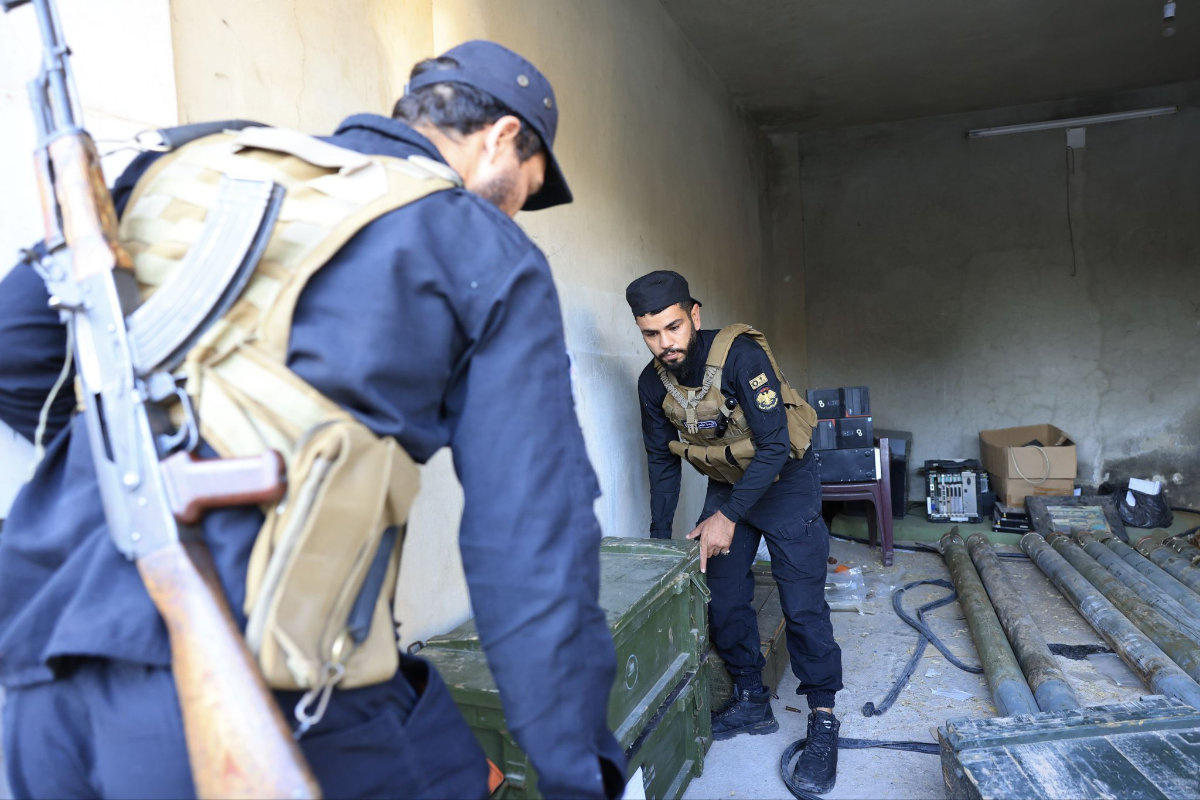
In a separate post, the ministry shared images of five men it said were arrested on suspicion of involvement in the Hezbollah cell. The suspects, it added, were “referred to the competent authorities to continue the investigations.”
Hezbollah swiftly rejected the accusation.
“We categorically and completely deny what the Syrian Interior Ministry mentioned regarding the affiliation of those arrested in western Damascus countryside to Hezbollah,” the group’s media office said in a statement the same day.
The group reiterated what it called its longstanding position. “Hezbollah has no presence and conducts no activity on Syrian territory, and it is deeply committed to Syria’s stability and the security of its people.”
Fadi Nicholas Nassar, a senior fellow at the Washington-based Middle East Institute, said Tehran likely views Hezbollah’s continued activity as of a piece with “Iran’s strategy to salvage what remains of its regional security infrastructure after the seismic setbacks it suffered in the Levant with the weakening of Hezbollah in Lebanon and the fall of Assad in Syria.
“For now, Tehran is still banking on Hezbollah to disrupt progress in the Levant and exploit spoiling opportunities as they emerge,” he told Arab News.
“In Syria, the Gulf states are investing significant political, economic, and technical assistance to help ensure a functioning state emerges from the ashes of years of war. Iran’s leverage lies in threatening to disrupt that progress and in waiting to twist any shift in the Syrian landscape to its favor.”
Given its weakness and the perhaps more pressing challenges to its existence in Lebanon, the strength of Hezbollah’s appetite for intervening meaningfully in Syria remains up for debate.
Sam Heller, a Beirut-based fellow with the US think tank The Century Foundation, said the group “was hit hard by the fall of the Assad government in Syria, which came alongside Israel’s military escalation targeting the group inside Lebanon.
“The loss of strategic depth and supply lines through Syria is particularly significant now, as Hezbollah seeks to rebuild and reconstitute some of its capabilities,” Heller told Arab News.
“That said, the group has denied interfering in Syria, and it’s unclear whether it would now try to destabilize the country or reestablish itself there.”
Much of the Syrian Interior Ministry’s account of the Sept. 11 arrests remains unverified. Some analysts say the announcement was a message to a far more significant neighbor — Israel — that Damascus is prepared to cooperate on security.
They consider the timing of the arrests significant, coming as they did just days before Syria’s interim President Ahmad Al-Sharaa’s visit to New York for the UN General Assembly.
“We do not know much about the facts and much about this story remains speculative,” Joshua Landis, director of the Center for Middle East Studies at the University of Oklahoma, told Arab News.
“It would not be surprising if Israel worked with Al-Sharaa’s military to have this ‘Hezbollah-linked cell’ arrested in the days leading up to Syria’s New York appearance.”
Landis added that the administration of US President Donald Trump is “putting great store in Al-Sharaa’s willingness to work with Israel on security along their mutual border.”
Ali Rizk, a Lebanese security and political analyst, noted that the announcement also coincided with Israel-Syria negotiations.
He told Arab News that “from the start, (Al-Sharaa’s government) has made clear it is not looking for trouble with Israel, and it continues to do so despite the Israeli military operations against Syria.”
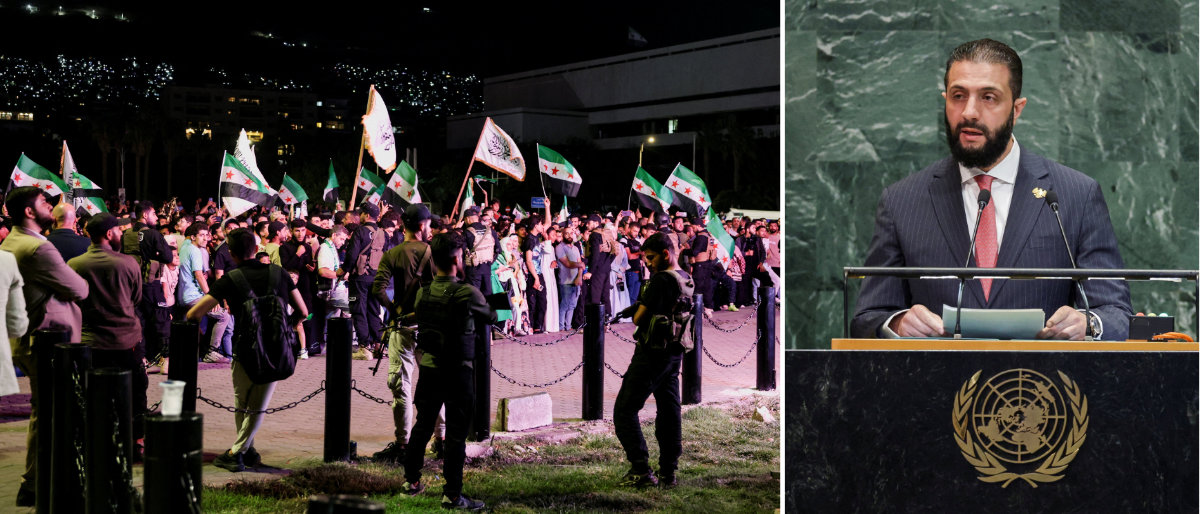
Al-Sharaa delivered a historic speech at the UN General Assembly on Wednesday — the first by a Syrian leader since 1967 — declaring Syria’s return to the international community after decades of dictatorship and civil war.
He said Syria is “reclaiming its rightful place among the nations of the world,” outlined an agenda for reform, reconstruction, and transitional justice, and announced plans for new institutions, elections, and inclusive government.
Al-Sharaa condemned Israeli airstrikes on Syria, called for the complete lifting of remaining sanctions, and pledged accountability for war crimes, stressing Syria’s commitment to balanced diplomacy and dialogue for regional peace.
Since taking power in December 2024, Al-Sharaa has repeatedly stressed that Syria poses no threat to Israel or any other neighbor, describing his strategy in March as one of “patience and wisdom.”
Despite this, Israel has launched hundreds of airstrikes and incursions in Syria, destroying up to 80 percent of its strategic weapons and infrastructure within the first 48 hours of Assad’s overthrow, the BBC reported.
Israeli forces also occupied at least 460 sq. km of Syrian territory, including parts of the UN-monitored buffer zone, in violation of the 1974 Agreement on Disengagement.
In response, Washington initiated talks on a security deal. Syria hopes such an agreement will halt Israeli operations and prompt a troop withdrawal, while Israel is pressing for a demilitarized zone extending from southwest Damascus to the border.
On Sept. 17, Al-Sharaa said negotiations could yield results “in the coming days.” Speaking to reporters in Damascus, he said a potential UN-monitored security pact is a “necessity” that must respect Syria’s territorial integrity and airspace.
That same day in London, Syrian Foreign Minister Asaad Al-Shaibani and Israeli Minister of Strategic Affairs Ron Dermer held US-brokered talks on a draft agreement to replace the 1974 deal.
According to Rizk, although the new government in Syria “poses a major threat” to Hezbollah, he does “not see Hezbollah being actively involved in such operations” as those allegedly taking place in the Damascus countryside.
“Post-Assad Syria has clamped down on the routes that were used to send weapons to Hezbollah,” he said, referring to the arc of territory previously used by Iran to channel materiel to its proxies across the region.
Despite this major strategic setback, which Hezbollah is likely keen to remedy, it is unlikely the group is “ready for such activity, especially if you look at how it hasn’t responded to the ongoing Israeli attacks on Lebanon.
“In other words, all indications show that Hezbollah is still rebuilding itself and is not currently in the process of getting involved in military operations — be it against Syria or Israel — unless of course it faces an offensive from either or both sides that could be an existential threat.”
That restraint stems in part from Hezbollah’s losses.
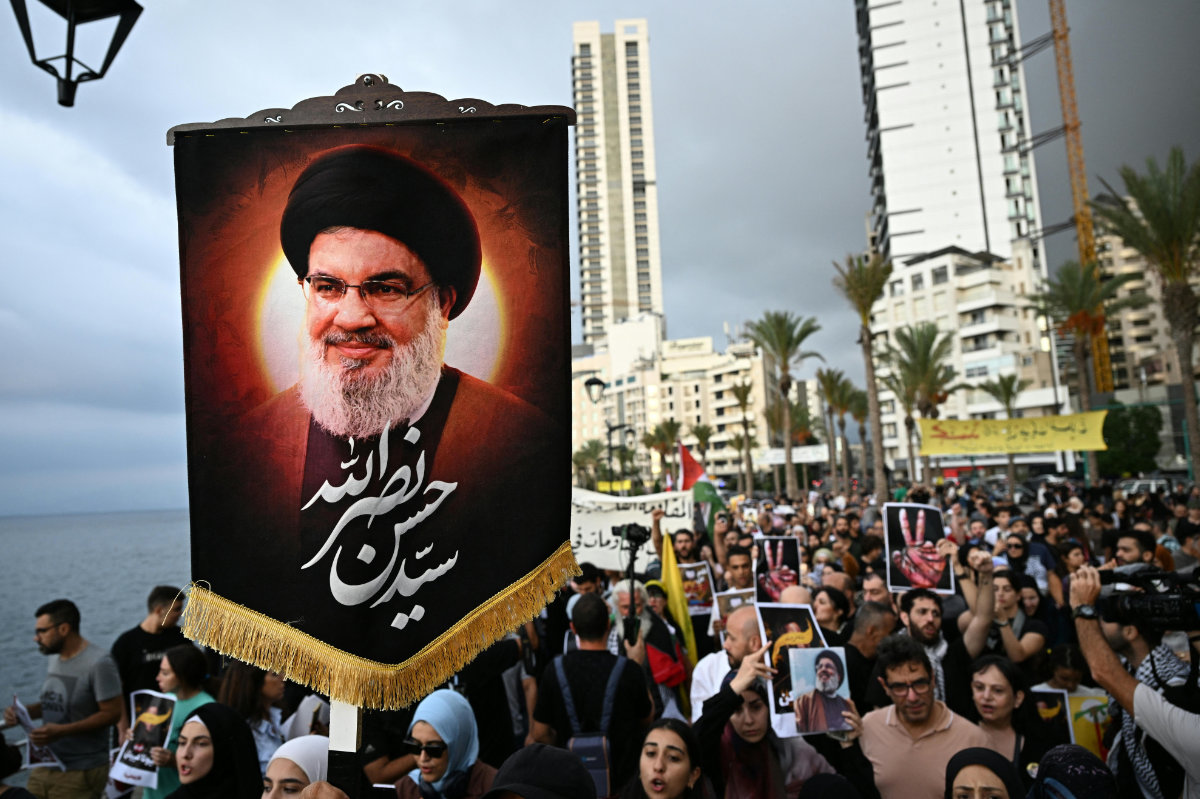
In October 2023, the group began firing rockets into northern Israel in support of its Hamas allies in Gaza. After months of cross-border exchanges, the conflict suddenly escalated in September 2024, with Israeli air attacks killing multiple Hezbollah leaders, including its longtime chief Hassan Nasrallah.
Israel’s 2024 campaign crippled Hezbollah’s infrastructure and weakened its ability to mount an effective response, according to media reports.
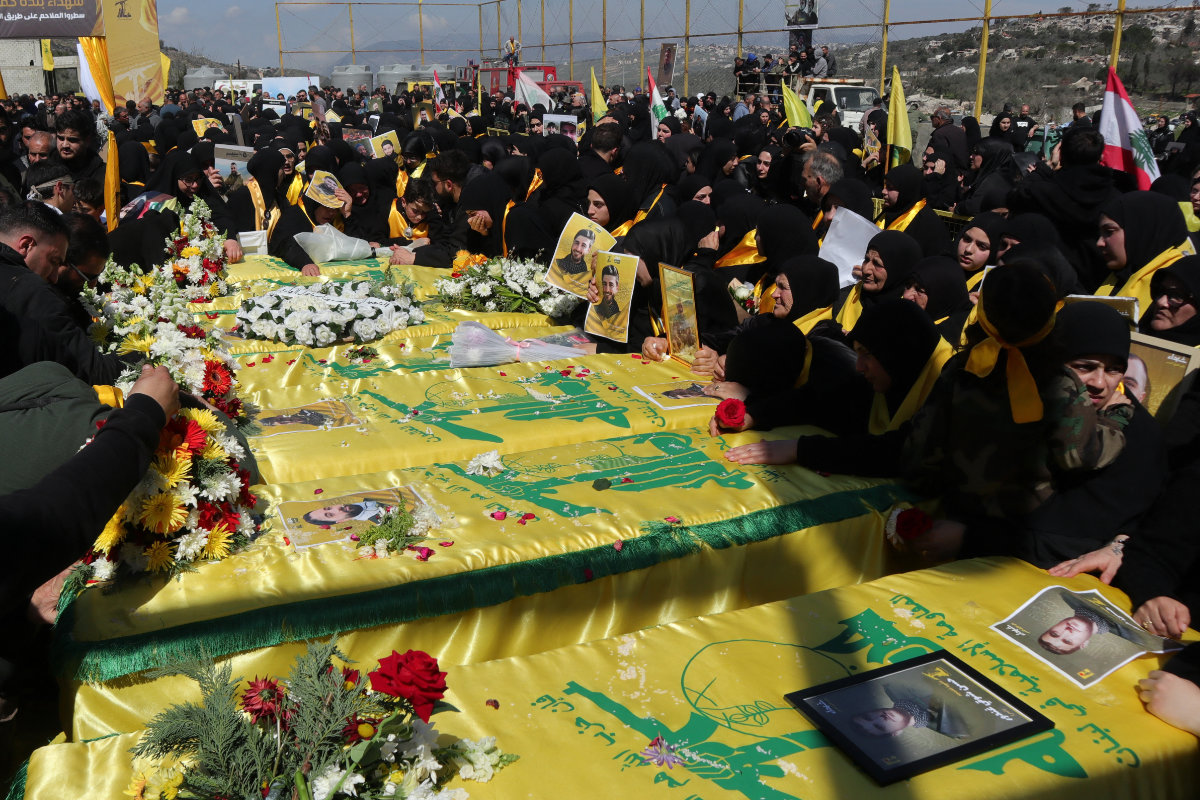
This defanging came as a huge strategic blow for Iran, which was then left far more exposed to Israeli and US strikes against its nuclear facilities. Hezbollah’s weakening also likely played a role in the rapid implosion of the Assad regime.
Its vulnerability within Lebanon, too, has placed its future in some doubt.
Hezbollah “is under great pressure to cease its military operations, and the Lebanese government has promised to take a tough line on Hezbollah both to Western powers and Israel,” said Landis.
The US-brokered ceasefire deal reached in November 2024 requires Hezbollah to withdraw from the area between the border with Israel and the Litani River, and Israeli troops to withdraw from the same area and to cease all attacks.
Despite this, Israel continues to occupy at least five points inside Lebanese territory.
Moreover, Hezbollah’s disarmament remains a highly contested issue. Lebanon’s government faces domestic and international pressure to place all weapons under state control, while Hezbollah has warned such moves could trigger a new civil war.
Iran’s role complicates the picture. Landis says Tehran “is working overtime to push back against Western efforts to have Hezbollah permanently decommissioned.
“Syria’s border with Israel is the ideal ground for Iran to fish in troubled waters,” he said. “The Druze massacre in July, Israel’s bombing of Syrian military bases, and Al-Sharaa’s efforts to placate Israel make it ripe for disruption.”
Violent clashes between Druze and Bedouin armed groups in Syria’s southern region of Suweida began around July 12. The violence swiftly escalated into widespread fighting that also involved Syrian government forces.
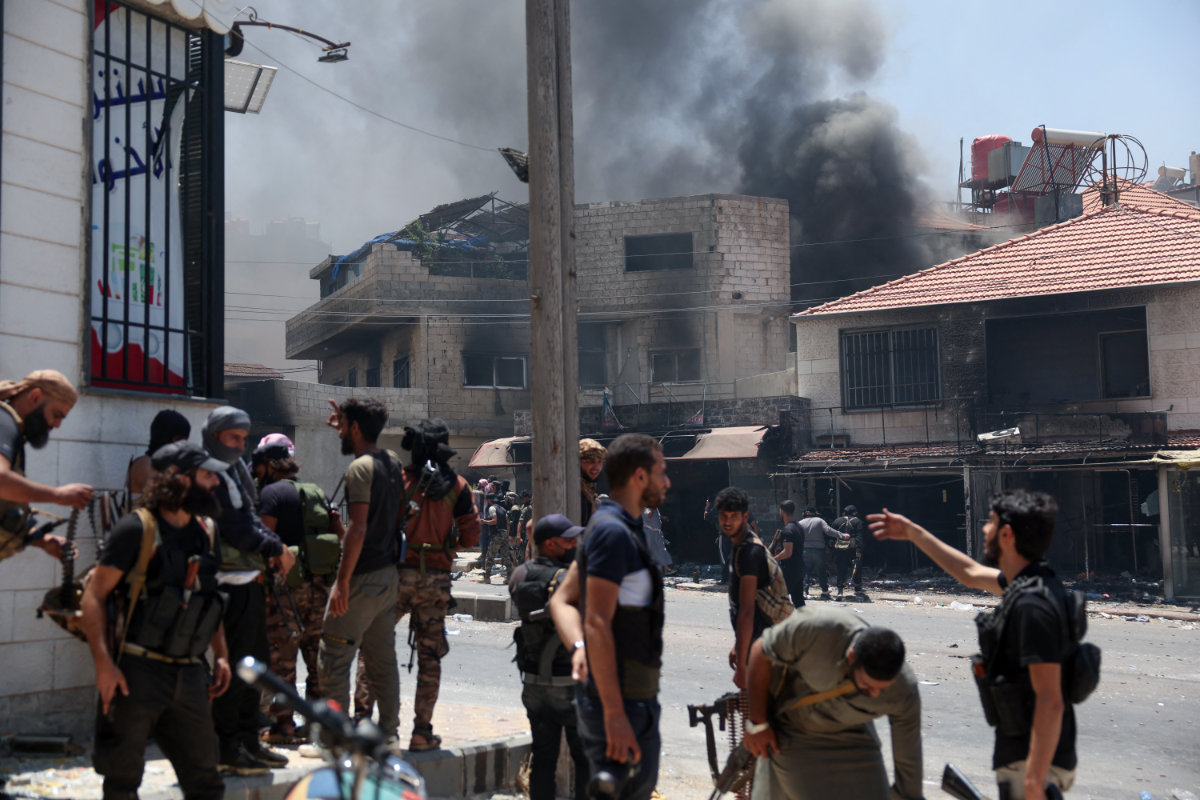
Israel soon intervened and bombed Syrian government forces deployed to Suweida and key targets in Damascus, claiming it sought to protect the Druze community. A ceasefire, thought fragile, was reached on July 19.
Hezbollah sent thousands of fighters to Syria during the civil war to help shore up the Assad regime, playing decisive roles in battles against opposition forces.
The intervention advanced Iran’s strategic aims but cost Hezbollah dearly. Between Sept. 2012 and Feb. 2016, at least 865 of its fighters were killed in Syria, according to the Washington Institute.
Lebanese political adviser Nadim Shehade says Hezbollah “lost many more men fighting in Syria than fighting Israel and all that for what now seems like nothing.
“If the object was to support the Assad regime, which eventually collapsed, then it was a useless and costly operation,” he told Arab News.
“Also, very bad optics that Hezbollah, who presents itself as a resistance, ends up being the occupier displacing people from their homes and conducting starvation sieges.
“I can imagine that this looks like Hezbollah’s Vietnam. A subject they would rather avoid and in which the objectives were immoral and disgraceful.”