Colombia’s foreign minister ‘renounces’ her US visa as tensions between both nations escalate

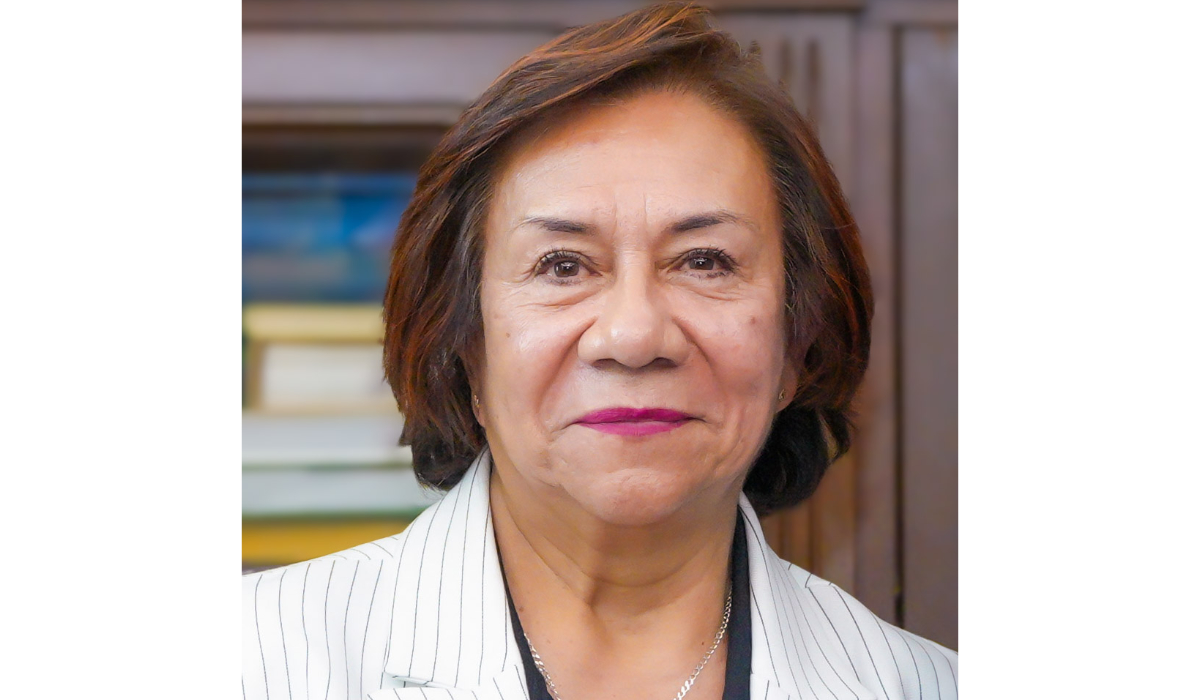
Foreign Minister Rosa Villavicencio. (Wikipedia)
Short Url
Updated 30 September 2025
Follow

Colombia’s foreign minister ‘renounces’ her US visa as tensions between both nations escalate

Foreign Minister Rosa Villavicencio. (Wikipedia)
  • Holding a megaphone and wearing a kaffiyeh, the traditional Palestinian scarf, Petro called on US soldiers to “disobey” President Donald Trump’s orders, adding that they should “not point their rifles against humanity”

BOGOTA, Colombia: Colombia’s foreign minister has “renounced” her US visa to protest a decision by the US State Department to revoke the visa of Colombian President Gustavo Petro, the Colombian government said Monday.
The decision by Foreign Minister Rosa Villavicencio comes as tensions between both nations escalate over issues that include drug policy, the war in Gaza and a US naval build up in neighboring Venezuela.
Colombia’s Foreign Affairs Ministry did not respond to questions about what kind of visa Villavicencio held, but said in a statement that it was not interested in “diplomatic visas that limit opinions” or curtail the nation’s “sovereignty.”
Later on Monday, Colombian Finance Minister Germán Ávila wrote in an X message that he would stop using his visa in “solidarity” with Petro, and because of the “aggression” he was subjected to by the United States. “To work for our people, we do not need visas” Ávila wrote.
The US State Department revoked Petro’s visa Friday after he participated in a protest in New York against the war in Gaza, in which Petro called for the creation of an international army to liberate the West Bank and the Gaza Strip.
Holding a megaphone and wearing a kaffiyeh, the traditional Palestinian scarf, Petro called on US soldiers to “disobey” President Donald Trump’s orders, adding that they should “not point their rifles against humanity.”
Hours after the protest, the State Department said on social media that it would cancel Petro’s visa “due to his reckless and incendiary actions.”
Petro was back in Colombia when the visa announcement was made, after having spent several days in New York attending the UN General Assembly. He wrote on X that he “didn’t care” about the punishment because he is also an Italian citizen, and could possibly travel to the USwithout a visa.
The revocation of Petro’s visa marks a new low in the leftist leader’s relations with the Trump administration, which earlier this month placed Colombia on a list of countries that it says are not fulfilling their international commitments to curb drug trafficking.
Geoff Ramsey, a Colombia analyst at the Atlantic Council, said the foreign minister’s decision to ban herself from visiting the United States places more obstacles in the relationship. He said it also reflects an effort by the Petro administration to distance itself from the US government, as Colombia heads into congressional and presidential elections next year.
“Petro is not even remotely interested in repairing the relationship with Washington,” Ramsey said. “He’s clearly betting that confrontation with Trump will score points for his coalition in the upcoming election cycle, and is willing to torch the bilateral relationship with the United States in the process.”
David Hart, an immigration attorney based in Miami, said it is very rare for non-immigrant visa holders — such as those with tourist or diplomatic visas — to renounce their travel permit.
He said that people who do not want to travel to the US can simply let their visas expire and then choose to not renew them.
“They are doing this for the media and to show solidarity” with Petro, Hart said of the foreign minister’s efforts to renounce her visa.
Wilfredo Allen, an immigration attorney from Miami, said that there is no formal procedure for quitting on a non-immigrant visa. He added that Colombia’s foreign affairs minister will likely have to send a letter to the US Embassy seeking the cancelation of her travel permit.
“If you don’t want to travel to the US you can simply choose not to come,” Allen said. “I had never seen someone take the time to renounce a non-immigrant visa.”


Corruption scandal, court battles pose test for Ukraine’s Zelensky

Corruption scandal, court battles pose test for Ukraine’s Zelensky
Updated 59 min 1 sec ago
Follow

Corruption scandal, court battles pose test for Ukraine’s Zelensky

Corruption scandal, court battles pose test for Ukraine’s Zelensky
  • Justice Minister German Galushchenko, a former energy minister, was suspended Wednesday after being caught up in an investigation

KYIV: A major corruption scandal and mounting accusations that the Ukrainian presidency is using the judiciary to intimidate and silence critics has rocked Kyiv, presenting a significant test for Volodymyr Zelensky almost four years into the Russian invasion.
Justice Minister German Galushchenko, a former energy minister, was suspended Wednesday after being caught up in an investigation into one of Zelensky’s top allies, who is accused of orchestrating a $100-million scheme to secure kickbacks from the power sector.
While Galushchenko denies any wrongdoing, the scandal has sparked anger as Ukraine’s electricity grid is creaking under a barrage of attacks from Russia as the country heads into winter.
These challenges come at a critical time for Zelensky, who has remained popular and largely unchallenged since Russia invaded in 2022, with Moscow’s forces advancing in the east.
It also shows how strained the tightrope that Ukraine has been forced to walk – between centralising power to run the war, and forging on with democratic reforms key to joining the EU – is becoming.
The latest case to trigger accusations that Zelensky’s team are weaponizing the judicial system to intimidate critics was last month’s arrest of Volodymyr Kudrytsky, who led national energy company Ukrenergo until 2024, on embezzlement accusations.
Kudrytsky and his backers reject the claims as retribution for criticizing Ukraine’s strategy to defend the energy grid from Russian attacks.
“It’s purely political. It couldn’t happen without the involvement of the presidential office,” Kudrytsky, currently on bail, said, saying that he was being lined up as a scapegoat.
The authorities want to “demonstrate what will happen if you comment on sensitive matters,” he added, pointing to his strained ties with the country’s leadership.
‘Something they don’t like’
Kudrytsky has won some high-profile supporters.
Business ombudsman Roman Waschuk said the evidence “appears quite flimsy” and warned against “targeting people for simply performing their normal corporate functions.”
Opposition lawmaker Inna Sovsun said it was part of a strategy of using criminal investigations to silence people.
“So you know there is a case against you, and they will try to use it if you do something they don’t like,” she said.
Asked by AFP about the case last week, Zelensky said it was a question for the judiciary but that Kudrytsky “was a chief of a big system, and that system had to secure our energy. He had to do it.”
The grid has been battered by Russian attacks and charges that Kyiv could have done more to protect the network are sensitive.
Alongside the court cases, this week’s allegations of a massive corruption scandal involving Timur Mindich, co-owner of the production company founded by the president, have fueled worries about the centralization of power amid the war.
Zelensky’s office had this summer tried to strip the independence of the two agencies investigating and prosecuting the case – the National Anti-Corruption Bureau (NABU) and Specialized Anti-Corruption Prosecutor’s Office (SAPO).
The dynamic presents a challenge to Brussels, which supports Ukraine’s bid to join the bloc but is pressing Kyiv to build on democratic reforms if it wants to join the bloc.
Since the collapse of the Soviet Union, Ukraine has been plagued by corruption scandals – with graft and rule-of-law major vulnerabilities in Kyiv’s EU bid.
While Brussels has praised progress made since the 2014 revolution, its latest monitoring report said: “The integrity, meritocracy and capacities of the judiciary and prosecutorial service... remain weak.”
‘People are afraid’
Activists have also pointed to other cases.
Zelensky’s predecessor and political rival Petro Poroshenko was charged with corruption earlier this year, a move he denounced as politically motivated.
Odesa mayor Gennadiy Trukhanov was stripped of his Ukrainian citizenship over allegations – denied by him – that he possesses a Russian passport.
Even some of his critics said it was a case of Zelensky’s office trying to tighten control over a region run by the opposition.
And one NABU detective, Ruslan Magamedrasulov, remains in custody, charged with aiding an aggressor state for allegedly doing business with Russia.
Supporters say that case is fabricated – retribution for his work investigating the scandal that came to light this week.
Other NABU staff have been detained or had their homes searched, heaping pressure on the agency.
“Some people are afraid. But if you’re talking about the general staff of the NABU, most of them are very motivated,” head Semen Kryvonos said.
There is mounting worry about how Zelensky will respond.
“The question now is – what will be their reaction,” said Daria Kaleniuk, head of the Anti-Corruption Action Center.
“If Zelensky will decide to cover his inner circle and attack.”