Saudi fund leads investors in $55bn buyout of games maker Electronic Arts

Saudi fund leads investors in $55bn buyout of games maker Electronic Arts
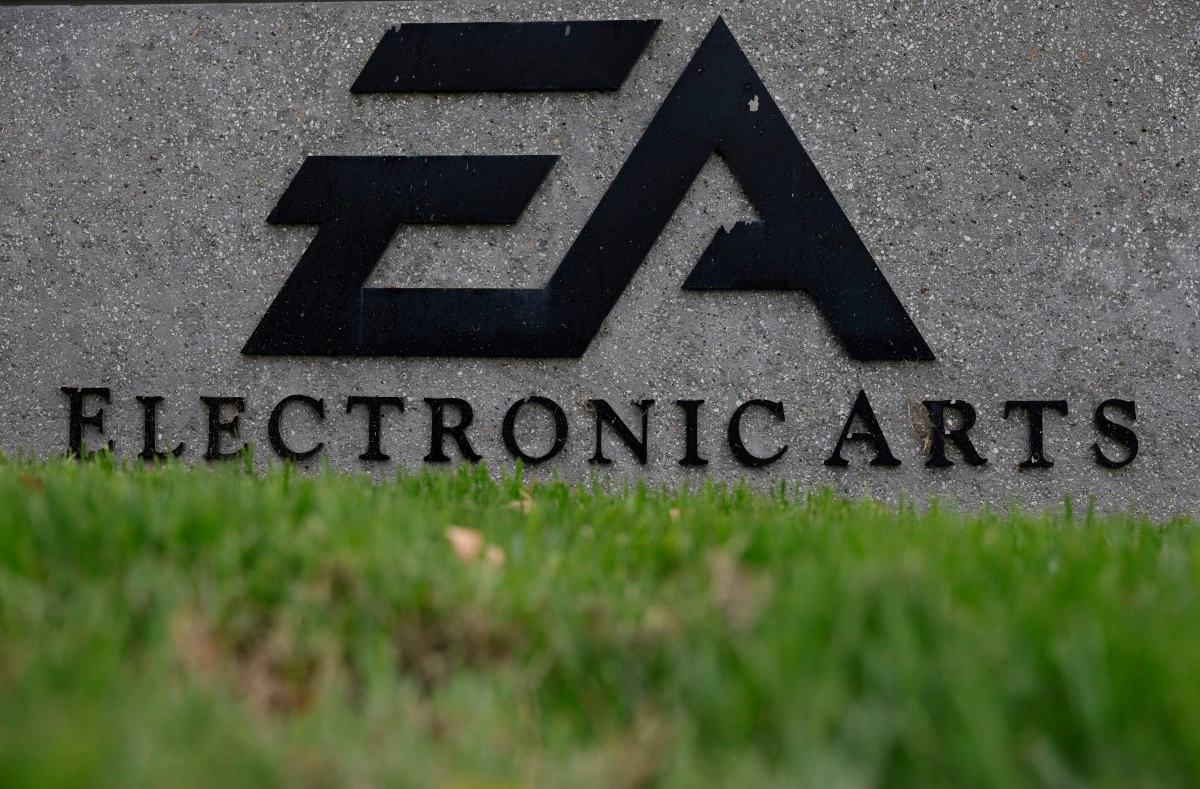
A sign is posted in front of Electric Arts headquarters in Redwood City, California, Sept. 29, 2025. (AFP)
Short Url
Updated 30 September 2025
Follow

Saudi fund leads investors in $55bn buyout of games maker Electronic Arts

Saudi fund leads investors in $55bn buyout of games maker Electronic Arts
  • Deal will give Saudi Arabia larger presence in esports industry, according to analysts
  • Jared Kushner’s Affinity Partners, private equity firm Silver Lake joining consortium to acquire 100% of EA, largest leveraged buyout in history

LONDON: Saudi Arabia’s Public Investment Fund is leading a consortium of investors, including Jared Kushner’s Affinity Partners and private equity firm Silver Lake, to acquire Electronic Arts, the popular video game developer, in an unprecedented $55 billion deal.

The buyout will involve a combination of about $36 billion in cash, equity already held by the PIF, and about $20 billion in debt, as announced on Monday, to be financed by JPMorgan.

The deal will give Saudi Arabia a larger presence in the esports industry, according to analysts. The Kingdom has hosted the Esports World Cup in Riyadh, and the gaming and esports sectors are significant contributors to the PIF’s efforts to diversify the Saudi economy.

EA has been creating popular video games since its establishment in Redwood City, California, in 1991. Some of its well-known titles include EA FC, Battlefield, and Madden NFL. EA FC has sold 325 million copies since its first release in 1993. These games were initially available on PCs and later gained popularity on PlayStation and other consoles in the late 2000s.

The deal will “position EA to accelerate innovation and growth in building the future of entertainment,” the company said.

It is believed to be the largest leveraged buyout in history, where a substantial portion of the purchase is financed through borrowing, according to the BBC.

The PIF, Affinity Partners, and Silver Lake will acquire all publicly traded shares of EA and take the company private. As a result, EA will no longer be listed on any stock exchange.

EA said in a statement to its shareholders: “The transaction represents the largest all-cash sponsor take-private investment in history, with the consortium partnering closely with EA to enable the company to move faster and unlock new opportunities on a global stage.”

The PIF will maintain its current 9.9 percent stake in EA, and the transaction is anticipated to close in the first quarter of 2027. Andrew Wilson, EA’s chairman and CEO, who will remain in his position, said that the deal was a strong acknowledgment of the company’s efforts.

He said: “Looking ahead, we will continue to push the boundaries of entertainment, sports, and technology, unlocking new opportunities.”

Turqi Alnowaiser, deputy governor and head of international investments at the PIF, said the company “is uniquely positioned in the global gaming and esports sectors, building and supporting ecosystems that connect fans, developers, and IP creators.”

He added: “PIF has demonstrated a strong commitment to these sectors, and this partnership will help further drive EA’s long-term growth, while fueling innovation within the industry on a global scale.”

The PIF acquired the gaming division of Niantic in March for $3.5 billion. Saudi companies have also invested in major gaming firms, such as Nintendo and Take-Two Interactive.

Egon Durban, co-CEO at Silver Lake, said that the consortium aimed to accelerate innovation at EA and enhance its international reach.

Jared Kushner, CEO of Affinity Partners, called EA an extraordinary company with a top-notch management team and a bold future vision, adding: “As ​someone ​who ​grew up playing their ​games, and now enjoys them with his ​kids, I couldn’t be ​more ​excited about ​what’s ​ahead.”


Saudi Arabia’s non-oil sector posts strong growth as PMI hits 60.2 

Saudi Arabia’s non-oil sector posts strong growth as PMI hits 60.2 
Updated 8 sec ago
Follow

Saudi Arabia’s non-oil sector posts strong growth as PMI hits 60.2 

Saudi Arabia’s non-oil sector posts strong growth as PMI hits 60.2 

RIYADH: Saudi Arabia’s non-oil economy accelerated in October, with the Purchasing Managers’ Index climbing to 60.2, its second-highest level in more than a decade, signaling strong business growth momentum. 

The latest survey by Riyad Bank and S&P Global showed a sharp improvement in operating conditions across the Kingdom’s private sector, underpinned by solid demand, rising employment, and robust output growth.  

The October reading, up from 57.8 in September, highlights the sustained momentum of the non-oil economy as Vision 2030 reforms continue to drive diversification away from crude revenues. 

Speaking at the Future Investment Initiative in October, Saudi Arabia’s Minister of Economy and Planning Faisal Alibrahim said the Kingdom’s gross domestic product is expected to expand by 5.1 percent in 2025, supported by continued growth in non-oil activities. 

Commenting on the latest report, Naif Al-Ghaith, chief economist at Riyad Bank, said: “Saudi Arabia’s non-oil private sector recorded a solid improvement in business conditions in October, with the PMI rising to 60.2, marking one of the strongest readings in over a decade.”  

He added: “The acceleration was driven by broad-based gains in output, new orders, and employment, reflecting sustained demand momentum and continued strength in the non-oil economy.”  

Al-Ghaith noted that the latest survey results also indicate a strong start to the final quarter of the year, supported by both domestic and external demand. 

According to the report, the pace of growth in new orders received by non-oil companies accelerated for the third consecutive month in October, with 48 percent of surveyed firms reporting higher sales. 

Participating companies attributed the sales growth to improving economic conditions, a growing client base, and increased foreign investment. 

Output and employment also expanded sharply during the month, with job creation rising at the fastest pace in nearly 16 years.

Al-Ghaith said the persistent rise in new export orders highlights the growing competitiveness of Saudi firms and the progress achieved under ongoing diversification initiatives. 

“The rise in demand encouraged firms to expand production and workforce capacity at the fastest rate since 2009, as businesses expanded capacity to meet new workloads. Purchasing activity and inventories also increased, while suppliers’ delivery times continued to improve, reflecting efficient coordination and resilient supply chains,” he added.  

October data indicated a sharp rise in input costs for non-oil firms, driven mainly by wage increases from salary revisions and bonuses. 

On the outlook, companies remained optimistic, citing strong market demand, ongoing project work, and government investment initiatives. 

“Optimism is underpinned by solid domestic demand and the momentum of ongoing projects. Although some concerns persist around costs and competition, sentiment overall remains strongly positive, reflecting confidence in the economy’s continued expansion and the strength of the non-oil private sector,” concluded Al-Ghaith.