- More than 1,000 immigrants have been arrested since an immigration crackdown started last month in the Chicago area
- US citizens, immigrants with legal status and children have been among detained in increasingly brazen and aggressive encounters
Storming an apartment complex by helicopter as families slept. Deploying chemical agents near a public school. Handcuffing a Chicago City Council member at a hospital.
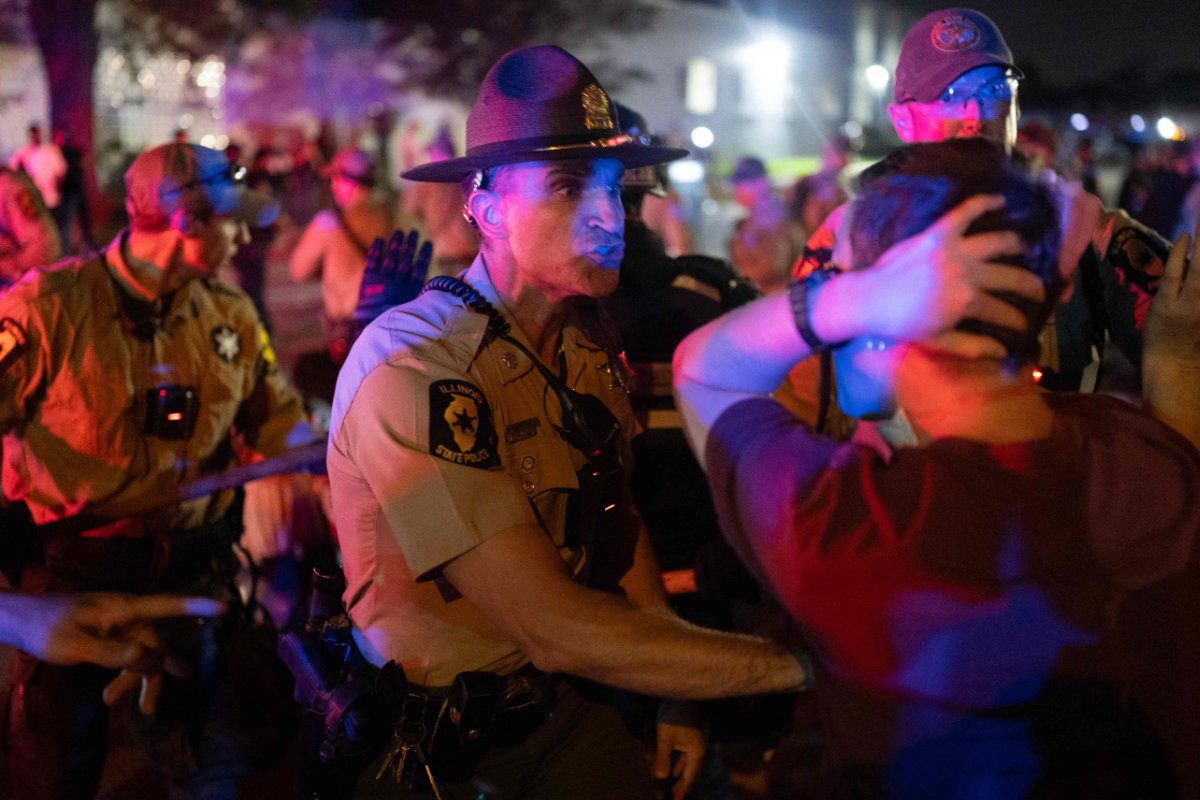
Activists, residents and leaders say increasingly combative tactics used by federal immigration agents are sparking violence and fueling neighborhood tensions in the nation’s third-largest city.
“They are the ones that are making it a war zone,” Illinois Gov. JB Pritzker said Sunday on CNN. “They fire tear gas and smoke grenades, and they make it look like it’s a war zone.”
More than 1,000 immigrants have been arrested since an immigration crackdown started last month in the Chicago area. The Trump administration has also vowed to deploy National Guard troops in its agenda to boost deportations.
But US citizens, immigrants with legal status and children have been among detained in increasingly brazen and aggressive encounters which pop up daily across neighborhoods in the city of 2.7 million and its many suburbs.
Arriving by helicopter
Activists and residents were taking stock Sunday at an apartment building on Chicago’s South Side where the Department of Homeland Security said 37 immigrants were arrested recently in an operation that’s raised calls for investigation by Pritzker.
While federal agents have mostly focused on immigrant-heavy and Latino enclaves, the operation early Tuesday unfolded in the largely Black South Shore neighborhood that’s had a small influx of migrants resettled in Chicago while seeking asylum.
Agents used unmarked trucks and a helicopter to surround the five-story apartment building, according to bystander videos and NewsNation, which was invited to observe the operation. The outlet reported agents “rappelled from Black Hawk helicopters.”
Agents then went door to door, woke up residents and used zip ties to restrain them, including parents and children, according to residents and the Illinois Coalition for Immigrant and Refugee Rights, which canvassed the area.
Rodrick Johnson was among the US citizens briefly detained and said agents broke through his door and placed him in zip ties. The 67-year-old was released hours later.
“I asked if they had a warrant, and I asked for a lawyer,” he told the Chicago Sun-Times. “They never brought one.”
Dixon Romero with Southside Together, an organization that’s also been helping residents, said doors were knocked off the hinges.
“Everyone we talked to didn’t feel safe,” he said. “This is not normal. It’s not OK. It’s not right.”
Pritzker, a two-term Democrat, has directed state agencies to investigate claims that children were zip tied and detained separately from their parents, saying “military-style tactics” shouldn’t be used on children.
DHS officials said they were targeting connections to the Tren de Aragua gang. Without offering details on arrests or addressing how children were treated, DHS said “some of the targeted subjects are believed to be involved in drug trafficking and distribution, weapons crimes, and immigration violators.”
Agency officials did not return a message left Sunday.
Four US citizens were also briefly detained, Brandon Lee, with the Illinois Coalition for Immigrant and Refugee Rights, said while some residents were placed on ankle monitors, others remained unaccounted for.
“It is plain and clear that ICE (Immigration and Customs Enforcement) and CBP (Customs and Border Patrol) are violent forces in our communities,” he said in a statement.
More tear gas and smoke bombs
Meanwhile, the use of chemical agents has become more frequent and visible in the past week. Used initially to manage protesters, agents used it this week on city streets and during immigration operations, according to ICIRR.
An emergency hotline to report immigrant agent sightings topped 800 calls on Friday, the same day activists said agents threw a cannister of a chemical near a school in the city’s Logan Square neighborhood. The activity in the northwest side neighborhood prompted nearby Funston Elementary School to hold recess indoors.
The same day Chicago Alderperson Jessie Fuentes was placed in handcuffs at a hospital. She said she asked agents to show a warrant for a person who’d broken his leg while chased by ICE agents who then transported him to the emergency room.
“ICE acted like an invading army in our neighborhoods,” said state Rep. Lilian Jiménez, a Democrat. “Helicopters hovered above our homes, terrifying families and disturbing the peace of our community. These shameful and lawless actions are not only a violation of constitutional rights but of our most basic liberty: the right to live free from persecution and fear.”
On Saturday, immigration agents shot a woman they allege tried to run them over after agents were “boxed in by 10 cars.” They later said the woman was armed. However, activists said immigration agents caused the multi-vehicle crash and detained the woman, who is a US citizen.
Department of Homeland Security Secretary Kristi Noem has defended the aggressive tactics, calling the mission treacherous to agents and alleging threats on officers’ lives.
“It’s an extremely dangerous situation,” she said Sunday on the “Fox & Friends” weekend show.
Going to court
Leaders of a Chicago suburb that’s home to an immigration processing center have taken their fight against federal agents to court.
The village of Broadview has become a front line in the immigration operation. The center in the community of 8,000 people is where immigrants are processed for detention or deportation.
Protests outside have become tense with near daily arrests. Civil rights organizations have blasted aggressive tactics by agents, while village officials have launched three separate criminal investigations against federal agents.
City officials have demanded the federal government remove an 8-foot fence they say was “illegally” put up outside the facility. They filed a federal lawsuit Friday seek a temporary restraining order and the immediate removal of the fence they say blocks fire access.
“The fence also constitutes an immediate public safety hazard,” the lawsuit said.
Also pending is an expected ruling on alleged violations of a 2022 consent decree on how federal immigration agents can make arrests in six states including Illinois. While the order expired in May, attorneys have sought an extension and filed dozens of more alleged violations in the past month.