
- Negotiators are discussing the “ground conditions” to implement Trump’s plan for Gaza
- Israeli and Hamas negotiators will speak through mediators shuttling back and forth
CAIRO: Delegations from Hamas and Israel on Monday began indirect talks in the Egyptian resort town of Sharm El-Sheikh on ending the nearly two-year war in Gaza, Egyptian state-linked media reported.
Al-Qahera News, which is linked to state intelligence, said the delegations “are discussing preparing ground conditions for the release of detainees and prisoners,” in line with a proposal from US President Donald Trump to halt hostilities.
“Egyptian and Qatari mediators are working with both sides to establish a mechanism” for the exchange of hostages held in Gaza for the Palestinian prisoners in Israeli jails, they added.
Behind closed doors and under tight security, negotiators will speak through mediators shuttling back and forth, only weeks after Israel tried to kill Hamas’s lead negotiators in a strike on Qatar.
The Hamas delegation, led by top negotiator Khalil Al-Hayya who survived the attack in Doha, held a meeting with Egyptian intelligence officials ahead of the talks, according to an Egyptian security source.
This round of negotiations, launched on the eve of the second anniversary of Hamas’s October 7, 2023 attack that sparked the war, “may last for several days,” said a Palestinian source close to Hamas’s leadership.
“We expect the negotiations to be difficult and complex, given the occupation’s intentions to continue its war of extermination,” he told AFP.
Trump, whose envoy Steve Witkoff and son-in-law Jared Kushner are expected in Egypt, has urged negotiators to “move fast” to end the war in Gaza, where Israeli strikes continued on Monday.
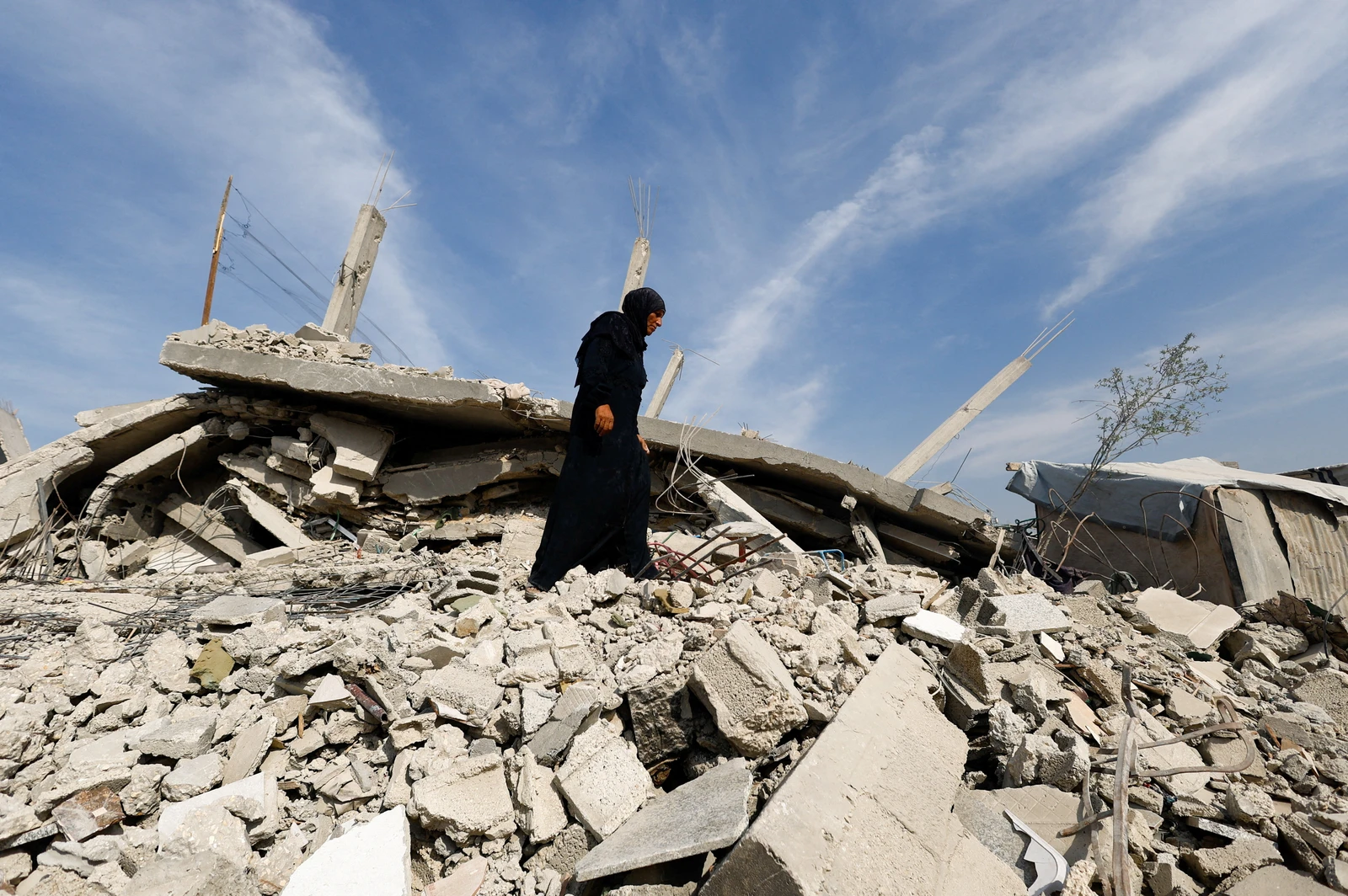
At least seven Palestinians were killed in the latest Israeli air strikes, according to Mahmud Basal, spokesman for Gaza’s civil defense agency.
AFP footage showed explosions in the Gaza Strip, with plumes of smoke rising over the skyline, even after US Secretary of State Marco Rubio said Israel must stop bombing the territory.
‘Require several days’
Both Hamas and Israel have responded positively to Trump’s proposal, but reaching an agreement on the details is set to be a herculean task.
The plan envisages the disarmament of Hamas, which the militant group is unlikely to accept.
It also provides for the full withdrawal of Israeli forces from Gaza, but Israel’s Prime Minister Benjamin Netanyahu has vowed to redeploy troops “deep inside” the territory while securing the release of hostages.
According to the Palestinian source, the initial hostage-prisoner exchange will “require several days, depending on field conditions related to Israeli withdrawals, the cessation of bombardment and the suspension of all types of air operations.”
Previous rounds of negotiations have also stalled over the names of Palestinian prisoners the Islamist group proposed for release.
Negotiations will look to “determine the date of a temporary truce,” a Hamas official said, as well as create conditions for a first phase of the plan, in which 47 hostages held in Gaza are to be released in return for hundreds of Palestinian detainees.
Mirjana Spoljaric, head of the International Committee of the Red Cross, which has coordinated previous exchanges, said its teams were standing at the ready “to help bring hostages and detainees back to their families.”
The ICRC said it was ready to facilitate aid access, which must resume “at full capacity” and be distributed safely across the territory, where the UN has declared a famine.
‘MOVE FAST’
Posting on his Truth Social platform on Sunday, Trump praised “positive discussions with Hamas” and allies around the world including Arab and Muslim nations.
“I am told that the first phase should be completed this week, and I am asking everyone to MOVE FAST,” he wrote.
On Monday, Egyptian President Abdel Fattah El-Sisi praised Trump’s plan saying it offered “the right path to lasting peace and stability.”
A Palestinian source close to Hamas said it would halt its military operations in parallel with Israel stopping its bombardment and withdrawing its troops from Gaza City.
Israeli military chief Lt. Gen. Eyal Zamir warned if the negotiations failed, then the military would “return to fighting” in Gaza.
Militants seized 251 hostages during their October 7, 2023 attack, 47 of whom are still in Gaza. Of those, the Israeli military says 25 are dead.
According to Trump’s plan, in return for the hostages, Israel is expected to release 250 Palestinian prisoners with life sentences and more than 1,700 detainees from Gaza taken during the war.
Hamas has insisted it should have a say in the territory’s future, though Trump’s roadmap stipulates that it and other factions “not have any role in the governance of Gaza.”
Under the proposal, administration of the territory would be taken up by a technocratic body overseen by a transitional authority headed by Trump himself.
“We hope Trump will pressure Netanyahu and force him to stop the war,” said Ahmad Barbakh, from the Al-Mawasi area.
“We want the prisoner exchange deal to be completed quickly so that Israel has no excuse to continue the war.”
Hamas’s October 2023 attack resulted in the deaths of 1,219 people, mostly civilians, according to an AFP tally of Israeli official figures.
Israel’s retaliatory offensive has killed at least 67,160 Palestinians, according to health ministry figures in the Hamas-run territory that the United Nations considers reliable.