RSF strikes on hospital in Sudan’s El-Fasher kill 20 in 24 hours

RSF strikes on hospital in Sudan’s El-Fasher kill 20 in 24 hours
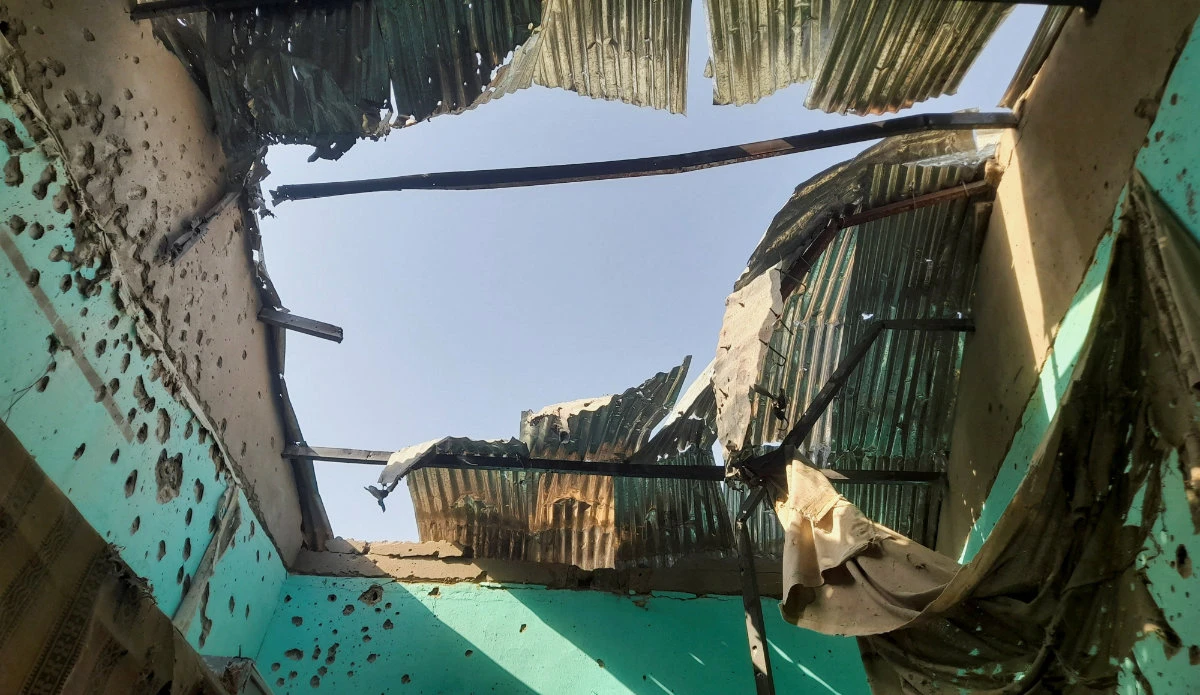
A ceiling damaged by shelling shrapnel at a displaced persons center in El Fasher, Sudan, October 7, 2025. (Reuters)
Short Url
Updated 08 October 2025
Follow

RSF strikes on hospital in Sudan’s El-Fasher kill 20 in 24 hours

RSF strikes on hospital in Sudan’s El-Fasher kill 20 in 24 hours
  • Since the war erupted in April 2023, tens of thousands have been killed, millions displaced and nearly 25 million pushed into acute hunger

PORT SUDAN: Attacks by Sudan’s paramilitary Rapid Support Forces on one of the last functioning hospitals in the besieged city of El-Fasher killed 20 people within 24 hours, medical sources said on Wednesday.

Those killed included two health workers, their colleagues at El-Fasher Hospital — one of the city’s last functioning health facilities — said.

The RSF is mounting its fiercest assault yet on El-Fasher as it seeks to seize the city from their rivals, the regular army.

Activists say El-Fasher, the last state capital in the vast western region of Darfur to elude the paramilitary’s grasp, has become “an open-air morgue” for starved civilians.

The strikes on Tuesday and Wednesday caused “significant damage to hospital buildings” and wounded a combined 24 people.

On Tuesday, a drone strike hit the maternity ward, killing eight people.

The artillery attack on Wednesday killed 12 more.

Most hospitals in El-Fasher have been repeatedly bombed and forced to shut, leaving nearly 80 percent of the city in need of medical care but unable to access it, according to the UN.

Across the country, hospitals have been routinely attacked, stormed by fighters and looted, with the doctors’ union saying 90 percent of hospitals have at some point been forced shut.

Dozens of health workers have been reported killed, including in what the UN says have been targeted attacks.

In El-Fasher, exhausted medical teams are already scrambling to treat the injured from daily attacks.

Doctors, using satellite internet connections to circumvent a communications blackout, say they have taken to using bits of mosquito netting as a substitute for gauze.

Nearly 18 months into the RSF’s siege, the city — home to 400,000 trapped civilians — has run out of nearly everything.

The animal feed families have survived on for months has grown scarce and now costs hundreds of dollars a sack.

The majority of the city’s soup kitchens have been forced shut for lack of food.

More than 1 million people have fled El-Fasher since the war began, accounting for 10 percent of all internally displaced people in the country, according to the latest figures released by the UN.
Not enough tents, food reaching Gaza as winter comes, aid agencies say

Not enough tents, food reaching Gaza as winter comes, aid agencies say
Updated 5 sec ago
Follow

Not enough tents, food reaching Gaza as winter comes, aid agencies say

Not enough tents, food reaching Gaza as winter comes, aid agencies say
CAIRO/GENEVA: Far too little aid is reaching Gaza nearly four weeks after a ceasefire, humanitarian agencies said on Tuesday, as hunger persists with winter approaching and old tents start to fray following Israel’s devastating two-year offensive.
The truce was meant to unleash a torrent of aid across the tiny, crowded enclave where famine was confirmed in August and where almost all the 2.3 million inhabitants have lost their homes to Israeli bombardment.
However, only half the needed amount of food is coming in, according to the World Food Programme, while an umbrella group of Palestinian agencies said overall aid volumes were between a quarter and a third of the expected amount.
Israel says it is fulfilling its obligations under the ceasefire agreement, which calls for an average of 600 trucks of supplies into Gaza per day. It blames Hamas fighters for any food shortages, accusing them of stealing food aid before it can be distributed, which the group denies.
Gaza’s local administration, long controlled by Hamas, says most trucks are still not reaching their destinations due to Israeli restrictions, and only about 145 per day are delivering supplies.
The United Nations, which earlier in the war published daily figures on aid trucks crossing into Gaza, is no longer giving those figures routinely.

TENTS ‘COMPLETELY WORN OUT’
“It is dire. No proper tents, or proper water, or proper food, or proper money,” said Manal Salem, 52, who lives in a tent in Khan Younis in southern Gaza that she says is “completely worn out” and she fears will not last the winter.
The ceasefire and greater flow of aid since mid-October has brought some improvements, said the United Nations humanitarian agency OCHA.
Last week OCHA said a tenth of children screened in Gaza were still acutely malnourished, down from 14 percent in September, with over 1,000 showing the most severe form of malnutrition.
Half of families in Gaza have reported increased access to food, especially in the south, as more aid and commercial supplies entered after the truce, and households were eating on average two meals a day, up from one in July, OCHA said.
There is still a sharp divide between the south and the north where conditions remain far worse, it said.

FOOD, SHELTER, FUEL NEEDED
Abeer Etefa, senior spokesperson for WFP, described the situation as a “race against time.”
“We need full access. We need everything to be moving fast,” she said. “The winter months are coming. People are still suffering from hunger, and the needs are overwhelming.”
Since the ceasefire the agency has brought in 20,000 metric tons of food assistance, roughly half the amount needed to meet people’s needs, and has opened 44 out of a targeted 145 distribution sites, she said.
The variety of food needed to ward off malnutrition is also lacking, she added.
“The majority of households that we’ve spoken to are only consuming cereals, pulses, dry food rations, which people cannot survive on for a long time. Meat, eggs, vegetables, fruits are being consumed extremely rarely,” she said.
A continuing lack of fuel, including cooking gas, is also hampering nutrition efforts, and over 60 percent of Gazans are cooking using burning waste, said OCHA, adding to health risks.
With winter approaching, Gazans need shelter. Tents are wearing thin. Buildings that survived the military onslaught are often open to the weather or unstable and dangerous.
“We’re coming into winter soon — rainwater and possible floods, as well as potential diseases because of the hundreds of tons of garbage near populated areas,” said Amjad Al-Shawa, head of the Palestinian agencies that liaise with the UN
He said only 25-30 percent of the amount of aid expected into Gaza had entered so far.
“The living conditions are unimaginable,” said Shaina Low, spokesperson for the Norwegian Refugee Council, which leads a group of agencies working on a lack of shelter in Gaza.
The NRC estimates that 1.5 million people need shelter in Gaza but large volumes of tents, tarpaulins and related aid is still waiting to come in, awaiting Israeli approvals, Low said.