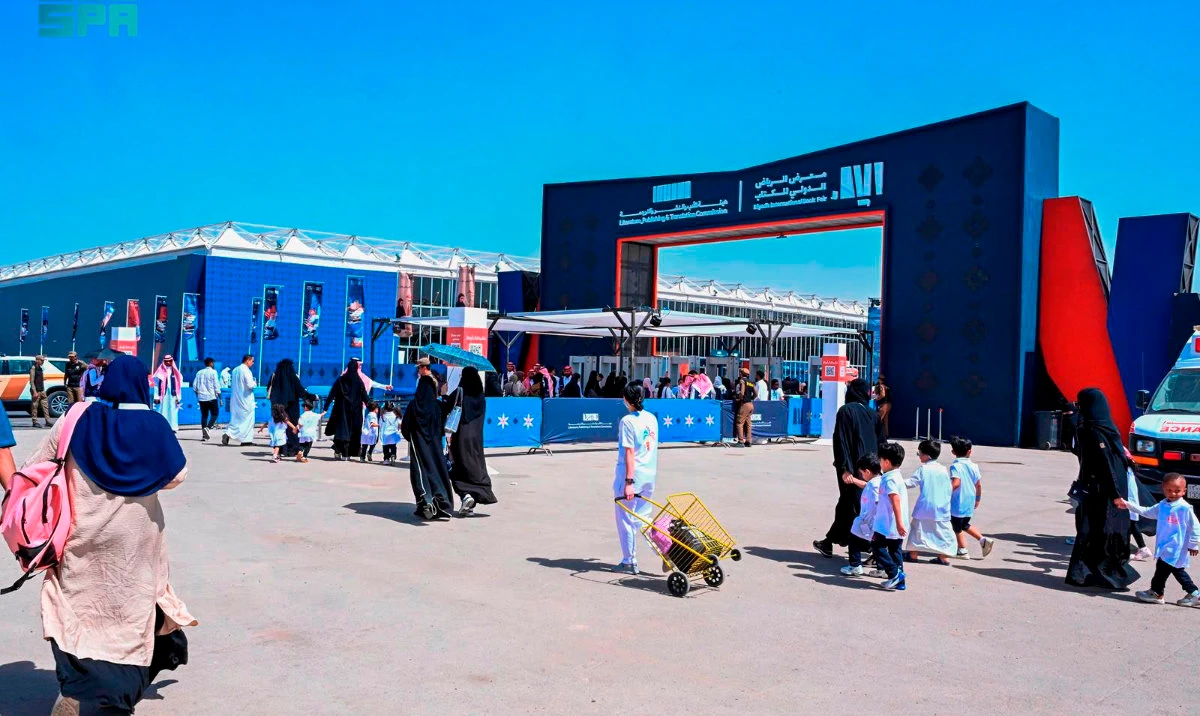
Arabic Language education held at Riyadh Book Fair

Arabic Language education held at Riyadh Book Fair
Image: SPA
Short Url
Updated 08 October 2025
Follow

Arabic Language education held at Riyadh Book Fair

Arabic Language education held at Riyadh Book Fair
  • This approach emphasizes enabling learners to use the language effectively in real-life situations

RIYADH: The Riyadh International Book Fair 2025, organized by the Literature, Publishing and Translation Commission, held a workshop on Arabic language teaching techniques.

The session was led by professor of Applied Linguistics at King Saud University, Dr. Bandar Al-Ghmaiz, and attended by specialists and enthusiasts of Arabic language instructors for non-native speakers, both from within the Kingdom and abroad.

Al-Ghmaiz outlined several compelling reasons behind the growing global interest in learning Arabic, such as the desire to understand the Holy Qur’an, engage with Arab and Islamic cultural heritage, and the language’s increasing relevance in economic, political and cultural spheres.

He addressed the use of modern technologies in teaching Arabic.

This approach emphasizes enabling learners to use the language effectively in real-life situations.

He discussed the importance of cultural immersion, which integrates language learning with a deeper understanding of the culture and context of its native speakers.

Al-Ghmaiz also highlighted Saudi Arabia’s pioneering role in Arabic language education through specialized university institutes and the King Salman Global Academy for Arabic Language, which serves as a model for developing high-quality content and curricula, as well as launching impactful initiatives to promote the Arabic language globally.

Saudi Arabia protects rare marine ecosystems with 2 new reserves

Saudi Arabia protects rare marine ecosystems with 2 new reserves
Updated 12 November 2025
Follow

Saudi Arabia protects rare marine ecosystems with 2 new reserves

Saudi Arabia protects rare marine ecosystems with 2 new reserves
  • Aim to protect 30% of Saudi by 2030
  • Unique biodiversity and tourism value

RIYADH: Saudi Arabia’s Council of Ministers has included the Ras Hatiba and Blue Holes marine areas on the Kingdom’s national list of reserves, the Saudi Press Agency reported recently.

The move reflects Saudi Arabia’s commitment to protecting biodiversity and advancing sustainable development goals under Vision 2030, the SPA reported.

Mohammed Qurban, CEO of the National Center for Wildlife, said the decision followed extensive biological, natural, and social studies confirming the two reserves’ unique biodiversity, and economic and tourism value.

Located northwest of Jeddah, Ras Hatiba covers 5,715 sq. km and features coral reefs, mangroves, and seagrass beds — key habitats for green turtles, dugongs, whales, dolphins, and sharks.

The Blue Holes areas are rich in marine life, including turtles, fish, mammals, and invertebrates. Their discovery was first announced in 2022 after 20 such formations were found along the southern Red Sea coast.

With the addition of these two protected areas, the Kingdom’s nature reserves now cover 16.1 percent of its territory, up from 6.5 percent, and moving closer to the national goal of 30 percent by 2030.