Syrian FM vows to correct past mistakes in first high-profile visit to Lebanon since fall of Assad

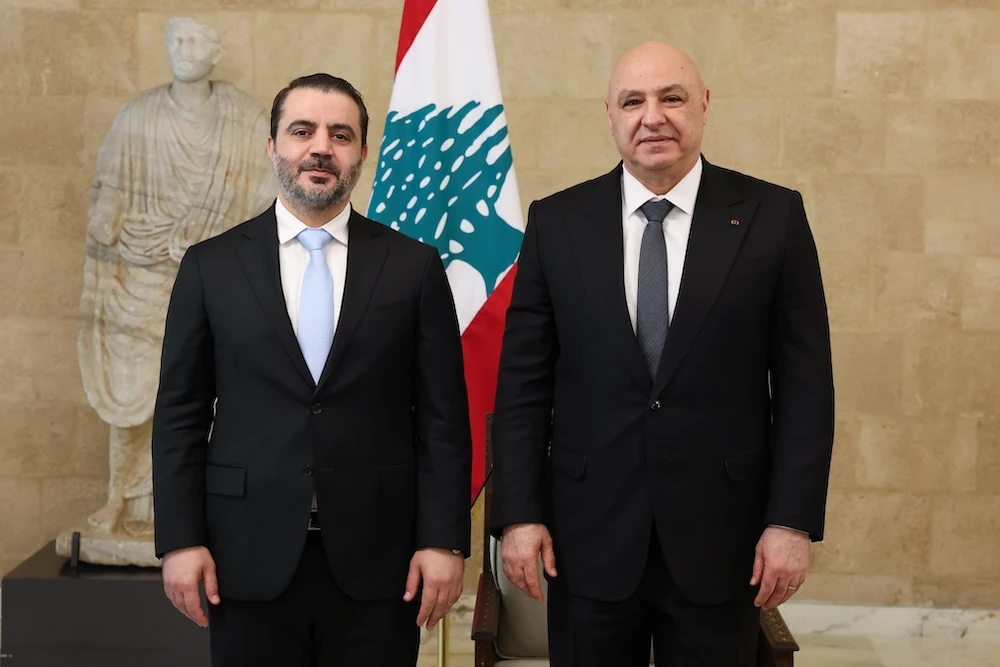
Update Lebanese President Joseph Aoun on Friday told Syrian Foreign Minister Asaad Hassan Al-Shaibani that Lebanon was awaiting the appointment of a new Syrian ambassador to Beirut to facilitate bilateral relations through official diplomatic channels. (Supplied)
Lebanese President Joseph Aoun on Friday told Syrian Foreign Minister Asaad Hassan Al-Shaibani that Lebanon was awaiting the appointment of a new Syrian ambassador to Beirut to facilitate bilateral relations through official diplomatic channels. (Supplied)
Short Url
Updated 10 October 2025
Follow

Syrian FM vows to correct past mistakes in first high-profile visit to Lebanon since fall of Assad

Syrian FM vows to correct past mistakes in first high-profile visit to Lebanon since fall of Assad
  • Al-Shaibani tells Lebanese officials that Damascus wants to ‘turn page on the past’
  • Suspension of the Lebanese-Syrian Higher Council, adoption of diplomatic channels were discussed at meeting
  • Aoun: “We look forward to mutual respect and non-interference in internal affairs”

BEIRUT: Lebanese President Joseph Aoun on Friday told Syrian Foreign Minister Asaad Hassan Al-Shaibani that Lebanon was awaiting the appointment of a new Syrian ambassador to Beirut to facilitate bilateral relations through official diplomatic channels.

This follows Syria’s decision to suspend the Lebanese-Syrian Higher Council, shifting all communications to embassies and formal state contacts.

Al-Shaibani emphasized to Aoun the need to deepen and correct the historical relationship between the two countries, particularly on issues that have tarnished Syria’s image.

President Aoun told Al-Shaibani that deepening and developing bilateral relations required the formation of joint committees to address all issues, including a comprehensive review of existing agreements.

“Lebanon is looking forward to strengthening relations between the two brotherly countries on the basis of mutual respect and non-interference in internal affairs, and activating cooperation to achieve stability in both Lebanon and Syria,” the president said.

Al-Shaibani’s visit, the first by a senior Syrian official to Lebanon since the fall of the Assad regime, marks a turning point as both sides seek a new framework for relations after decades of tension and shifting regional dynamics.

The two nations have begun addressing pressing concerns through committee meetings, including border demarcation, the return of Syrian refugees and the status of detainees.

In 1991, Lebanon and Syria signed the Treaty of Brotherhood, Cooperation and Coordination, establishing the highest official framework for bilateral relations after the Lebanese Civil War.

The treaty formalized Syria’s military presence in Lebanon and set up the Lebanese-Syrian Higher Council, signed by Lebanese President Elias Hrawi and Syrian President Hafez Assad.

Throughout the 1990s and early 2000s, the council served as the primary channel for sensitive coordination between Beirut and Damascus, overseeing security, economic affairs and the implementation of bilateral agreements.

Its decisions, binding on both states, were enforced within the framework of the constitutional systems of Lebanon and Syria.

“There is much work to be done, but when intentions are sincere, the interests of our two brotherly countries will take precedence over all else,” President Aoun told Al-Shaibani, according to the presidential palace media office.

“We have no choice but to reach an agreement that respects these interests,” he said.

Acknowledging improvements along the Lebanese-Syrian border, President Aoun underscored the urgency of resolving key outstanding issues previously discussed with Syrian President Ahmad Al-Sharaa at summits in Cairo and Doha.

These include land and maritime border demarcation, agreements on the gas pipeline and the fate of detainees — all to be addressed with a shared focus on mutual interests.

The Syrian foreign minister headed a large delegation, which included Justice Minister Mazhar Al-Wais, Head of the Intelligence Service Hussein Al-Salama, and Assistant Minister of Interior for Security Affairs Major General Abdul Qader Tahan.

Al-Shaibani called for expanded cooperation in economic and trade sectors, highlighting new opportunities for Lebanon after the lifting of some sanctions on Syria.

“We look forward to turning the page on the past because we want to build the future. Syria is ready to discuss any pending issues, whether economic or security-related. Our people have suffered from wars and tragedies, so let us strive for peace,” he said.

He also delivered an official invitation from President Ahmad Al-Sharaa for Aoun to visit Syria.

The Syrian delegation held a series of meetings in Beirut, including with Lebanese Prime Minister Nawaf Salam, as well as direct sessions between Maj. Gen. Hassan Choukeir, head of Lebanese General Security, and Maj. Gen. Abdel Qader Tahan, Syria’s assistant minister of interior for security affairs.
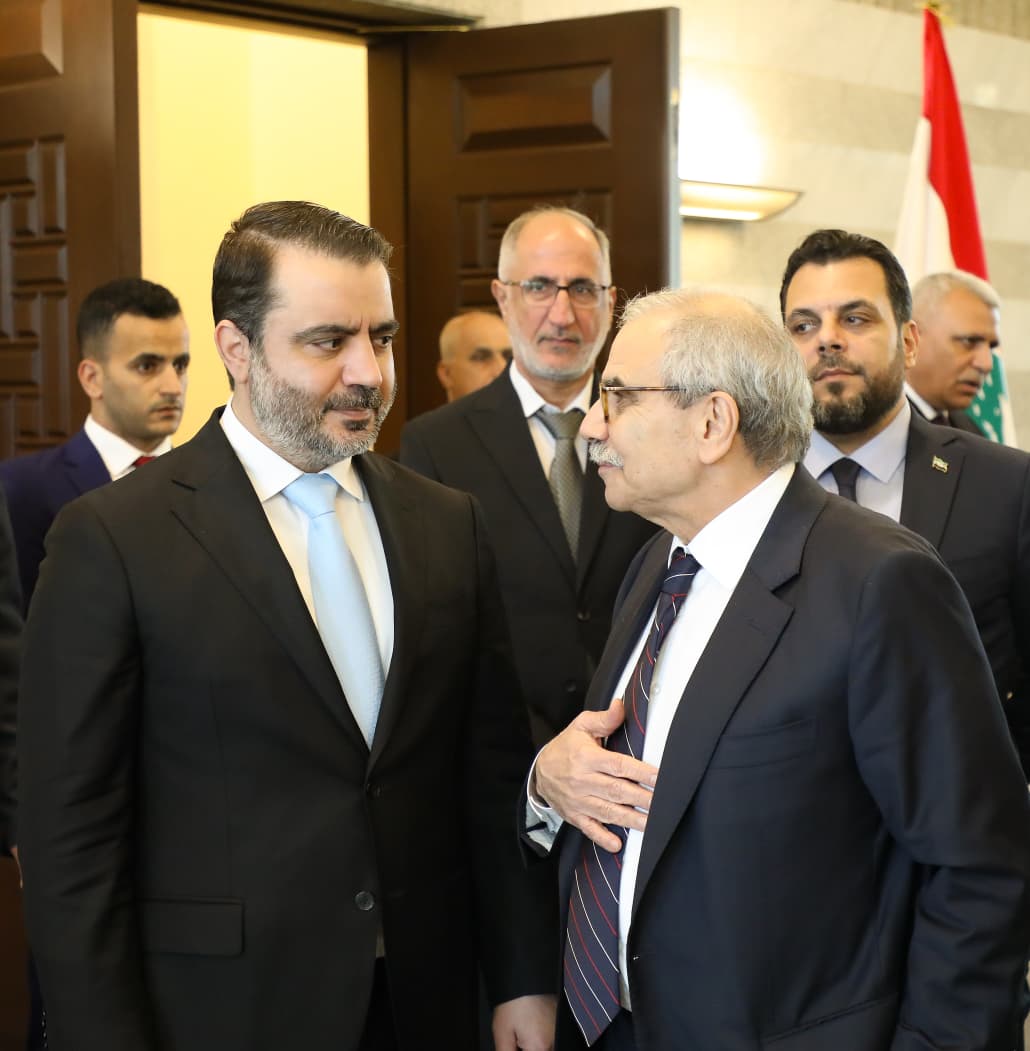


Syrian delegation held a series of meetings in Beirut, including with Lebanese Prime Minister Nawaf Salam (right). (Supplied)

Army intelligence chiefs Brig. Gen. Tony Kahwaji of Lebanon and Hussein Al-Salama of Syria also met to discuss coordination.

The prime minister’s media office noted that Salam’s talks with Al-Shaibani reflected a “mutual affirmation of the desire to open a new chapter based on mutual respect, good neighborliness and the preservation of the sovereignty and national independence of both countries.”

The topics addressed included border management, anti-smuggling efforts, safe and dignified repatriation of Syrian refugees — with UN and international coordination — as well as the cases of Syrian detainees in Lebanon and Lebanese missing persons in Syria. Both sides agreed to review bilateral agreements in light of recent developments.

“Lebanon is committed to establishing sound and balanced relations with Syrian, grounded in cooperation between two independent states united by geography and history,” Salam said.

“Openness and sincere dialogue constitute the only path to achieving stability in both counties and the region.”

Deputy Prime Minister Tarek Mitri, present at the meeting, emphasized that the process would tackle every issue “in a spirit of goodwill and urgency,” eschewing “red lines” and bartering.

Al-Shaibani reported progress on expediting the case of Syrian detainees in Roumieh prison and highlighted new gains in joint security and intelligence coordination.

Lebanese Foreign Minister Youssef Rajji, speaking at a joint press conference with Al-Shaibani, welcomed Syria’s new approach. “What distinguishes this stage is the new Syrian administration’s respect for Lebanon’s sovereignty and independence and its non-interference in its internal affairs,” Rajji said, which he called “a very important and positive development.”
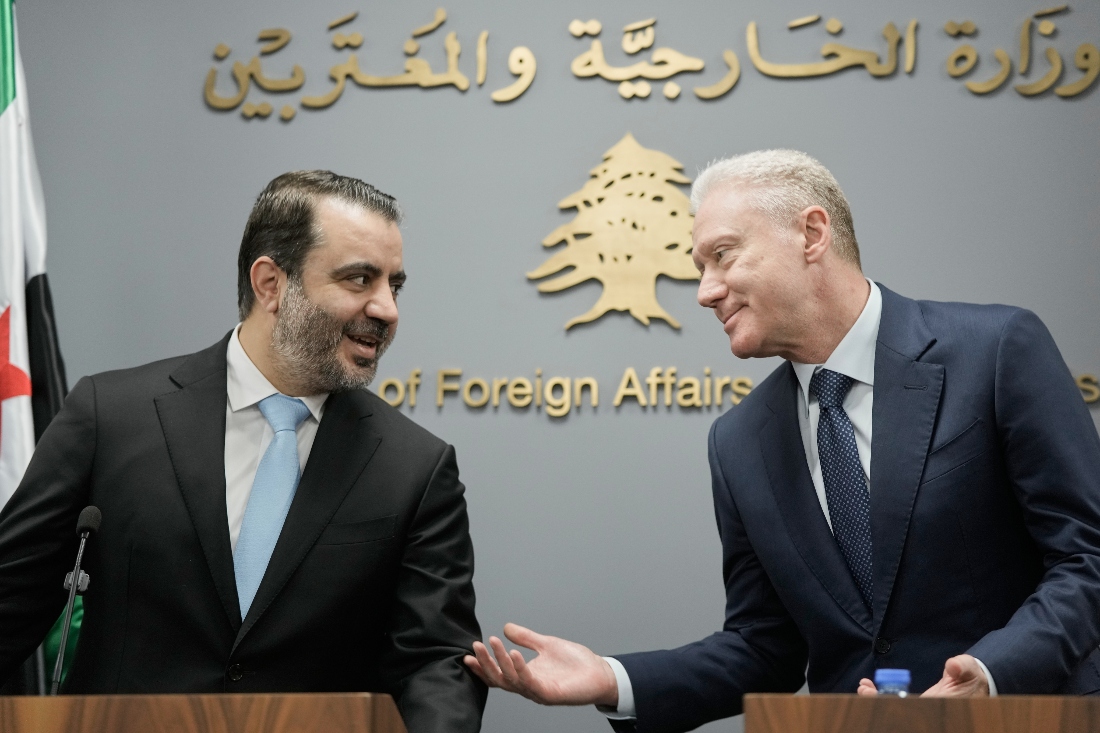


Syrian Foreign Minister Asaad Al-Shaibani speaks with Lebanese Foreign Minister Youssef Rajji before a briefing for journalists following their meeting in Beirut, Lebanon. (AP)

Al-Shaibani expressed gratitude for Lebanon hosting Syrian refugees, saying he expected this issue “to be resolved gradually.”

“There are plans currently under discussions, with international support, to ensure a dignified and sustainable return and to address the postwar situation in Syria through infrastructure development, reconstruction and other measures.”

He added: “We in Syria have the utmost respect and appreciation for Lebanon and seek to overcome the mistakes of the past, from which we, too, were also victims as a result of the mismanagement of relations between the two countries.”

One of the most pressing unresolved issues between Lebanon and Syria is Damascus’ demand for the extradition of Syrian detainees held in Lebanon.

These detainees fall into three groups — those convicted of crimes, including security-related offenses committed on Lebanese soil or combat against the Lebanese army; those convicted of misdemeanors; and those detained without trial.

Another contentious point is the extradition of former regime officers who fled to Lebanon following the Assad regime’s collapse.

In return, Lebanon insists that Syria address the fate of Lebanese missing persons in Syria and provide files or information related to individuals accused of crimes in Lebanon, including assassinations of political figures.
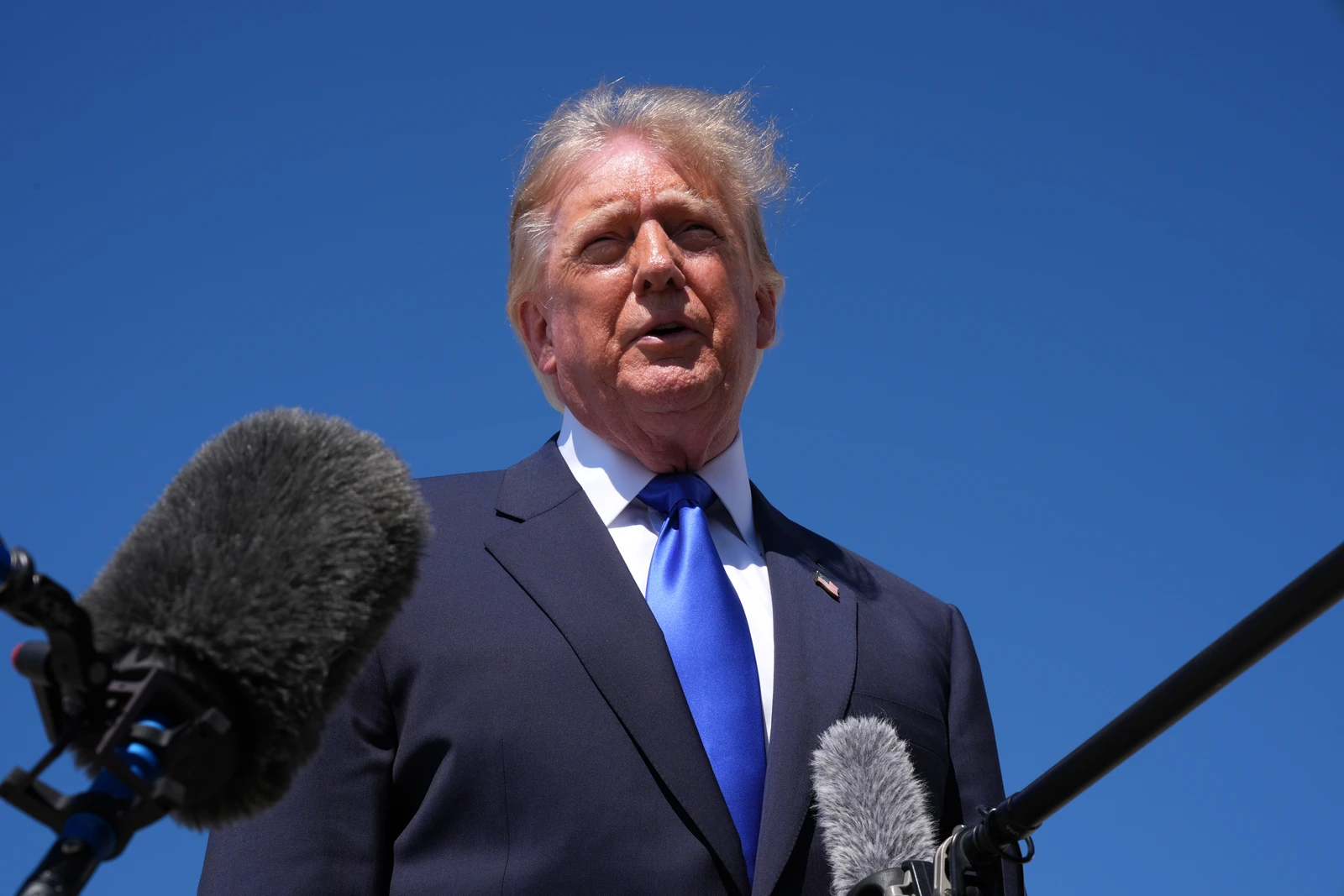
Partition of Gaza a looming risk as Trump’s plan falters

Partition of Gaza a looming risk as Trump’s plan falters
Updated 3 sec ago
Follow

Partition of Gaza a looming risk as Trump’s plan falters

Partition of Gaza a looming risk as Trump’s plan falters
  • Without progress on Trump plan, yellow line could be new de facto border, major reconstruction limited to Israeli side
  • Hamas disarmament, Israel opposition to Palestinian Authority involvement among key sticking points
MANAMA: A de facto partition of Gaza between an area controlled by Israel and another ruled by Hamas is increasingly likely, multiple sources said, with efforts to advance US President Donald Trump’s plan to end the war beyond a ceasefire faltering.
Six European officials with direct knowledge of the efforts to implement the next phase of the plan told Reuters it was effectively stalled and that reconstruction now appeared likely to be limited to the Israel- controlled area.
That could lead to years of separation, they warned.
Under the first stage of the plan, which took effect on October 10, the Israeli military currently controls 53 percent of the Mediterranean territory, including much of its farmland, along with Rafah in the south, parts of Gaza City and other urban areas.
Nearly all Gaza’s 2 million people are crammed into tent camps and the rubble of shattered cities across the rest of Gaza, which is under Hamas control.
Reuters drone footage shot in November shows cataclysmic destruction in the northeast of Gaza City after Israel’s final assault before the ceasefire, following months of prior bombardments. The area is now split between Israeli and Hamas control.
The next stage of the plan foresees Israel withdrawing further from the so-called yellow line agreed under Trump’s plan, alongside the establishment of a transitional authority to govern Gaza, the deployment of a multinational security force meant to take over from the Israeli military, the disarmament of Hamas and the start of reconstruction.
But the plan provides no timelines or mechanisms for implementation. Meanwhile, Hamas refuses to disarm, Israel rejects any involvement by the Western-backed Palestinian Authority, and uncertainty persists over the multinational force.
“We’re still working out ideas,” Jordanian foreign minister Ayman Safadi said at a Manama security conference this month. “Everybody wants this conflict over, all of us want the same endgame here. Question is, how do we make it work?” Without a major push by the United States to break the impasse, the yellow line looks set to become the de facto border indefinitely dividing Gaza, according to 18 sources, among them the six European officials and a former US official familiar with the talks. The United States has drafted a UN Security Council resolution that would grant the multinational force and a transitional governing body a two-year mandate. But ten diplomats said governments remain hesitant to commit troops. European and Arab nations, in particular, were unlikely to participate if responsibilities extended beyond peacekeeping, and meant direct confrontation with Hamas or other Palestinian groups, they said.
US Vice President JD Vance and Trump’s influential son-in-law Jared Kushner both said last month reconstruction funds could quickly begin to flow to the Israel-controlled area even without moving to the next stage of the plan, with the idea of creating model zones for some Gazans to live in.
Such US proposals suggest the fragmented reality on the ground risks becoming “locked into something much more longer term,” said Michael Wahid Hanna, US program director of think-tank International Crisis Group.
A State Department spokesperson said that while “tremendous progress” had been made in advancing Trump’s plan, there was more work to do, without responding to questions about whether reconstruction would be limited to the Israeli-controlled area.
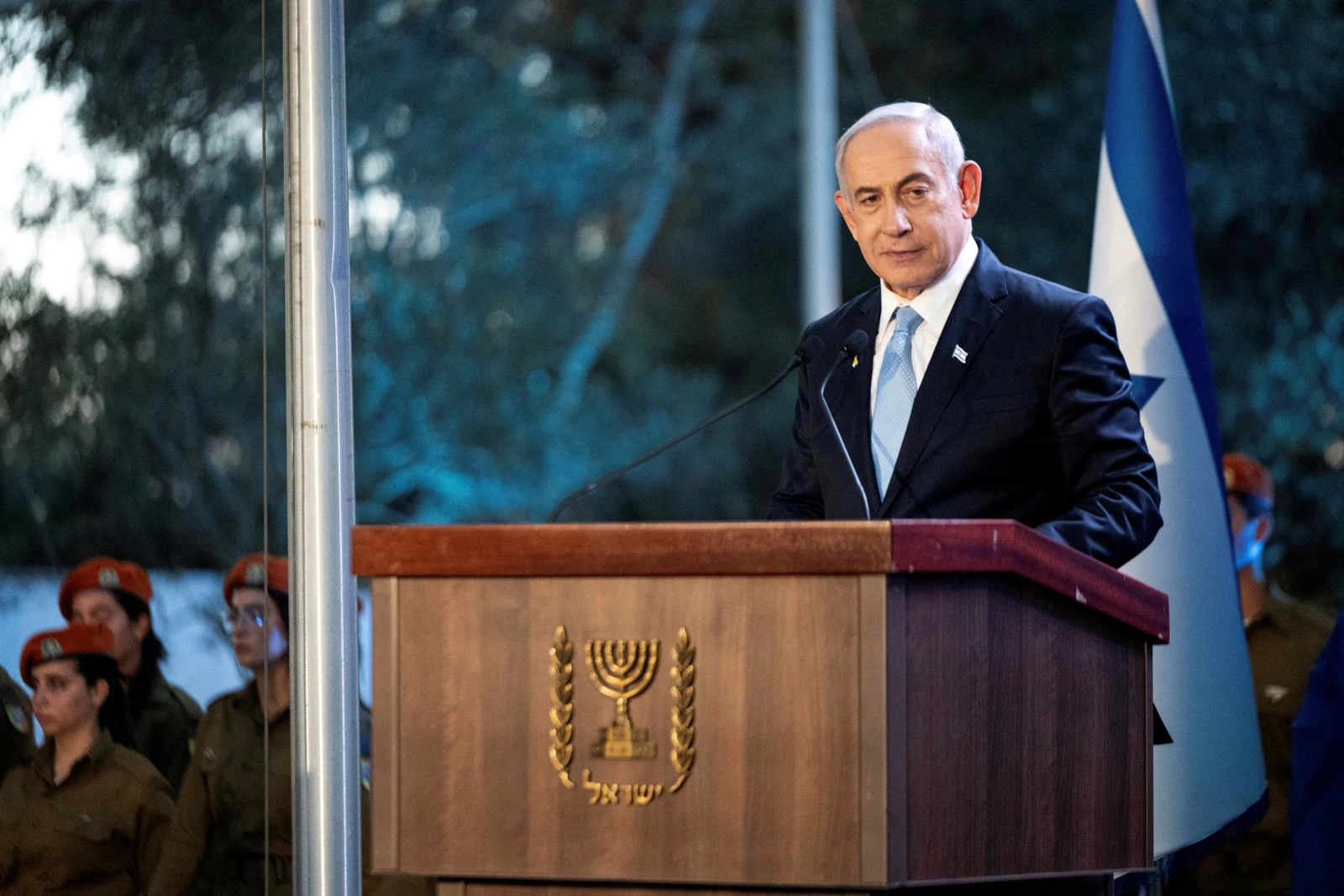
Prime Minister Benjamin Netanyahu has said Israel has no intention of re-occupying or governing Gaza, even though far-right ministers in his cabinet have urged the revival of settlements dismantled in 2005.
The military, too, has resisted such demands for a permanent seizure of the territory or direct oversight of Gaza’s civilians. Netanyahu has instead pledged to maintain a buffer zone within Gaza, along the border, to block any repeat of Hamas’ October 2023 attack that ignited the war.
YELLOW BLOCKS MARK THE LINE
Israeli forces have placed large yellow cement blocks to demarcate the withdrawal line and is building infrastructure on the side of Gaza its troops control. In the Shejaiya neighborhood of Gaza City, the military took journalists last week to an outpost fortified since the ceasefire.
There, satellite images show, earth and building rubble have been bulldozed into steep mounds, forming a protected vantage point for soldiers. Fresh asphalt has been laid.
Israel’s military spokesman Nadav Shoshani said the soldiers were there to prevent militants crossing into the Israel-controlled zone, saying Israel would move further from the line once Hamas met conditions including disarming and once there was an international security force in place.
As soon as “Hamas holds their part of the agreement we are ready to move forward,” Shoshani said. An Israeli government official, responding to written questions for this article, said Israel adhered to the agreement and accused Hamas of stalling.
Hamas has released the last 20 living hostages held in Gaza and the remains of 24 deceased hostages as part of the first stage of the plan. The remains of 4 other hostages are still in Gaza.
Nearby, in Palestinian areas of the city, Hamas has reasserted itself in recent weeks, killing rivals. It has provided police for security and civil workers who guard food stalls and clear paths through the broken landscape using battered excavators, Reuters video shows.
“We really need to fill the vacuum within the Gaza Strip for security,” German Foreign Minister Johann Wadephul said at the Manama conference, urging speed and warning a Hamas resurgence could trigger renewed Israeli military operations in Gaza.
Hazem Qassem, a Hamas spokesperson in Gaza City, said that the group was ready to hand over power to a Palestinian technocrat entity so that reconstruction could begin.
“All the regions of Gaza deserve reconstruction equally,” he said.
One idea under discussion, according to two European officials and a Western diplomat, was whether Hamas could decommission weapons under international supervision rather than turn them over to Israel or another foreign force.
European and Arab states want the West Bank-based Palestinian Authority and its police to return to Gaza alongside the multinational force to take over from Hamas. Thousands of its officers trained in Egypt and Jordan are ready for deployment, but Israel opposes any involvement by the Palestinian Authority.
REBUILDING UNDER ISRAELI OCCUPATION
The six European officials said that absent a major shift in Hamas’ or Israel’s positions, or US pressure on Israel to accept a role for the Palestinian Authority and path to statehood, they did not see Trump’s plan advancing beyond the ceasefire.
“Gaza must not get stuck in a no man’s land between peace and war,” Britain’s Foreign Secretary Yvette Cooper said at the Manama conference.
Gaza City resident Salah Abu Amr, 62, said that if no progress was made on disarming Hamas and redevelopment began across the yellow line, people might think of moving there. But the realities of a divided Gaza were hard to contemplate, he said.
“Are we all going to be able to move into that area? Or Israel will have a veto over the entry of some of us,” he said. “Are they also going to divide the families between good people, bad people?” It remains unclear who would finance rebuilding parts of Gaza under Israeli occupation, with Gulf nations loath to step in without involvement of the Palestinian Authority and a path to statehood, resisted by Israel. Reconstruction costs are estimated at $70 billion.
Any de facto territorial break up of Gaza would further set back Palestinian aspirations for an independent nation including the West Bank and worsen the humanitarian catastrophe for a people without adequate shelter and almost entirely dependent on aid for sustenance.
“We cannot have a fragmentation of Gaza,” Jordan’s Safadi said. “Gaza is one, and Gaza is part of the occupied Palestinian territory.”
Palestinian Foreign Minister Varsen Aghabekian Shahin also rejected territorial division of Gaza, and said the Palestinian Authority was ready to assume “full national responsibility.”
“There can be no genuine reconstruction or lasting stability without full Palestinian sovereignty over the territory,” she said in a statement in response to Reuters questions.