Madagascar president warns of attempted coup after soldiers join protests

Madagascar president warns of attempted coup after soldiers join protests
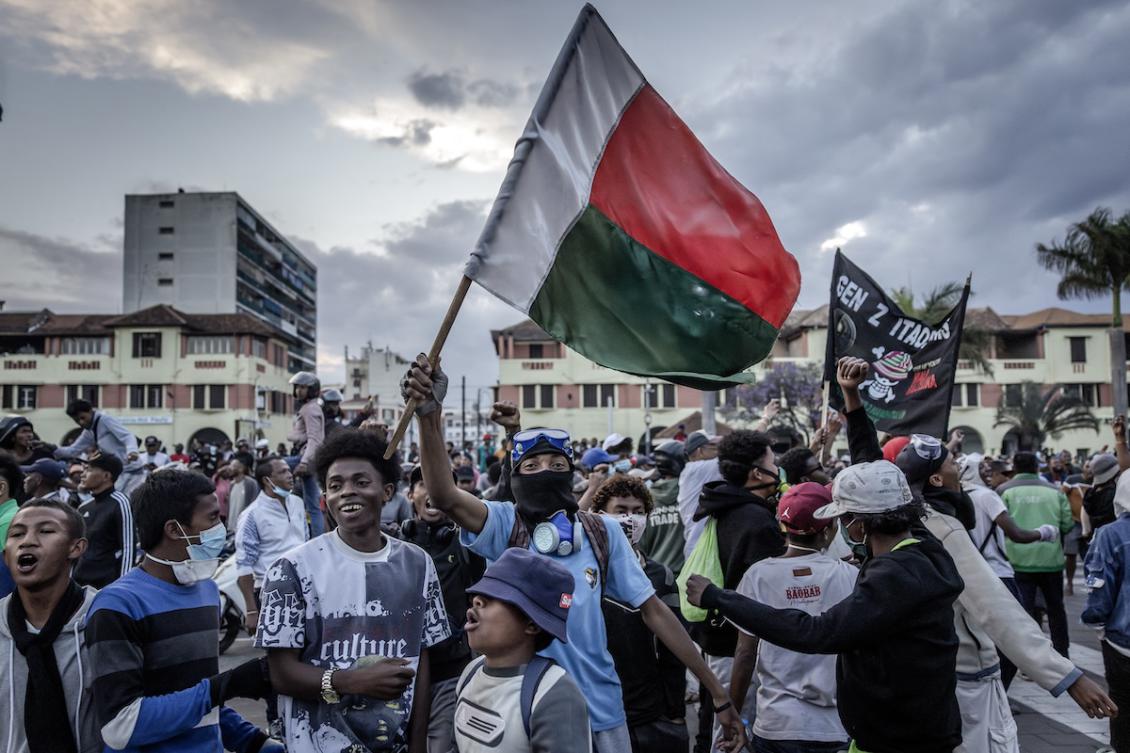
Protesters celebrate at Antananarivo City Hall after listening the address of members of a section of the Malagasy army on October 11, 2025. (FILE/AFP)
Short Url
Updated 12 October 2025
Follow

Madagascar president warns of attempted coup after soldiers join protests

Madagascar president warns of attempted coup after soldiers join protests
  • Troops from the elite CAPSAT unit that helped President Andry Rajoelina seize power in a 2009 coup urged fellow soldiers to disobey orders and back the youth-led protests

ANTANANARIVO: Madagascar’s presidency said on Sunday that “an attempted illegal and forcible seizure of power” was underway in the African nation, without providing details, a day after some soldiers joined a protest movement that had begun last month.
Troops from the elite CAPSAT unit that helped President Andry Rajoelina seize power in a 2009 coup urged fellow soldiers to disobey orders and back the youth-led protests, which began on September 25 and pose the most serious challenge to Rajoelina’s rule since his reelection in 2023.
A Reuters witness saw three people injured after shots were fired along a road to the CAPSAT barracks on Sunday. Other witnesses said there was no sign of ongoing clashes.
The protests, inspired by Gen Z-led movements in Kenya and Nepal, began over water and electricity shortages but have since escalated, with demonstrators calling for Rajoelina to step down, apologize for violence against protesters, and dissolve the Senate and electoral commission.
At least 22 people have been killed and 100 injured in the unrest since September, according to the United Nations. The Malagasy government has disputed the figures, with Rajoelina saying this month that 12 people were killed in the protests.
In a statement on the presidency’s official social media account, Rajoelina’s office said he firmly condemned attempts to destabilize the country and urged all forces “to stand together in defense of constitutional order and national sovereignty.” It encouraged dialogue to resolve the crisis.
Videos on social media on Saturday showed CAPSAT soldiers urging fellow troops to “support the people.”
A video broadcast by local media showed that dozens of soldiers left the barracks later on Saturday to escort thousands of protesters into the May 13 Square in Antananarivo, the scene of many political uprisings, which had been heavily guarded and off limits during the unrest.
Since then, the prime minister and army’s chief of staff have urged citizens to take part in dialogue and stay calm.
Indian police carry out sweeping raids in disputed Kashmir

Indian police carry out sweeping raids in disputed Kashmir
Updated 4 sec ago
Follow

Indian police carry out sweeping raids in disputed Kashmir

Indian police carry out sweeping raids in disputed Kashmir
  • There has been no confirmation that the searches this week are connected to Monday’s explosion which killed at least 12 people in New Delhi
  • The blast was the most significant security incident since April 22 attack in Pahalgam which killed 26 people, triggered clashes with Pakistan

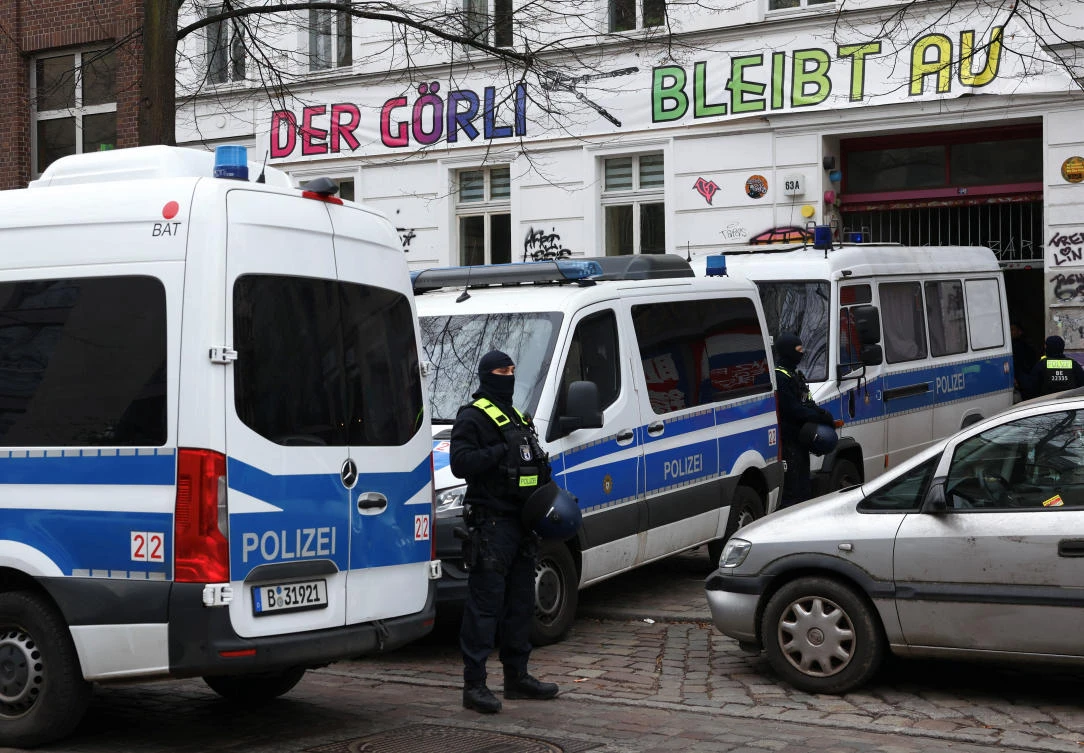
New Delhi: Indian police have carried out sweeping raids targeting a banned political party in Indian-administered Kashmir, days after the deadliest blast in the Indian capital for more than a decade.

There has been no confirmation that the searches this week are connected to Monday’s explosion — which killed at least 12 people near the historic Red Fort in the capital’s Old Delhi quarter.

But the raids represent a renewed effort by police to tighten security after the explosion, which the government called “a heinous terror incident” and blamed on “anti-national forces.”

Many of the raids have taken place since Wednesday, according to district police statements from across the Indian-administered part of the Himalayan territory.

Kashmir has been divided between India and Pakistan since their independence from British rule in 1947, and both claim the Himalayan territory in full. Tensions remain high between New Delhi and Islamabad.

Police, including in Kashmir’s Awantipora, Bandipora, Ganderbal, Shopian and Sopore districts, issued statements about the raids, which they said targeted the Jamaat-e-Islami (JeI) party.

Indian Prime Minister Narendra Modi’s Hindu-nationalist government banned the Kashmir branch of Jamaat-e-Islami in 2019 as an “unlawful association.”

'Large-scale operations'

Officers carried out “extensive raids at multiple locations” to “dismantle the terror ecosystem and its support structures,” the police in Awantipora said in a statement.

The department in Bandipora said they had seized “incriminating material,” while the Sopore police said it had carried out “large-scale operations against Jamaat-e-Islami-linked networks,” adding that more than 30 locations were searched.

Officers also raided Al-Falah University in Faridabad, on the southern outskirts of the capital, while security forces on Friday demolished a house in Kashmir’s Pulwama district.

Police have not commented on the demolition, although law enforcement agencies have carried out such destruction against those accused of launching attacks in the past.

India’s anti-terrorism National Investigation Agency is leading the probe into Monday’s blast, and the government has vowed to bring the “perpetrators, their collaborators, and their sponsors” to justice.

But officials, so far, have given little further information on who that might be — and whether it was a homegrown group or had links from abroad.

Indian media have widely connected the November 10 blast with a string of arrests just hours before, when they seized explosive materials and assault rifles.

Police said those arrested were linked with Jaish-e-Mohammed (JeM), an Al-Qaeda linked group, and Ansar Ghazwat-ul-Hind, a Kashmir offshoot linked to JeM.

Concerning those arrests, India’s Jammu and Kashmir police said on Monday — shortly before the explosion — that their investigations had “revealed a white collar terror ecosystem, involving radicalized professionals and students in contact with

foreign handlers, operating from Pakistan and other countries.”

The blast in Delhi was the most significant security incident since April 22, when 26 mainly Hindu civilians were killed at the tourist site of Pahalgam in Indian-administered Kashmir, triggering clashes with Pakistan.