- “A nuclear facility and surrounding areas should never be struck,” Rafael Grossi said
- Authorities in Iran say over 1,900 people have been killed
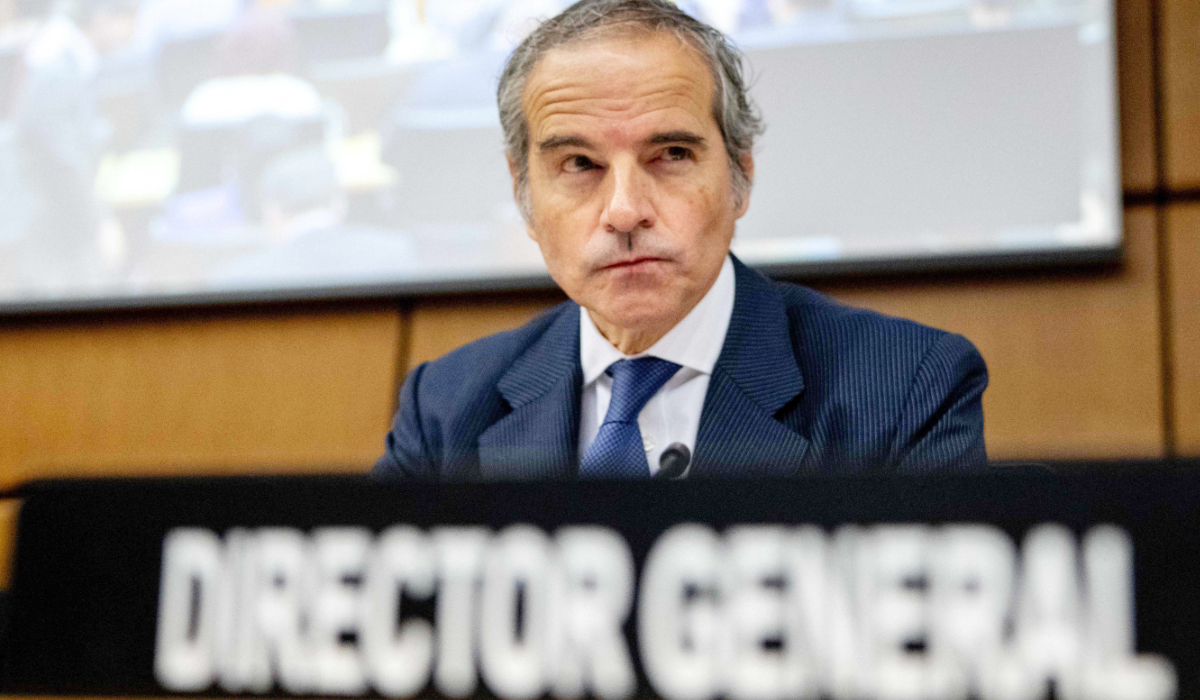
VIENNA/TEHRAN: The chief of the UN nuclear watchdog on Monday warned attacks near Iran’s Bushehr atomic power plant “pose a very real danger to nuclear safety and must stop.”
The facility, located in the south of the country and equipped with a 1,000 MW reactor, has been targeted four times since the US-Israeli war on Iran began.
The latest strike was reported by Iranian state media on Saturday.
Strikes near the operating plant “could cause a severe radiological accident with harmful consequences for people and the environment in Iran and beyond,” said Rafael Grossi, director of the International Atomic Energy Agency, on X.
The agency analyzed satellite imagery of the site, confirming the impact of the latest strike, which did not damage the power plant.
Grossi added that one strike hit just 75 meters from the plant perimeter.
“A nuclear facility and surrounding areas should never be struck,” he said.
Even as the war generates global turmoil — and fear and anxiety within Iran — daily life goes on in Iran.
In city after city on the road to Tehran, reporters from The Associated Press saw normal traffic, businesses open and people walking the streets.
A restaurant served Iranian delicacies like grilled lamb and rice, barley soup and saffron drinks as R.E.M.’s “Losing my religion” played on loudspeakers.
Many women could be seen going about their day without wearing the theocracy’s mandatory head covering, the enforcement of which has eased in recent years. The team passed through two checkpoints on the approach to Tehran without being stopped.
The city was eerily quiet after midnight. There had been heavy airstrikes on the mountains overlooking the capital the previous night.
Tehran is on the front lines, having seen wave after wave of strikes that the U.S. and Israel say are aimed at the military and internal security forces.
Authorities in Iran say over 1,900 people have been killed. It’s unclear how many were soldiers or civilians.
The AP reporters saw several government buildings and police stations that had been destroyed.
They passed a number of checkpoints operated by plainclothes Basij, an internal security force, and uniformed members of the paramilitary Revolutionary Guard.
They were stopped once and asked to open the car and show press cards before being waved onward.
Fuel is heavily subsidized, such that 4 liters of gasoline costs around 15 US cents.
But people are only allowed to purchase around 20 liters at a time. There were no signs of gas lines.
Back in Zanjan, Mohamoud Maasoumi, a retired soldier, said the conflict with the US — “the world’s arrogance” — goes back to a 1953 CIA-backed coup that is seared into the minds of many Iranians.
He expressed hope that Iran’s leaders would defend the country.
“The enemy sees that we are not ever succumbing,” he said.