- Sustained missile, drone strikes have forced operations at strategic Yemeni port to halt, causing more than $16m in initial losses
- Military experts say control of Mokha would give Houthis greater access to Bab Al-Mandab, international shipping lanes
AL-MUKALLA: A barrage of missiles and drones from Iran-backed Houthi has again struck Yemen’s government-controlled city of Mokha, intensifying an assault on the strategically located Red Sea port that has already forced it to suspend operations.
Residents and the National Resistance Forces, which control Mokha and neighboring areas along Yemen’s western coast, said large explosions rocked the city on Sunday as six ballistic missiles and drones struck several locations, including the seaport. Air defenses intercepted two drones.
The latest attack came a day after Abdul Malik Al-Shara’bi, director of Mokha seaport, announced the complete suspension of operations following repeated Houthi bombardment, leaving about 1,300 workers without their livelihoods.
Speaking at a press conference in Mokha, Al-Shara’bi said the attacks had killed four security personnel and three port workers.
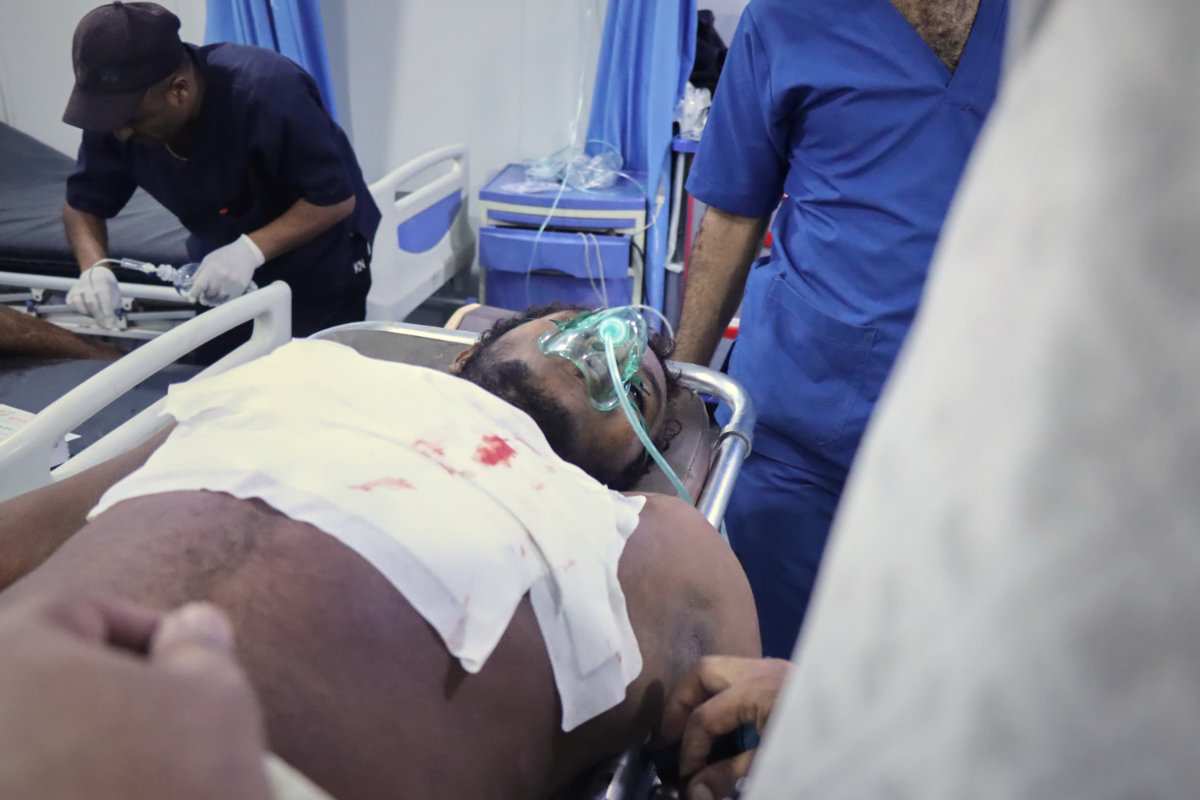
He said the Houthis had fired 25 missiles at the port, damaging six wooden vessels and a drilling rig being used as part of an expansion project, as well as causing severe damage to the dock and other facilities.
Initial losses were estimated at more than $16 million.
The scale and frequency of the attacks have raised concerns that Mokha is becoming a central target in the latest phase of Yemen’s conflict — not only because of its importance to forces opposed to the Houthis, but because of its proximity to one of the world’s most important maritime corridors.
The previous Sunday, the Houthis launched more than 40 drones and missiles at Mokha and its port on the first day of the latest escalation, killing seven people and damaging port facilities.
Further missile and drone attacks followed during the week, while a commercial vessel was also sunk.
The escalation has not been limited to Yemen’s Red Sea coast.
Several civilians were wounded in the central city of Marib on Saturday night after another wave of Houthi missile and drone attacks on the government-controlled city.
Yemen’s official SABA News Agency said six ballistic missiles and four drones struck residential areas, damaging homes, vehicles and businesses.
Marib is home to more than 2 million internally displaced Yemenis who fled Houthi repression or fighting in their home provinces, making it one of the country’s largest concentrations of displaced people, according to international aid organizations.
Government forces have responded with strikes of their own.
Yemeni army spokesperson Majed Al-Nuzaily said on Sunday that government forces had conducted 181 military operations involving drones, artillery and missile launchers against Houthi positions during the previous 24 hours.
In a statement carried by official media, Al-Nuzaily said dozens of Houthi fighters had been killed and military equipment, vehicles and ammunition depots destroyed.
The operations targeted frontlines in Taiz, Marib, Hodeidah, Dhale and Abyan, from where government forces said the Houthis had launched attacks.
Al-Nazili said the strikes were carried out in response to the latest Houthi escalation and attacks on civilian and military sites. He warned that further operations would follow if the attacks continued, and urged civilians in Houthi-controlled areas to stay away from military positions.
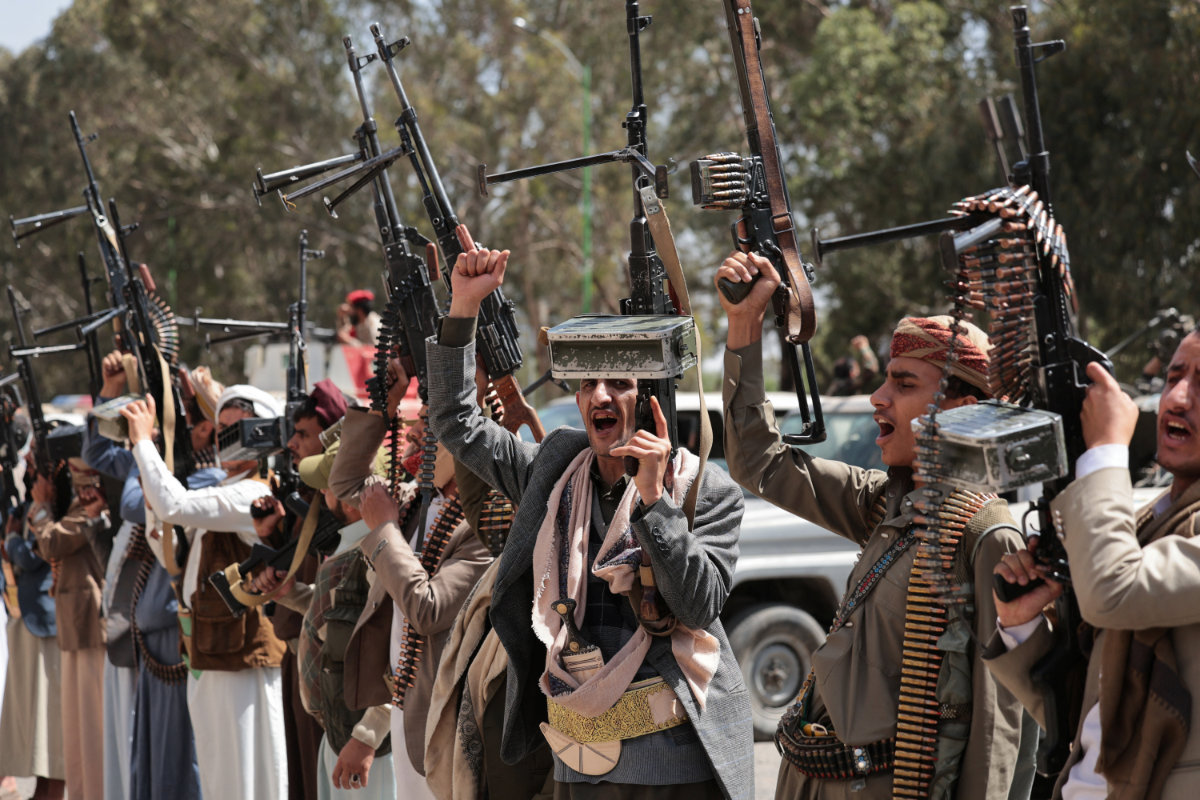
The Houthis, meanwhile, said their attacks on Mokha and Marib had targeted concentrations of government troops and military equipment.
Yemeni officials and military experts dispute that account, arguing that the two cities are being targeted because of their wider strategic value.
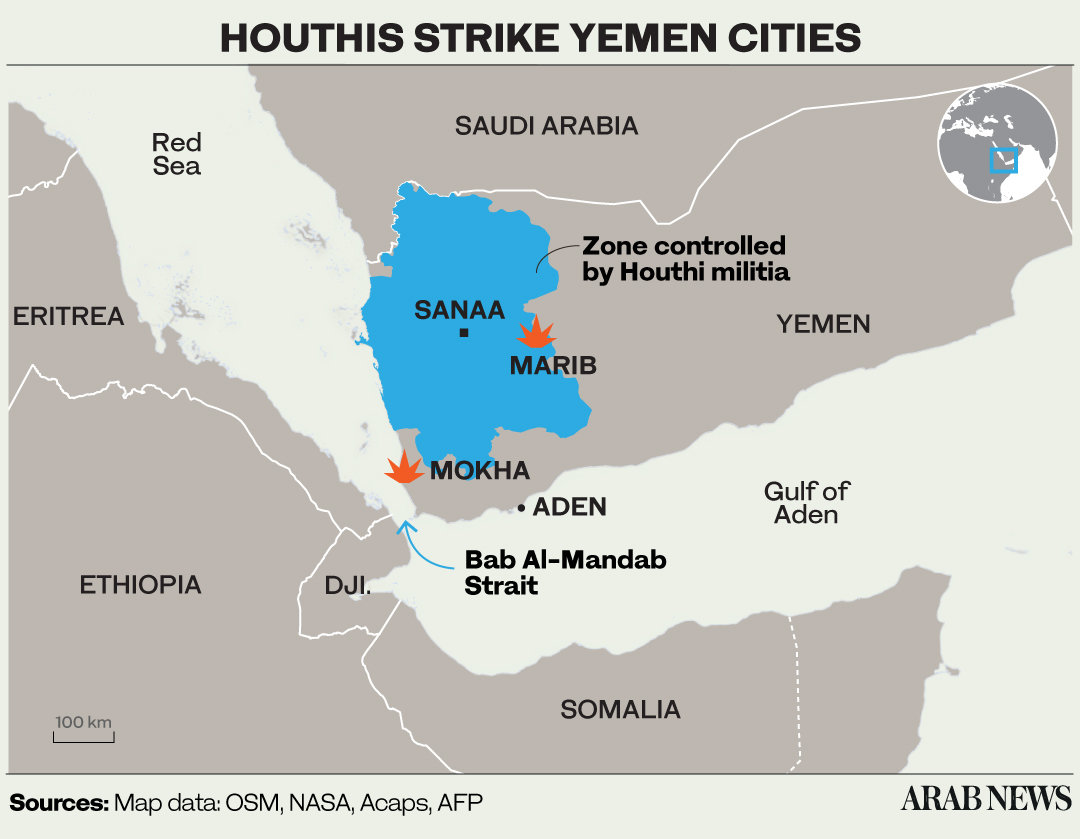
Marib contains some of Yemen’s most important oil and gas resources and energy infrastructure. Mokha, by contrast, sits on the Red Sea close to international shipping routes leading toward the Bab Al-Mandab Strait.
Col. Abdul Basit Al-Baher, a Yemeni army officer and military analyst, told Arab News that the Houthis had long sought to seize Marib because of its oil and gas fields and power infrastructure, but had increasingly turned their attention toward Mokha because of its proximity to maritime traffic.
“Mokha seaport was once the second-most important port in northern Yemen after Hodeidah and, historically, powers that invaded Yemen came through Mokha port,” Al-Baher said.
He added that the Houthis also launched a ground offensive toward Mokha on Sunday from areas under the militia’s control in Al-Barah, on the edge of Mokha district.
That, he said, suggested the missile and drone bombardment could be intended to weaken defenses ahead of attempts to advance toward the city.
The consequences of any change in control could extend far beyond Mokha itself.
Al-Baher said capturing the city would give the Houthis greater access to the Red Sea and international shipping lanes, potentially providing new positions from which to attack vessels while opening another route for weapons smuggling.
“The militias are determined to control the ports in order to use booby-trapped boats from areas close to shipping lanes,” he said.
Mokha’s geography could also make it useful for launching attacks at sea.
The coastline surrounding the city is known for its dense palm groves, which Al-Baher said could provide natural cover for missiles and artillery.
“The port is very close to international shipping lanes, and therefore, with coastal artillery or by hiding missiles under these very dense palm trees, they can easily target ships from this area,” he said.
For Yemen’s internationally recognized government and its allied forces, holding Mokha is therefore about considerably more than retaining another city.
Its location makes it important for securing Yemen’s Red Sea coastline, disrupting weapons-smuggling routes, safeguarding nearby international shipping lanes and maintaining the flow of food and other goods into government-held territory.
And with the latest attacks already bringing commercial activity at the port to a halt, the battle for Mokha is increasingly intertwined with the wider struggle over access to one of the region’s most strategically important waterways.
As Al-Baher put it: “Whoever controls Mokha would control Bab Al-Mandab.”