- The ‘sophistication and next-generation design’ of the weapons ‘refute the militia’s claims that the missiles are locally manufactured,’ Yemeni military expert tells Arab News
- The Houthis have bombarded the coastal Red Sea city for more than 10 days, forcing its strategic seaport out of service and striking other civilian and military sites
AL-MUKALLA: The Iran-backed Houthis used Iranian missiles in their latest attacks on the city of Mokha on Yemen’s Red Sea coast, according to a Yemeni military official.
Brig. Gen. Sadiq Duwaid, spokesperson for the government’s National Resistance, said an examination of debris from projectiles fired at the city revealed they were Iranian-made Fateh-110 short-range ballistic missiles. They have a range of about 300 kilometers, use solid fuel and can be launched from mobile platforms or camouflaged commercial trucks, he added.
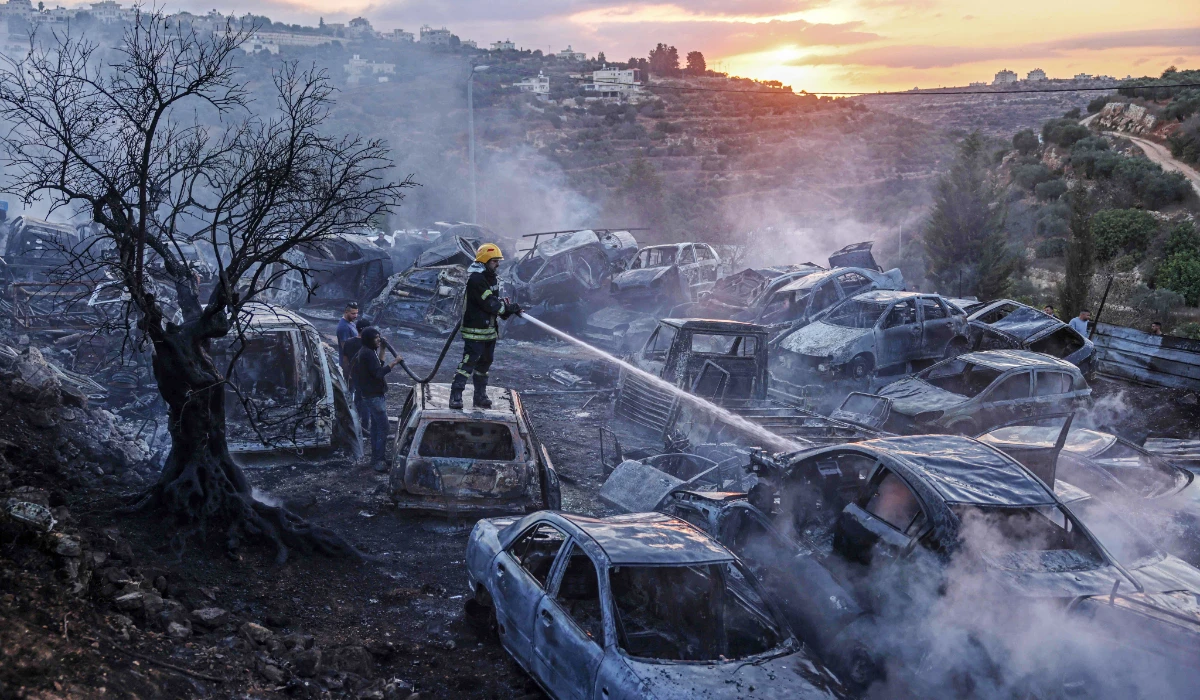
The Houthis have launched barrages of missiles and drones at Mokha for more than 10 days, battering its strategic seaport and forcing it out of service, while also striking other civilian and military sites across the city.
The militant group has launched similar waves of missile and drone attacks targeting military camps in Hadramout and Marib provinces, as well as parts of Marib city. The attacks killed or wounded dozens of people and prompted retaliatory strikes by forces aligned with Yemen’s internationally recognized government.
Yemen’s National Defense Council, chaired by the head of Presidential Leadership Council, Rashad Al-Alimi, met on Monday night and praised government drone units for carrying out what it described as “precise and painful” strikes on Houthi military positions and equipment.
Yemen’s official SABA News Agency reported that the council had ordered military and security forces to remain on heightened alert and expand drone and missile operations against the Houthis.
“The National Defense Council stressed the need to maintain the highest levels of military and security readiness across all fronts, strengthen the early-warning system, and enhance the protection of vital facilities and civilian infrastructure,” SABA said.
The defense council also ordered the expansion of air and missile deterrence operations against the sources of threats.
Col. Majed Al-Nazili, a spokesperson for the Yemeni army, said on Tuesday that government forces had carried out 133 military operations against the Houthis over the previous 24 hours, including missile, drone and artillery strikes on front-line positions.
The army previously announced 181 military operations against Houthi targets across contested areas of Yemen. At the same time, the National Resistance released footage showing its drones striking Houthi military vehicles, fighters, trenches and a command-and-control center. Some of the footage showed Houthi fighters carrying dead or wounded comrades or fleeing as drones pursued them.
The Yemeni army also released footage showing flashes and explosions it said were caused by missile and artillery strikes on Houthi positions in Marib province.
In Taiz, government forces said on Tuesday that they had thwarted a Houthi attempt to infiltrate their positions in Jabal Habashi district. Their drone units also targeted Houthi positions and a command center in Al-Salo, southeast of Taiz, they added.
The latest escalation in Yemen began early this month when the Houthis launched a wave of drone and missile attacks targeting three military camps used by government forces in Hadramout and Marib provinces. Seventeen soldiers were killed in what was one of the deadliest Houthi strikes since a UN-brokered truce came into effect in April 2022.
Despite the intensifying exchange of fire, experts said neither side appeared ready to return to all-out war.
“For now, these clashes remain relatively contained and measured,” Nadwa Al-Dawsari, an associate fellow at the Middle East Institute, told Arab News. “But the dynamics are changing and I think a broader return to war is increasingly likely.”
Other experts said the identification by the Yemeni government of the use of Iranian-made missiles in the latest strikes offered further evidence of Iranian military support for the Houthis and challenged the militia’s assertion that it manufactures its missiles domestically.
“The announcement of the missile type confirms they are Iranian-made, while naming the missile itself underscores that the militia is acting as an Iranian proxy,” Brig. Gen. Mohammed Al-Kumaim, a Yemeni military expert, told Arab News.
“These are modern, advanced solid-fuel weapons capable of long-term storage, rapid deployment and maneuverability. Their sophistication and next-generation design refute the militia’s claims that the missiles are locally manufactured.”
Government forces have also started to use new weaponry in retaliatory strikes against the Houthis, he added, and possess more advanced drones with greater firepower that have not yet been deployed.
“Government forces have begun using new types of weapons, such as rocket launchers and long-range artillery, and have the capability to use high-performance drones,” Al-Kumaim said.
“They have also increased the intensity of their fire and expanded the rules of engagement on all fronts.”