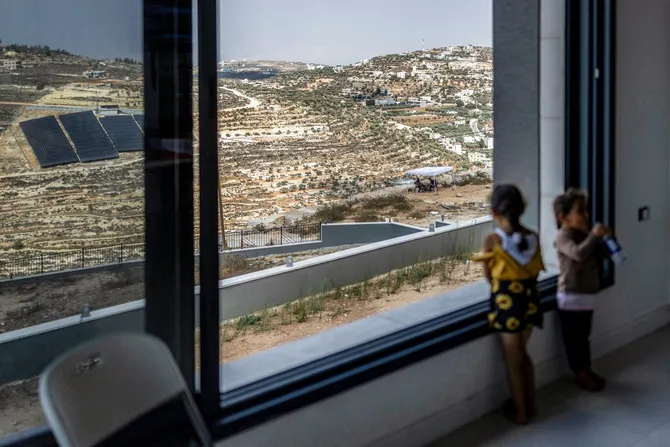
- Families and local mayor say prolonged isolation is having growing psychological and social effects on the children in besieged houses
- Movement restrictions imposed on Palestinians by Israeli military in response to attacks by settlers disrupt access to food, medicine and schooling for 15 people, including 2 young girls
QUSRA: Children trapped inside three Palestinian homes in the village of Qusra’s hilltop Ras Al-Ain area are bearing the brunt of an Israeli siege that entered its 11th day on Wednesday, their families and the local mayor said.
Restrictions on movement continue to disrupt access to food, medicine and schooling for about 15 Palestinians, including two young girls. They remain confined to a cluster of homes under restrictions imposed by Israeli forces, as settlers continue to move around the surrounding area, Mayor Abdul Azim Wadi told Arab News.
Yousef Hassan, whose home was evacuated by the Israeli military and turned into a military post for the operation to remove the settlers, said his daughters Kinda, 2, and Hoor, 4, were struggling with the prolonged confinement.
“The younger one does not really understand what is happening but my 4-year-old keeps asking me why we left the house, where we are going, why we cannot move around and when we are going back to our home,” Hassan told the organization Medical Aid for Palestinians.
“She was preparing to start kindergarten but if this situation continues, she may not be able to go.”
Hassan, his wife and daughters initially stayed with his brother, Rezeq, before moving to another neighboring house in the besieged area. His mother and sister are still at his brother’s home.
“My house is only about five meters away from my brother’s house but I am still not allowed (by the Israeli military) to return to it,” Hassan said. “We couldn’t go back there, not even once.”
The displacement has forced several family members to share homes within the besieged area that are not equipped to accommodate them all.
“The houses are not really prepared for us to live in,” Hassan said. “In (my neighbor’s) house, there are seven of us, and three people are staying in Rezeq’s house.”
A UNICEF team was able to deliver food, water, medicines, hygiene supplies and recreational kits for the children on Monday, after previous attempts to reach the families failed. But Mayor Wadi warned that food supplies could begin to run out again by Thursday.
One of the residents, a 61-year-old woman with a stomach condition, was struggling to eat the canned food provided for the families, he said.
“We are in contact with the Palestinian Liaison Office to deliver food in coordination with the Israeli army but we haven’t received approval yet,” he added.
Access to medication is also restricted, Wadi said, and the families were asking for urgent help to replace some medicines and other essential medical supplies.
Hassan said: “Healthcare has also become difficult. My mother takes medication and uses eye drops. We were only able to get their medication through coordination with UNICEF. Everything requires coordination.
“If we want to visit someone in the village, go to a clinic or school, or bring something essential into the house, we need coordination” with Israeli forces, he added.
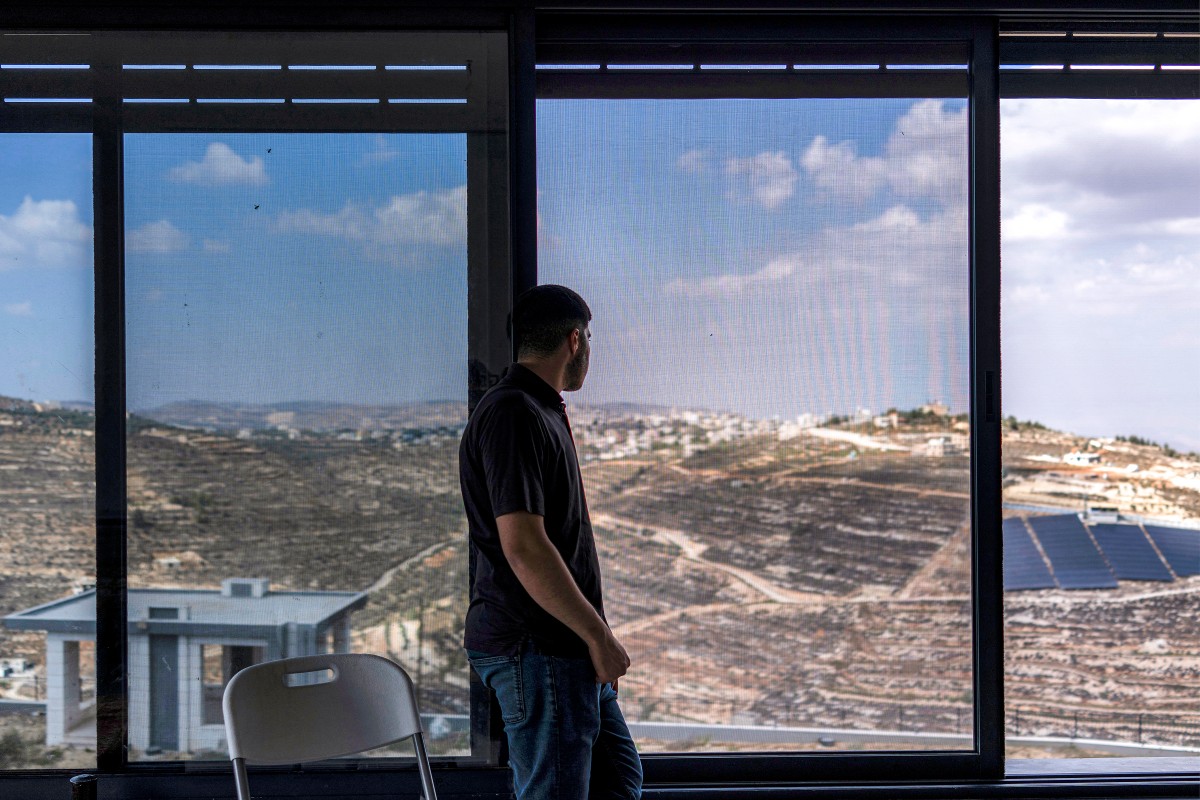
Israeli forces also ordered 13 workers at a nearby factory to stop work for a week, a move the UN said was affecting local livelihoods.
Wadi said the families remained surrounded by Israeli troops and settlers, with restrictions on who can enter and leave the area.
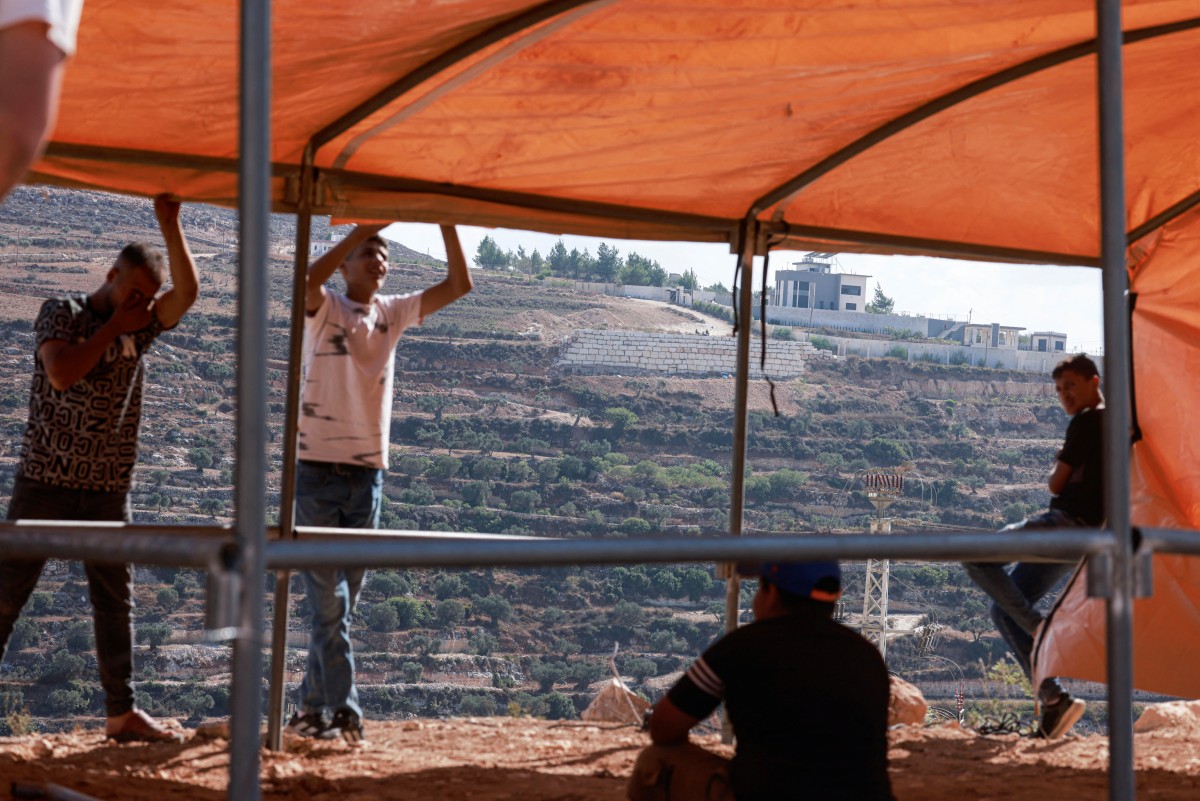
In addition to their post inside Hassan’s home, Israeli forces are stationed at several other points around Ras Al-Ain, including a tent overlooking the properties, near the Ras Al-Ain spring and at another house that is still under construction, the mayor said.
Hassan said Israeli troops had erected a tent of their own at the location previously occupied by the settlers and remained there around the clock.
The settlers, meanwhile, continue to enter and move around Ras Al-Ain daily, Wadi said, their numbers fluctuating from about five to as many as 15.
“Settlers come and go as they wish. There’s a settler on his quad-bike roaming around near the Israeli forces as we speak,” Hassan said, adding that the only restriction imposed on settlers was not to approach the homes, while their movement around the area remained unrestricted.
The continuing Israeli military presence follows operations last week that the army said were intended to dismantle the settler outpost and protect Palestinian residents. Troops removed the settler structures and deployed additional personnel after the siege drew international condemnation but residents said this failed to restore their freedom of movement.
On Sunday, municipal crews were able to restore water and electricity supplies to the besieged homes that had been cut off, in coordination with the Israeli military. An earlier attempt to do this ended when settlers attacked the workers, forcing a water company crew to flee, and Israeli forces detained four electricity workers.
Wadi said the prolonged isolation was having growing psychological and social effects on the children in the besieged houses.
“The children are isolated from the rest of their community, friends and extended family,” he said. “They want to see their friends and go out to play but there’s nothing we can do.”
The standoff began on Aug. 9 when settlers pitched a tent among Palestinian homes in Ras Al-Ain and blocked access to three properties, cutting their water and power supplies and restricting the movement of their residents.
It followed months of escalating attacks by settlers around Qusra. The UN Human Rights Office said the establishment of an Israeli settler outpost near the village in November 2025 was followed by increasing encroachment by settlers onto land west of the town.
The siege has drawn international condemnation, including an unusually strong intervention by the US ambassador to Israel, Mike Huckabee, who described the settlers involved as “Israeli terrorists” and urged authorities in Israel to take action. France also called for those responsible for the violence in Qusra to be arrested and prosecuted.
The UN Human Rights Office warned last week that attacks by settlers and incursions into Palestinian homes had reached “intolerable levels,” and called on Israeli authorities to protect Palestinian communities. UN officials also said the situation unfolding in Qusra must not be allowed to become “the new normal.”
Wadi warned that, unlike previous instances of settler violence in Qusra, the prolonged presence in Ras Al-Ain was indicative of an intention to establish a more permanent foothold in the area.
“I have lived in Qusra for years and witnessed settler violence since 2010, but the attacks would usually last for a few hours and then end,” he said.
“What is different now is that there appears to be an intention for this presence to continue. We are talking about an area around 3 kilometers from the nearest Israeli settlement. There is no justification for their presence there or for this situation to continue.”