- US Treasury Department said it has issued determinations against five sectors — digital assets, technology, gold, aviation and shipping
WASHINGTON: President Donald Trump’s administration on Monday announced an expansion of secondary sanctions it can impose on entities and countries that maintain business ties with Iran around the world as Washington significantly ratchets up economic pressure on Tehran with the war nearing its 6-month mark.
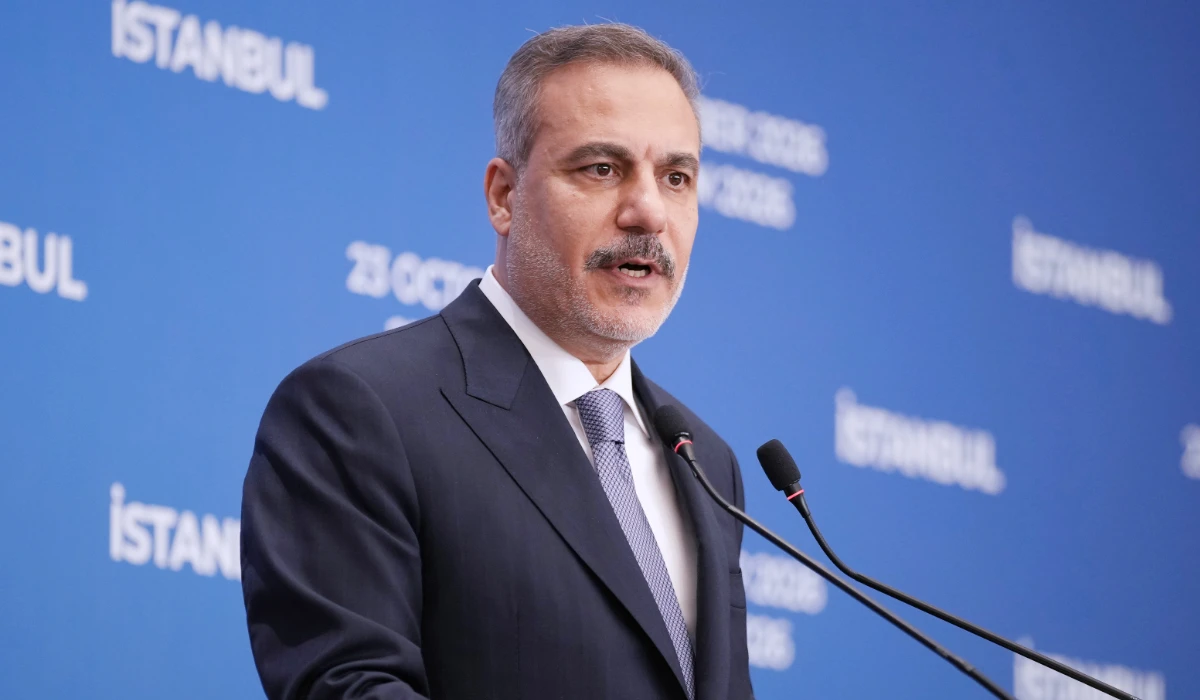
At a press conference, Treasury Secretary Scott Bessent unveiled what he described as an “economic D-Day” that aims to give a final warning to countries to sever their business ties with Iran or risk having key companies and entities cut off from the dollar-based financial system.
“We are launching an economic onslaught against Iran’s financial connections around the globe. Our objective is to sever every economic lifeline that sustains this tyrannical regime until Tehran stands alone,” Bessent said.
The US Treasury Department has mapped the networks, facilitators, and financial channels that Iran uses to smuggle oil and evade sanctions and said that Washington would be working with US partners to target any source of Iran’s “illicit revenue.”
The department said it has issued determinations against five sectors — digital assets, technology, gold, aviation and shipping — that the Iranian government is using to prop up its economy. The Treasury has also imposed sanctions on nearly 60 entities, individuals and vessels.
China has for several years been the biggest buyer of Iranian oil and Washington has intensified its efforts to clamp down on Chinese purchases, but has so far stopped short of designating larger Chinese banks that may be facilitating the oil trade.
Trump’s war with Iran, which has pushed energy prices higher worldwide, is about to hit its six-month mark. While heavy fighting has subsided, diplomatic efforts to end the war have stalled and oil and raw material shipping through the Strait of Hormuz remains blocked, keeping energy prices elevated.
Trump’s approval rating has fallen to a low point, with just 33 percent of Americans in the latest Reuters/Ipsos poll approving of his performance. He says the economic costs are necessary to ensure Iran does not have a nuclear weapon.
The US has maintained sanctions against Iran for decades, most of which have been aimed at curtailing the country’s oil revenues, aviation sector, cryptocurrency, procurement of weapons components and other military hardware, and cutting off funding for business enterprises controlled by the Islamic Revolutionary Guard Corps, a dominant force in the Iranian economy.
The sanctions bar designated entities from the dollar-based financial system, but Iran has been successful in quickly standing up new front companies, other entities and vessel registrations to evade the sanctions.
Ali Vaez, Middle East and North Africa deputy program director at the International Crisis Group, said the administration appeared to be combining several sources of pressure on Tehran at a particularly vulnerable moment.
“The US is looking to marshal the four horsemen of an Iranian financial apocalypse: A blockade, heightened sanctions pressure, war damage and internal economic mismanagement,” Vaez told Arab News.
“The Islamic Republic has faced all of these before, though rarely in tandem and at a time when its challenges are already so acute.”
He said Tehran may believe it can withstand the pressure and could respond with military action.
“While there is little doubt in Washington’s ability to impose substantial pain, Tehran believes that it has a high threshold for absorbing it, as well as the potential to respond to financial pressure with military counterpressure,” he said.
“The question is whether this new chapter in economic brinksmanship is intended to be a zero-sum campaign aimed at collapsing the regime, or leverage towards an agreement.”