DUBAI: An investigation by Haaretz reveals that armed Palestinian militias have effectively become an operational extension of the Israel Defense Forces and Shin Bet inside the Gaza Strip.
Through satellite imagery, social media mapping, and testimonies from military personnel, Haaretz documented a deepening collaboration where Israeli forces provide cover, artillery, and drone support to anti-Hamas proxy groups.
Prime Minister Benjamin Netanyahu previously acknowledged activating these local clans to counter Hamas, describing the alignment of interests as beneficial to Israel’s security goals.
According to military witnesses the partnership has led to a alarming blurring of operational lines, the report added.
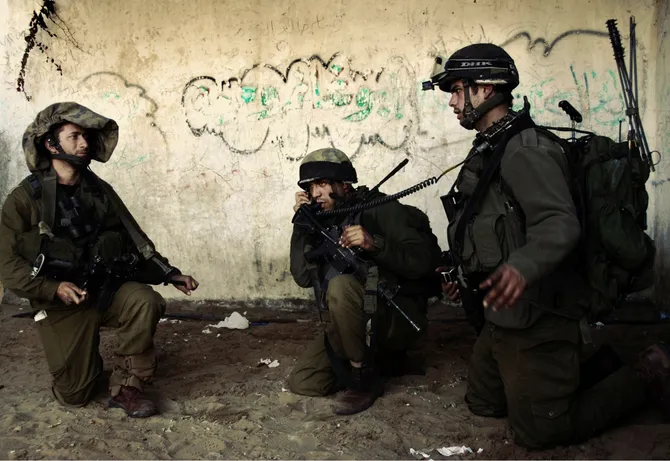
Soldiers described scenes of militia members roaming freely near Israeli outposts, staging displays of force, and conducting summary justice.
In one instance, an IDF soldier recounted witnessing a clan dispute where a gunman shot another man in the legs as an accepted punihsment while troops stood by in shock.
Further testimonies from an Israeli Air Force officer detailed instances of militiamen raiding residential areas in pickup trucks, shooting at civilians, looting homes, and burning down structures, with Israeli forces assigned to protect the fighters during these actions.
The repiort identified at least five active militia bases operating in regions in Gaza such as Beit Hanoun, Shujaiyeh, Deir al-Balah, Khan Yunis, and Rafah.
Satellite data shows that while broader reconstruction across Gaza remains stalled, these proxy compounds are actively expanding with heavy machinery, fortified concrete barriers, and mobile housing units, with some equipment reportedly supplied directly from Israel.
The forces, including groups known as the Popular Forces and the Counter-terrorism Strike Force, are deployed along the separation line, launching targeted operations, retrieving contraband, and forcibly expelling local residents from territories under Israeli control.
The report says senior defense officials and commanders privately acknowledged that key militia leaders were not political visionaries, but rather former gang figures, drug dealers, or ex-security officers acting out of personal ambition or vengeance against Hamas.
Military leadership views the proxy network as a temporary, localized measure to maintain order in specific sectors, noting that the groups lack the capability to survive militarily without continuous Israeli protection.
The expanding project has created significant diplomatic friction regarding peace efforts.
While a US proposal linked Hamas’s disarmament to the simultaneous disbanding of these proxy groups and an Israeli withdrawal, Netanyahu rejected the terms. Hamas continues to refuse disarmament so long as armed, Israeli-backed militias remain active.