- Pakistan to assist Kuwait in training, capacity building and border management
- Agreement follows months of talks on expanding bilateral defense cooperation
ISLAMABAD: Pakistan and Kuwait signed an agreement on Thursday expanding military cooperation, with Islamabad to provide training, capacity building and border-management assistance to the Gulf state as regional security ties deepen amid the prolonged conflict involving Iran.
The new protocol builds on a 2023 defense cooperation agreement between the two countries and comes weeks after Kuwait ratified that pact and Pakistan joined Saudi Arabia and Türkiye in a separate mutual defense agreement against a backdrop of heightened Middle East tensions.
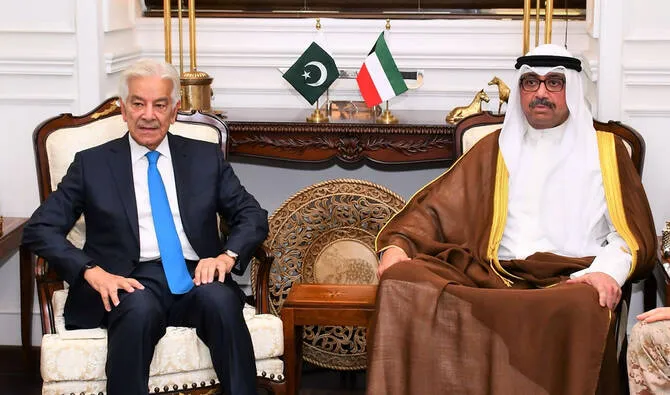
The agreement was signed during a visit to Pakistan by Kuwaiti Defense Minister Sheikh Abdullah Ali Abdullah Al-Saleem Al-Sabah, who met his Pakistani counterpart Khawaja Asif and army chief Field Marshal Asim Munir in Rawalpindi.
“Under the new agreement, the Armed Forces of Pakistan will extend assistance to the Armed Forces of Kuwait in diverse fields, including training, capacity building, border management and other mutually agreed areas of defense collaboration,” Pakistan’s defense ministry said in a statement.
The ministry said the “Protocol Agreement 2026” significantly enhanced the military cooperation framework established under the Defense Cooperation Agreement signed by Pakistan and Kuwait in June 2023.
The development follows months of discussions over expanding security ties between Pakistan and Kuwait, which has faced attacks during the conflict involving Iran and the United States.
Reuters reported in July, citing five sources familiar with the talks, that Pakistan and Kuwait were discussing an expanded defense arrangement alongside energy cooperation and investment.
Kuwait was seeking a substantially greater Pakistani military presence that could include thousands of troops, fighter jets, drones and air-defense systems, according to the report, although a Pakistani security official said at the time that Islamabad was not considering deploying combat troops.
Pakistan has been expanding defense ties with Middle Eastern states as the war involving Iran has upended the region’s security environment and raised questions over the protection of energy-producing Arab states.
Saudi Arabia, Türkiye and Pakistan this month signed the Makkah Joint Defense Agreement, which commits the three countries to regard an attack on one as an attack on all.
The three governments have said the agreement is defensive and not directed against any particular country.
These developments come as countries across the Middle East reassess their security arrangements during a conflict that began on Feb. 28 with US and Israeli attacks on Iran and subsequently spread across the region.
Kuwait has been among the Gulf states affected by the conflict.
During Thursday’s visit, the Kuwaiti delegation also met Munir at Pakistan’s military headquarters, where the two sides discussed regional security and agreed to expand institutional defense ties, the Pakistani military said.
“The engagement reaffirmed the resolve of Pakistan and Kuwait to further consolidate their historic and brotherly relations into a strong, enduring and mutually beneficial defense partnership, contributing to regional security and stability,” the military said in a statement circulated after the meeting.