- New exhibition in French capital shows the faces of AlUla’s storytellers
DUBAI: Long before the Arab world had written history, there were rawis to remember and tell it. In Arabic, ‘rawi’ means storyteller, but in reality, a rawi was closer to a living archive: someone who carried a tribe’s verses, victories and lineage forward.
The practice faded as the written word took over. But in AlUla, the ancient oasis destination in northwest Saudi Arabia, it is being revived. Today’s rawis are trained cultural interpreters and ambassadors, who guide visitors through more than 200,000 years of history.
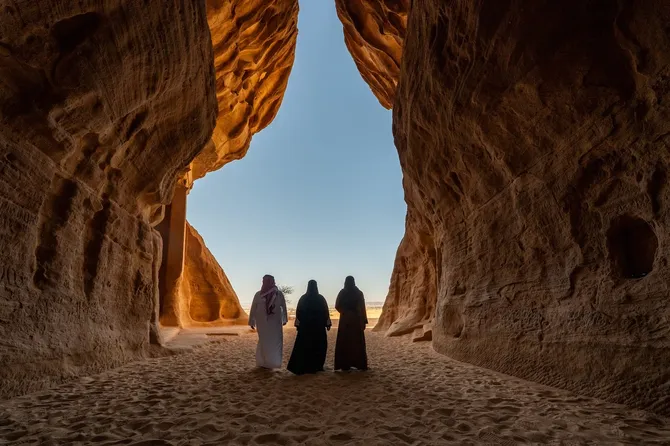
Now, those rawis have traveled to the gates of UNESCO Headquarters in Paris, where the photography exhibition “I am a Rawi: Sharing Stories from AlUla,” which runs until the end of August, shows their faces and work to the world.
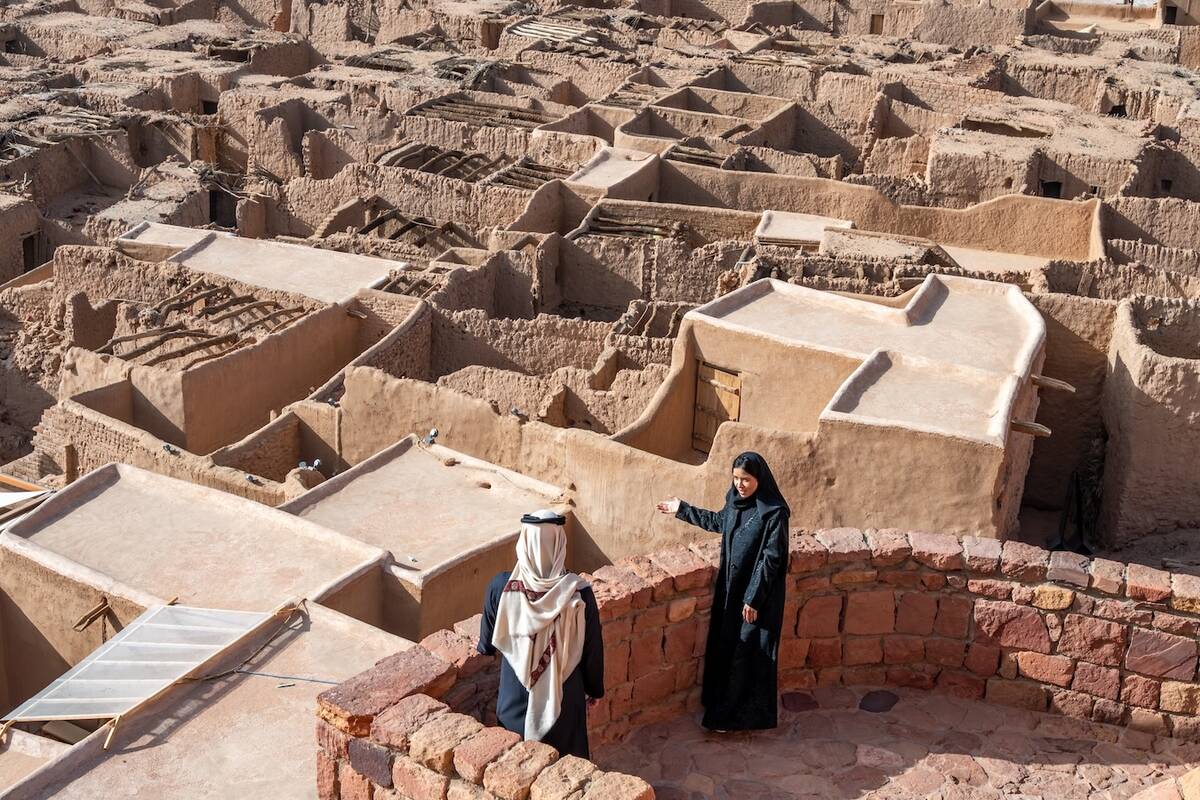
UNESCO and the Royal Commission for AlUla have spent more than a year developing the Live Museum model, an approach to heritage built on facilitated storytelling and dialogue rather than one-way presentation.
The exhibition is a “culmination of that journey,” said Leila Chapman, narrative experience expert at the RCU. It reflects what AlUla has “honed and practiced” and is now “ready to share with the world,” she told Arab News.
The free exhibition represents AlUla’s offering, which is “all about intercultural engagement, openness and accessibility,” Chapman said. And summer in Paris, she added, draws exactly the multicultural crowd the project was built for.
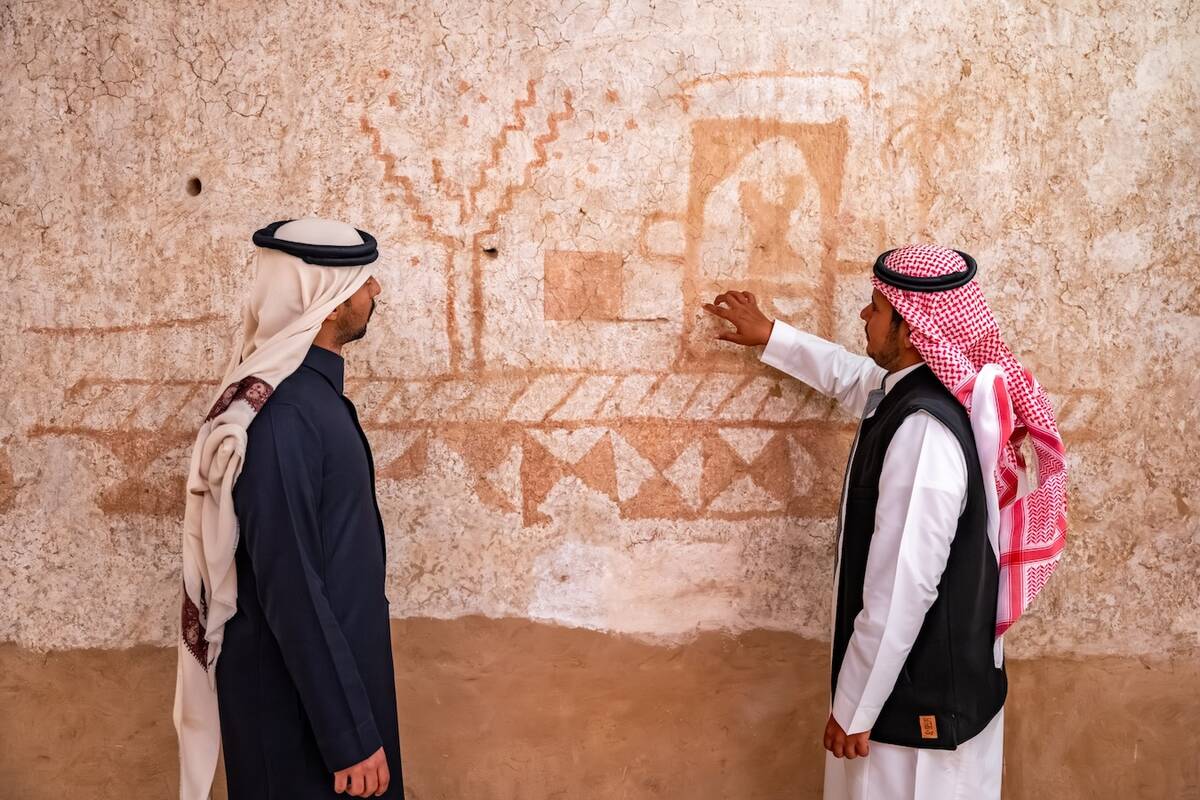
The photographs featured in the exhibition are taken by celebrated British photographer Nick Jackson, who was selected through an open call run by UNESCO. Jackson, who has been living in AlUla in recent years, has gotten to know the rawis over time, Chapman said, which assured the RCU that he could capture “the day-to-day experience and the bigger ambitions of the rawi team,” rather than “static models.”
One of Chapman’s favorite images is of Atif Albalawi, a rawi from AlUla’s Bedouin community, photographed at the ancient site of Dadan with his two young sons. Once shy, he has now grown into a confident rawi, husband and father — something the photograph captures in a single frame, she believes.
Albalawi is one of 32 rawis handpicked to become part of a “cultural profession that only exists in AlUla,” said Chapman. Although the tradition of rawis has existed across the region for generations, AlUla wanted to “build on that legacy” by developing something rooted in the Arab world’s cultural fabric that could also be shared on a wider scale, she explained.
The Rawi Program, founded in 2019, aligned with AlUla’s vision “as the world’s largest living museum,” intended to “place people at the heart of heritage,” Chapman continued.
Along with onsite training, the RCU took the rawis to Sedona, Arizona — a landscape Chapman said mirrors AlUla’s mix of heritage and scenery — and later to the Louvre Abu Dhabi and the Institut du Monde Arabe in Paris.
Last year, six rawi leaders traveled to UNESCO’s Paris headquarters for the organization’s inaugural Intercultural Training Week. There, they worked on new approaches to cross-cultural learning and explored story circles — a UNESCO methodology inspired by indigenous storytelling traditions in which small groups share personal stories.
That method became the foundation for Qissa bi Qissa — Arabic for “swap a story” — AlUla’s own version, which Chapman said builds on the format by adding a heritage object to the mix, such as an incense burner or a traditional coffee pot.
Piloted in February 2026 at Huna, a communal space in AlUla’s Old Town, Qissa bi Qissa will become a weekly fixture starting on Saudi National Day, Sept. 23, with themes rotating monthly, as well as special sessions tied to notable occasions including International Women’s Day and International Museum Day.

The rawis have held these sessions globally through the Rawi in Residence program at institutions such as the Forbidden City in Beijing and the Smithsonian’s National Museum of Asian Art in Washington.
The residency also ran during the opening week of the Paris exhibition, where a small group of rawis ran Qissa bi Qissa sessions, led public tours, and trained UNESCO guides.
Chapman is hopeful visitors walk away from the exhibition thinking about their “own connection to heritage” and understanding it’s about “people rather than just places, and the connections we make with one another.”
Heritage isn’t the sole property of professionals — rawis, archaeologists, conservationists — but something everyone carries forward, Chapman said, adding: “We all have a responsibility to be flag bearers and think about what we leave behind for future generations.”
That idea is also reflected through the “prism of the rawis,” wherein AlUla’s stories “aren’t just confined to the past, but continue to evolve and live on.”