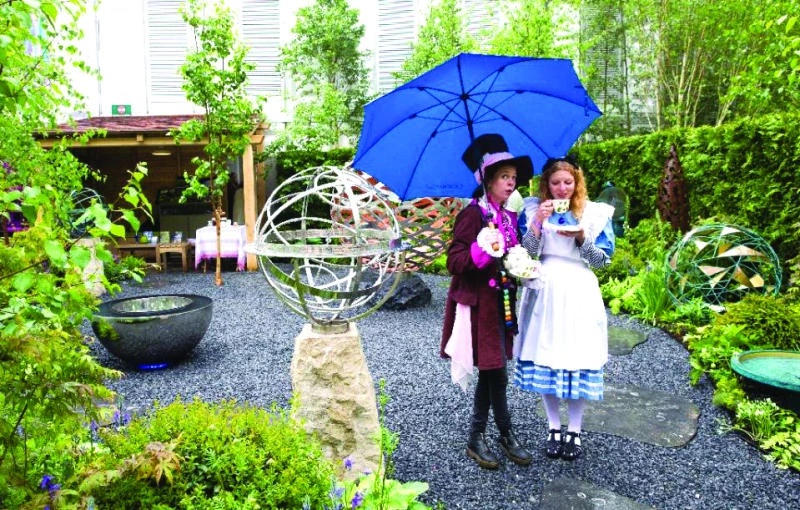
LONDON: A century and a half after first being published, the surreal classic “Alice’s Adventures in Wonderland” still fascinates readers and inspires artists with its eerie and iconic fantasy world.
An exhibition in the British Library traces how the story and its characters quickly took on a life of their own after the publication of the book in 1865, inspiring spin-off merchandising, music and early film.
Visitors to the show in London wander through large distorted mirrors and illustrations that walk them through the plot of the book, before discovering the history of how it became a classic.
James Devine, 66, spoke rapturously of the book as he remembered reading it as a child in 1950s Glasgow.
“It’s fascinating. It takes you into another world. I loved it, particularly the Cheshire Cat,” Devine told AFP. “You get carried away with it.”
The exhibition begins with how the story was born: on a summer’s day in Oxford in 1862, when Charles Dodgson, a maths tutor who took the pen name Lewis Carroll, took a boat trip with 10-year-old Alice Liddell and two of her sisters, and told them a story. At the heart of the exhibits is a display of the original leather-bound manuscript later written down by Carroll by hand with 37 careful illustrations and presented to Alice in 1865 with the dedication “a Christmas gift to a dear child, in memory of a summer day.”
Liddell sold the manuscript for a record price in 1928 to an American collector, but it was gifted to the British Museum after World War II “as an expression of thanks to a noble people who kept Hitler at bay for a long period single-handed.”
A book of the original manuscript, with its old title “Alice’s Adventures Under Ground” has been published this year in a luxury edition by French publishing house Les Saint Peres to mark the 150th anniversary.
Dodgson revised the manuscript, taking out personal passages and adding new sections for publication under his pen name “Lewis Carroll.”
“Lewis Carroll was as charming, imaginative and attractive as the tutor Charles Dodgson was boring, dull and stern,” said Belgian writer Amelie Nothomb who wrote the introduction to the newly published early version.
Alice still shapeshifting 150 years after Wonderland