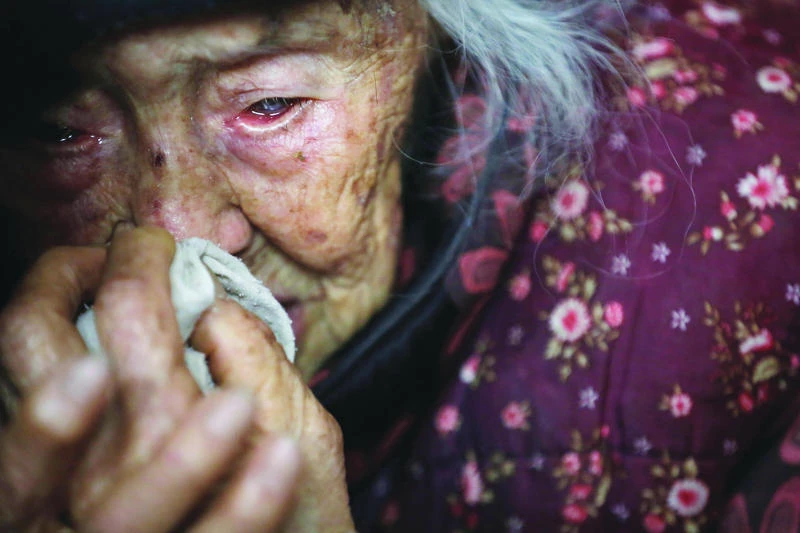
FUSHENG, China: The daughter-in-law smashes the cockroach under her foot and rolls open the rusted metal doors to the garage. Light spills onto a small figure huddled on a straw mattress in a dank room. A curious face peers out.
The face is the most infamous in this village tucked away in the lush green mountains of southwest China. It’s the face of Kuang Shiying’s 94-year-old mother-in-law — better known as the little old lady who sued her own children for not taking care of her.
The drama that is playing out inside this ramshackle house reflects a wider and increasingly urgent dilemma. The world’s population is ageing fast, due to longer life spans and lower birth rates, and there will soon be more old people than young for the first time in history. This demographic about-turn has left families and governments struggling to decide: Who is responsible for the care of the elderly?
A handful of countries, such as India, France and Ukraine, require adult children to financially support their parents, mandating what was once a cultural given. Similar laws are in place in 29 US states, Puerto Rico and most of Canada, though they are little known and rarely enforced because government funds help support the old. In Singapore, parents can sue their adult children for an allowance; those who fail to comply can face six months in jail.
In China, where aid is scarce and family loyalty is a cornerstone of society, more than 1,000 parents have already sued their children for financial support over the last 15 years. But in December, the government went further, and amended its elder care law to require that children also support their parents emotionally. Children who don’t visit their parents can be taken to court — by mom and dad.
The law pits the expectations of society against the complexities of family and puts courts in the position of regulating the relationship between parent and child.
Which then begs the question: How do you legislate love?
Zhang Zefang hardly looks like the vindictive matriarch many assume she must be. A tiny woman with blotchy skin, she stares at visitors through half-blinded eyes.
Zhang is one of about 3,800 people who live in the village of Fusheng, where life seems frozen in a long-ago era. Mothers trudge up steep roads with babies in bamboo baskets strapped to their backs.
In aging China, old lady sues children for neglect