Since the Arab Spring began, Egypt has seen different avatars of its people stand defiantly in the face of police crackdown, calling for a regime change that adheres to democratic norms and supports Egyptians’ free will. In this battle, Egyptian artists were involved every step of the way in the much-awaited chance to participate in crafting the future of their nation. At last, they were able to force Hosni Mubarak’s tyrannical regime down with their unrelenting protests.
Even though his absence forebodes well for the country in the long haul, there is no denying that Egypt is up against complex issues that are yet to unfold in full magnitude.
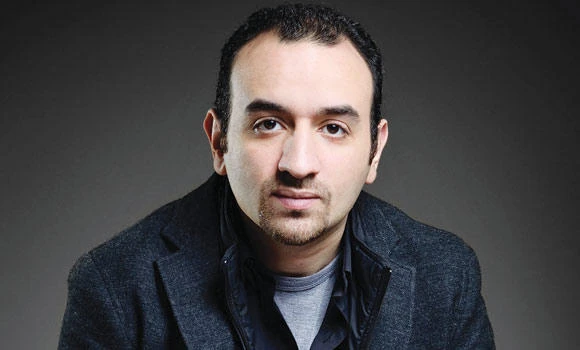
Egyptian filmmaker Amr Salama highlights some of the social malaises ailing the Egyptian community. His work provides insight into the average Egyptian citizens’ conscious awakening and the moral battle toward seeking the righteous path.
Commenting on his passion for the art of filmmaking, Salama says, “It just feels right. This is the only thing I have a true passion for and it feels like home. This is why my cinematic obsession has turned into a profession. I don’t remember when I became fond of drawing and writing, it’s difficult to recall which year it was and at what age it happened.”
Pausing a little to ponder on how his career as a director began he recalls, “After college I accepted an accounting job to please my parents. However, pretty soon my job couldn’t keep me away from studying the basics of visual effects, 3D animation and editing. Eventually, directing became my sole choice and path.”
The young director has created two feature films, which have succeeded in calling into question underlying problems many young Egyptians face and in the process he has succeeded in sparking a much-needed discussion regarding these contested issues.
Reflecting on his second film “Asmaa;” which enhanced his profile as a prominent director, he said, “I was interested in making a film about the unheralded heroes in the Egyptian society, especially those who are unnoticed in our societies and have not been given the chance to communicate their struggles.”
The plot of the movie revolves around the plight of Egyptians infected with the HIV virus.
“I met people suffering from Aids and they relayed Asmaa’s story to me. I was profoundly touched by her journey and what she endured. Unfortunately, Asmaa died weeks before I could personally hear her grueling story. In the movie, the protagonist dies because she suffers a severe gall bladder problem, which is medically unattended because she is shunned by doctors due to her HIV infection.”
Salama describes the movie as an attempt to break society’s rigid restraints and misconceptions.
“Taboos exist everywhere. Likewise, Egypt is plagued with its own. Since I was looking for a subject that affects many people in the country, the story of Asmaa couldn’t have been more poignant and important for me to explore.”
Reacting to the warmly received critical acclaim for his film, the young artist describes a great sense of content, mixed however with a certain despondency.
“I think Asmaa was lauded because it communicated universal themes of fear and silence especially coming from a part of the world which is already crippled by social taboos and the fear of alienation.”
When asked if the film is a depiction of the insensitivity and negative attitudes harbored toward people with life-threatening diseases, Salama frankly answers, “Yes, however it is more than that. It is also about how people judge, discriminate and outcast the ‘other’ in our societies. It is a reminder that we still have a long way to go in constructing an all-inclusive and just society.”
Full of intense curiosity and confidence, he doesn’t hesitate to express his aspirations for a brighter future for his homeland.
“I would like Egypt to shine just as it did in Tahrir Square, during the 18 decisive days of revolution. I participated in the uprising along with my fellow citizens and it was a life-changing phase in our lives. That was when we finally made a stand united to face our fears.”
Regarding the current state of affairs within the Egyptian creative industry, Salama acknowledges that artists are still not free to delve into subjects of their own choice.
“We still suffer from strict censorship that is suffocating and preventing us from generating new ideas,” he says, adding, “Some of us have dared to go against the conservative dictums and pursued our ambitions with cataclysmic consequences. I am lucky to have not suffered an attack or threaten against what I do.”
Commenting on whether Egypt has gained or lost since the revolution, he optimistically says, “The revolution hasn’t ended at all. More importantly, the demands it generated haven’t been met yet. At this time, it won’t be right to evaluate the overall impact. We need to wait a few more years.”
“My next film will focus on religious discrimination and the deteriorating relations between Muslims and Christians in Egypt. It will be another bold project. I get inspired from every street corner in my country, as Egypt is full of drama. You just need to watch and listen closely and you will get access to the best stories.”
Email: [email protected]