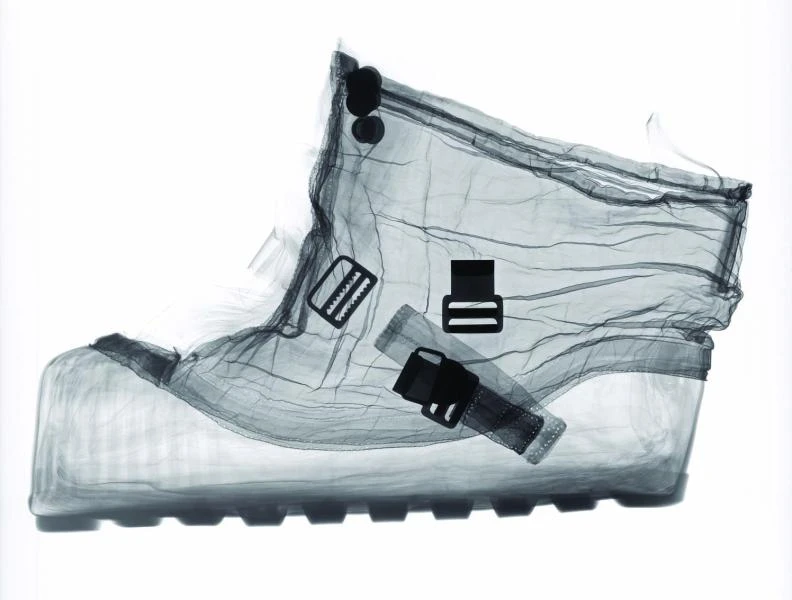
WASHINGTON: A new art exhibit, “Suited for Space,” opened Friday at the Smithsonian’s National Air and Space Museum, highlights the creativity behind the suits that allowed humans to explore the moon and aspire to fly farther from Earth.
X-ray images and photographs show the suits in intricate detail, said space history curator Cathleen Lewis. The museum’s X-rays are the first such images ever created to study, conserve and research the nation’s spacesuits.
“You don’t realize what a complex machine these are,” Lewis said. But the X-rays of Alan Shepard’s Apollo spacesuit and a 1960s prototype “allow visitors to see beyond what is visible to the naked eye, through the protective layers of the suit to see the substructures that are embedded inside.”
The exhibition traces the evolution of the spacesuit from the early high-altitude test flight suits of the 1930s to the dawn of the space age with Mercury, Gemini, Apollo and space shuttle missions.
While technology drove much of the suit design to maintain an airtight barrier to the vacuum of space and to protect from solar radiation, fashion aesthetics of the time also played a role, Lewis said. The original Mercury seven astronaut suits were unique from all others with a silvery coating to introduce America’s space explorers to the world.
“NASA had a demand to create the astronauts into a whole new corps, a non-military corps. So here was an opportunity to dress them in a new uniform ... that evokes sensibilities of that Buck Rogers imagination,” she said. “All of these guys, the engineers, they grew up on science fiction. They fed it with their ideas, and they were consumers of it at the same time.”
Curators are working to find ways to preserve spacesuits because some materials are decomposing, discoloring or becoming rigid some 50 years after they were created.
The spacesuit show is traveling to 10 cities, moving next to Tampa, Florida, Philadelphia and Seattle through 2015.
Two companion exhibits at the National Air and Space Museum also highlight 50 artworks of about 550 new items added to the Smithsonian’s growing space art collection over the past decade. They include portraits of astronomer Carl Sagan and astrophysicist Neal deGrasse Tyson, and a photograph of first female shuttle commander Eileen Collins by photographer Annie Leibovitz.
‘Suited for Space’ art exhibition wows enthusiasts