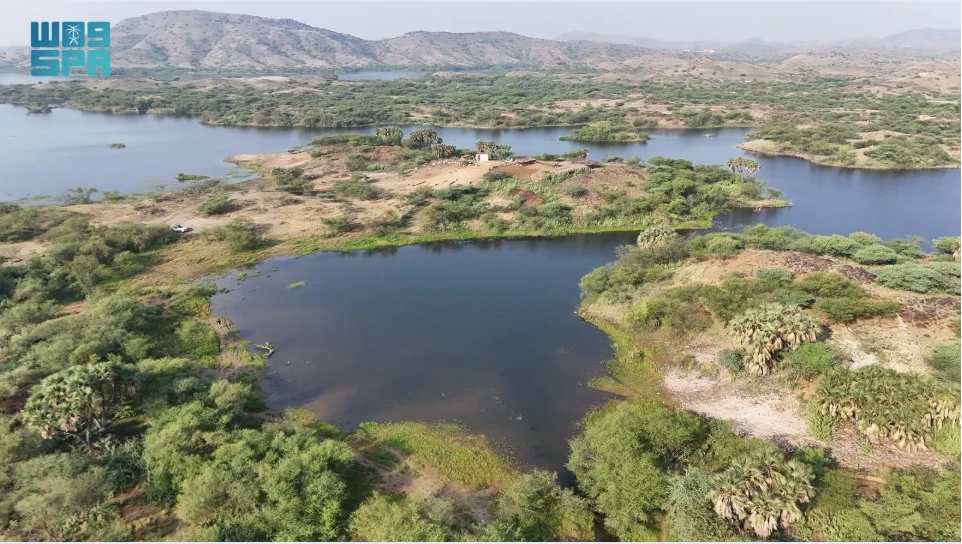
- Wadi Al-Ghar in Jazan’s Al-Aydabi Governorate is distinguished by its doum palms and the seasonal transformation of its landscape due to rainfall
- Located 80 km northeast of Jazan city, Al-Aydabi features a mix of mountainous terrain, valleys, and green spaces that enhance its appeal for outdoor activities
RIYADH: With their distinctive fan-shaped leaves and branching crowns, doum palms are a defining feature of Wadi Al-Ghar, where seasonal rainfall transforms the landscape of Jazan’s Al-Aydabi Governorate.
Located around 80 km northeast of Jazan city, Al-Aydabi is marked by mountainous terrain, valleys, green spaces and rural settlements scattered among the slopes. Its combination of natural features and countryside scenery makes the governorate an appealing setting for exploration, photography and outdoor experiences.
One of the area’s notable natural sites is Wadi Al-Ghar, where doum palms stand alongside rock formations and open stretches of land. The valley blends into the surrounding terrain, creating a rural setting that changes with the seasons, particularly after periods of rainfall.
During rainy periods, water moves through winding channels and between rocks and lower-lying areas before gradually receding. The water affects the soil and vegetation, contributing to a new cycle of growth and flowering. The wadi does not have a permanent flow, making these seasonal changes particularly visible.
The doum palms are among the most distinctive elements of the valley. Their broad leaves, varied branching patterns and dense crowns contribute to its visual character, while their shade provides places for visitors to pause and rest.
The vegetation around the palms changes in density and color according to soil conditions and moisture. Wild herbs, shrubs and grasses grow across different parts of the valley, while seasonal flowers emerge following rainfall.
The terrain is characterized by rounded pebbles, rock formations, earthen banks and changes in elevation. These features reflect the effects of water movement and erosion over time, offering visitors interested in geography an opportunity to observe the natural processes that have shaped the area.
Beyond its natural features, the wadi provides open spaces for walks and outings away from the bustle of the city. Visitors can explore the surrounding environment, sit beneath the shade of trees and enjoy the countryside scenery.
The changing conditions also give photographers a range of scenes to capture. Vegetation, rock formations and open spaces take on different appearances as daylight shifts, while the contrast between dry periods and rainy seasons reveals different aspects of the valley.
The surrounding countryside can also be seen along Al-Mashaf Road, which connects Al-Aydabi and Harub governorates. Winding through villages, agricultural areas and elevated terrain, the road offers views of the rural landscape and makes the journey itself part of the experience.
Together, the wadi, mountain roads and countryside highlight a quieter side of Jazan’s natural environment, offering visitors another setting to discover within Al-Aydabi.