RIYADH: The ongoing exhibition on the early capitals of Islamic culture at the National Museum here, showcasing the best collections of Islamic art, is attracting high-profile dignitaries among others, who have expressed admiration for the rich legacy on display.
Organized by the Saudi Commission for Tourism and National Heritage (SCTNH) in collaboration with the Pergamon Museum of Germany, the exhibition, titled “Early Capitals of Islamic Culture,” was opened by SCTNH President Prince Sultan bin Salman on Feb. 5 and will continue till May 3 offering a unique opportunity to see the collection of the most precious Islamic artifacts that reflect the Islamic civilization at its peak during the Umayyad and Abbasid periods.
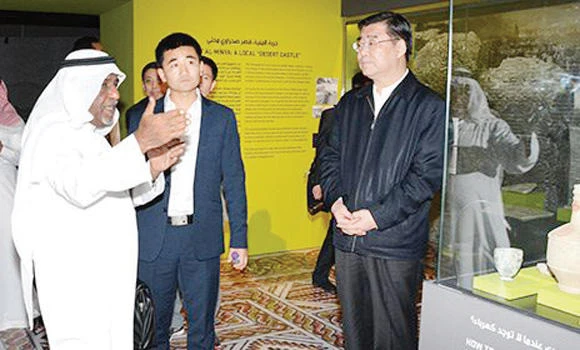
A museum official said on Wednesday that a number of dignitaries paid a visit to the National Museum to see the exhibition included Tian Xue, Chinese deputy minister for water resources, who was on trip here and visited with his accompanying delegation on Sunday.
The visiting delegation, accompanied by diplomats from the Chinese Embassy, also toured various halls of the museum and listened to a detailed explanation of the exhibits, the official added.
The minister, during his tour, expressed his admiration of the rich legacy and archaeological and historical pieces that reflect the cultural dimensions of the Kingdom.
He was also presented with a commemorative gift of an archaeological model by museum authorities.
Earlier, German Ambassador Boris Ruge, during his visit, highlighted the importance of the historic exhibition saying it displays the best collections of Islamic art in the world and is more than a traditional exhibition.
During his visit Ruge also referred to the cultural value of the exhibition and its importance for developing bilateral relationships between the Kingdom and Germany.
The opening ceremony was also attended by Michael Eisenberg, director general of the State Museums in Berlin, and Stefan Weber, director of the Museum of Islamic Art at the Pergamon Museum in Berlin.
The officials added that they, too, expressed great admiration for the exhibition which includes 104 artifacts from the pieces on display at the Pergamon Museum and 21 archaeological pieces from the collection of the National Museum, reflecting models of Islamic civilization, and showing glimpses of cultural relations between the then-Islamic countries and the rest of the world at the time, and the progression and spread of Islamic culture.
Jamal Omar, director general of the National Museum, earlier gave a call to visit the exhibition, which is an opportunity to view groups of the most valuable relics of Islamic history.
The exhibition is open to the public for 12 hours everyday starting at 8 a.m. and continuing till 8 p.m., except on Sundays when the timings are from 8 a.m. to 12 p.m., and on Fridays from 4 p.m. to 8 p.m.
Exhibition showcases early Islamic capitals