Saudi Arabia’s unemployment rate has been brought down to 6.1 percent as a result of the implementation of Nitaqat program, said Labor Minister Adel Fakeih.
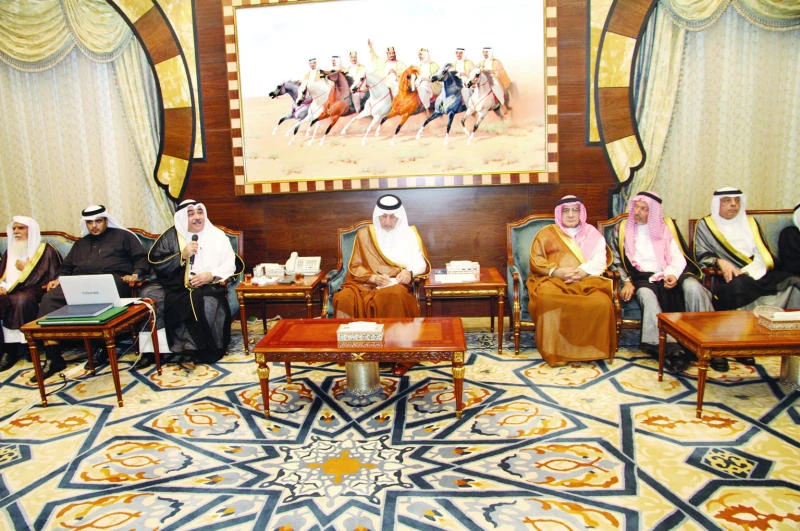
“Nitaqat helped in creating jobs whose numbers equaled 38 percent of Saudis employed in the past 30 years,” he said while addressing the weekly Majlis (council) at Makkah Gov. Prince Khaled Al-Faisal’s residence on Tuesday.
The minister was invited to the Majlis to present his ideas and programs to eradicate unemployment among Saudis and listen to the concerns of businessmen regarding some of Labor Ministry’s decisions.
Prince Khaled commended Fakeih and his ministry for their endeavors to create more job opportunities for Saudis through various initiatives with private sector support.
He emphasized the importance of providing job-oriented training to young Saudi men and women to get them employed quickly. “Education and training are the bedrock of development in any country,” he added.
The governor said the weekly councils at his residence would focus on subjects that contribute to the development of Saudis and the Kingdom. “We’ll discuss ways and means to make people feel the responsibility and respect rules and regulations,” he said.
During his presentation, Fakeih spoke about long-term and short-term solutions to fight unemployment. He said the ministry’s efforts were in line with Custodian of the Two Holy Mosques King Abdullah’s directive to provide decent jobs for Saudi men and women.
“The Labor Ministry alone will not be able to achieve this objective. It needs joint efforts by all departments to create jobs for the increasing number of Saudi graduates,” he said.
According to the latest figures issued by the Department of Statistics, there are about 588,000 unemployed Saudis. But the Hafiz program showed that their number is much larger than this figure.
Fakeih said the ministry has been reviewing academic and training programs to meet job market requirements. “We have proposed that government spending should aim at job creation and stressed the need for supporting small and medium enterprises.”
The ministry has set up a database of unemployed Saudis and their qualifications and set out new mechanisms to get them employed. Job seekers registered with Hafiz program are given training and guidance.
Apart from Nitaqat, the ministry has introduced various other programs to encourage companies to employ Saudis and make employment of expatriates costly. It imposed a SR 2,400 annual levy on private firms for every foreign worker they employ in excess of Saudis.
But many businessmen opposed the levy saying it would affect the Kingdom’s economic growth and increase inflation. Economic analysts said the measure would also create an additional economic burden on Saudis.
Fakeih said the ministry implemented the levy after conducting a thorough study. “We prepared the employment strategy as a framework to resolve manpower and employment issues. It is based on scientific methods and clear vision,” he said.
Talal Samarkandi, head of the Engineering Firm Committee at the Jeddah Chamber of Commerce and Industry, said his organization would come out with a detailed study to convince authorities of the need to abolish the levy.
Samarkandi said the government would be able to mobilize SR 19 billion annually from the new fees. “As a result of the additional expenditures, traders and businesses will increase the prices of their goods and services by three to five times and consumers will be the main victims.”
Many companies, especially contractors and labor suppliers have already increased their charges. Samarkandi estimated the increase in prices of goods after the imposition of the levy at 10 to 20 percent.
Fakeih: Nitaqat has reduced jobless rate