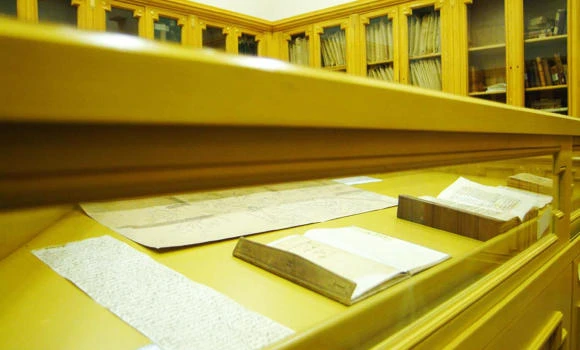
RIYADH: Thousands of visitors representing different social segments including visiting minister and foreign diplomats thronged to the National Museum to see an exhibition on Islamic capitals that exhibits archaeological pieces of antiquities and relics related to the early capitals of Islamic culture.
"The ongoing exhibition has seen heavy foot falls by Riyadh residents, both the citizens and expatriates and foreign dignitaries as the total number is more than 8000 visitors, so far," a National Museum official said on Sunday.
Giving details on visitors the exhibition drew until the last week of February, the official said that the exhibition was visited by over 2,725 people in its first week, about 2,000 in the second week and 2,315 on its third week.
About 2,000 of the visitors were from different public authorities, 2,778 were students and 2,517 were family members belonging to different ages and categories.
It was inaugurated by SCTNH President Prince Sultan bin Salman on Feb. 5 and will continue for three months, offering a unique opportunity for visitors to see the collection of the most precious Islamic artifacts that beautifully reflects the Islamic civilization at its peak during Umaiyyad and Abbasid periods.
Moreover, the exhibition showcasing the best possible collections on Islamic art also attracted a number visiting dignitaries as well as foreign diplomats who expressed admiration after seeing the rich legacy put on display.
These dignitaries include Tian Xue, Chinese deputy minister for water resources, who was accompanied by diplomats from Chinese Embassy during their tour at National Museum.
German Ambassador Boris Ruge also visited the exhibition during which he referred to the cultural value of the exhibition and its importance for developing bilateral relationship between the Kingdom and Germany.
Notably, the exhibition has been organized by the Saudi Commission for Tourism and National Heritage (SCTNH) in collaboration with the Pergamon Museum, Germany and includes 104 artifacts from the pieces on display at the Pergamon Museum and 21 archaeological pieces from the collection of the National Museum reflecting models of the Islamic civilization and showing glimpses of the cultural relations between the then Islamic countries and the rest of the world at the time of progress and spread of Islamic culture.
The exhibition is open to the public for 12 hours everyday starting at 8 a.m. and continuing till 8 p.m. except on Sundays when the timings are from 8 a.m. to 12 p.m. and on Fridays from 4 p.m. to 8 p.m.
Islamic capitals exhibition attracts thousands