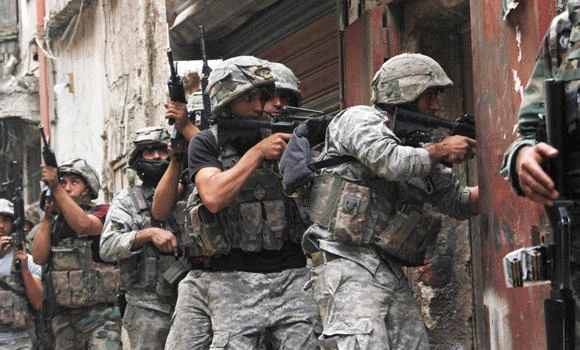
RIYADH: Saudi Arabia has stopped funding a $3 billion program to rearm Lebanon’s military because of “hostile Lebanese positions resulting from the stranglehold of Hezbollah on the State,” the official Saudi Press Agency (SPA) reported on Friday.
Quoting an “official source”, SPA said the kingdom is also stopping the rest of its planned assistance of $1 billion to the Lebanese Internal Security Forces.
Under the Saudi-funded “Donas” program, France was to provide military equipment to Lebanon to ensure stability in the country weakened by internal divisions and threatened by Islamic extremists.
The program was to ship vehicles, helicopters, drones, cannons and other equipment to Lebanon. After an initial delivery of 48 Milan anti-tank missiles in April the program was delayed as Saudi authorities sought a review of certain aspects of the deal, a French source said earlier.
But France’s Defense Minister Jean-Yves Le Drian later said “the execution of Donas resumed normally at the end of 2015,” as reflected in the signing of contracts with the companies concerned. This included a deal for about 200 armored vehicles.
The source, however, said the increased influence of Iran-backed Hezbollah in the official affairs of Lebanon has apparently undermined the Saudi-Lebanese ties.
He pointed out that despite the big support the kingdom had been providing Lebanon, including standing by the troubled state “in all its difficult stages and supported it without any discrimination among its sects and groups,” Lebanon’s official actions lately had been that of hostility to to Saudi Arabia.
The source cited Lebanon’s “non-condemnation of the blatant attacks” the Saudi missions in Iran last December, which were denounced by all countries across the world. SPA said Lebanon had not joined positions taken either by the Arab League or the Organization of Islamic Cooperation (OIC) against the attacks.
SPA’s source said “Saudi Arabia considers these positions as regrettable and unjustified and are inconsistent with the fraternal relations between the two countries and they are not taking into account their interests and ignoring all the kingdom's historical and supportive stances towards Lebanon during its economic and political crises.
Iranian mobs attacked the Saudi Embassy in Tehran and consulate in Mashhad following the execution in Saudi Arabia of a Shiite preacher Nimr Al-Nimr, who was convicted of terrorism. Al-Nimr was one of more than 40 prisoners, most of who were Al-Qaeda terrorists, who were executed before the yearend.
In a swift response, Saudi Arabia severed its ties with Iran and a number of Gulf states and other allies either did the same or downgraded their ties with Iran in a solidarity move.
SPA quoted the official source as saying Saudi Arabia has “exerted utmost efforts to prevent matters from reaching to the current status” to no avail.
“Saudi Arabia appreciates the positions issued by some Lebanese officials and dignitaries, including Lebanese Prime Minister Tammam Salam, who expressed their stand by and solidarity with the Kingdom as well as their pride of the distinguished relations binding the Kingdom of Saudi Arabia and the Lebanese people where the Kingdom is always keen to strengthen and enhance these relations,” the SPA report said.
KSA stops military aid to Lebanon; PM Salam appeals
Regrets
Lebanon’s prime minister urged Saudi Arabia to reconsider its decision to stop the military aid.
“We were very sad to hear the Saudi kingdom’s surprising decision to halt aid to the army and the internal security forces,” Tammam Salam said in a statement, adding he hoped for “the review of the decision.”
Sunni former premier Saad Hariri, who is supported by Saudi Arabia and the West, said Lebanese “received with feelings of regret and worry” the Saudi decision, but it was understandable as a response “to Lebanon’s rash decisions to exit from the Arab consensus.”