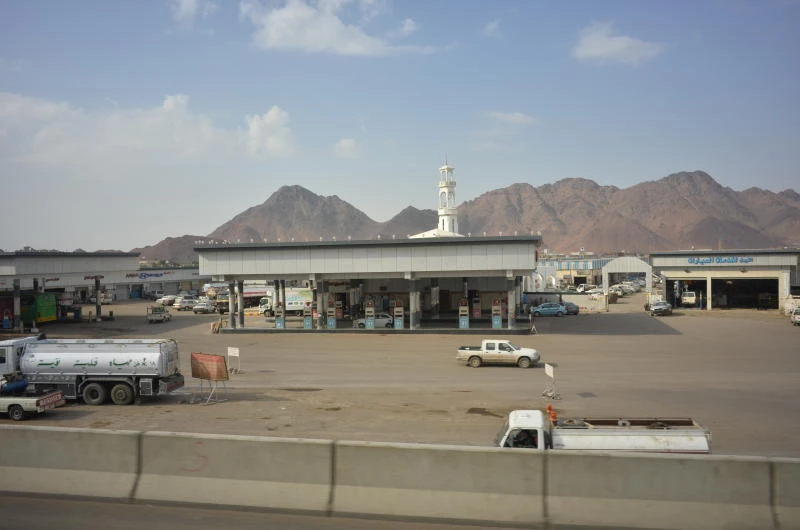
JEDDAH: The Jeddah municipality has listed eight basic conditions for reopening 140 gas stations which were closed because of not meeting the conditions set by the Ministry of Municipal and Rural Affairs.
The failures included a lack of commitment to architectural, structural, electrical, health, mechanical and security conditions. The stations also failed to provide drinking water facilities.
A number of station owners have asked to be given time to fulfill the conditions. The Board of Grievances is looking into the matter before allowing the owners to reopen the stations.
The local media have investigated responses of owners in Al-Rahaili and Al-Mizan stations. People who rent the stations pointed out they incurred huge losses because of the closure.
They said they were not notified of the closures and were not given a grace period to rectify the violations, while some facilities, such as tea and coffee kiosks were not penalized for violations.
The owner of one of the stations on Jeddah-Makkah Expressway said he was committed to all regulations and provided his station with water facilities for people with disabilities.
“We carried out all the changes required by the municipality, and my station was still closed down,” he said.
Investor Walid Al-Salami said owners and investors were ready to implement all the ministry’s conditions, but they needed some time to rectify the situation in the stations.
Atiya Al-Zahrani, another owner, said closing down stations because of violations was wrong, especially since owners were working on the modifications dictated by the municipality.
Owners of facilities in stations had similar stories.
Nassar Rajaallah, owner of a coffee kiosk, said the municipality came 10 days ago to close down commercial stores on the highway without prior warning of any violations.
He said he lost around SR40,000 because of the closure and that his rent is SR70,000 a year.
Ahmad bin Hamarn, owner of a juice kiosk, said his establishment had not been notified about any violation or modification. He lost a lot of money because of the closure and has no idea when the decision will be reversed.
“When I inquired, an official told me the decision came from the Ministry of Municipal and Rural Affairs,” he said.
Some Umrah pilgrims said they were inconvenienced by the decision. Anas Mohammad said Umrah pilgrims were the first to suffer because they depended on these stores to buy food and drink.
“The municipalities should reverse the decision because these stations are the first supplier to residents of neighboring areas, who are unable to go to markets in Jeddah,” he said.
Fahad Al-Ahmadi said Al-Rehaili and Al-Mizan stations were the best areas for Umrah pilgrims, because pilgrims were able to buy what they needed and continue on to Makkah.
Masood Mohammad said it was imperative to reopen these stores because they serve southern Jeddah and its visitors. He called for punishing violators and not consumers.
The Ministry for Municipal and Rural Affairs, through its official spokesman, Hamad Al-Amar, stressed the importance of correcting the situation in gas stations by the end of the defined period, including contracting a qualified facility to manage gas stations on highways.
Municipality sets terms for reopening of gas stations