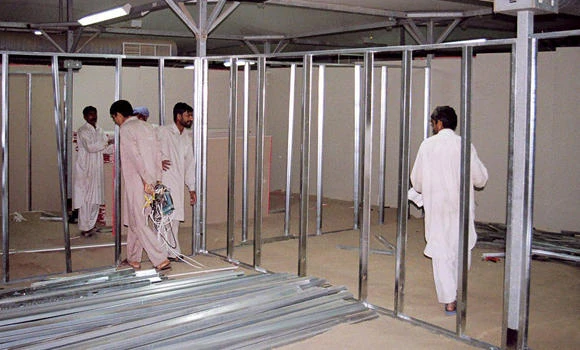
A number of factories in Jeddah have adopted the scheme of hiring expatriate workers on a temporary basis to increase their productivity.
However, these factories exploit these workers by paying them low salaries and refusing to transfer their sponsorship.
Hussein Al-Sharif, supervisor of the Makkah branch of the National Society for Human Rights (NSHR) said, “We will visit industrial regions in Jeddah soon to check the working conditions for expatriates there. We are also planning to visit some real estate projects in Jeddah to check on the circumstances of foreign workers.”
But, some workers are not keen to ensure their rights with their mangers. They would rather continue working under these circumstances because they do not have an iqama (residence permit). Most of these workers are Somalis and Pakistanis who prefer to work temporarily to earn money.
At the same time, some factories are hiding their expatriate workers who have not transferred their sponsorship to the factories, to avoid the inspectors of the Labor Office.
“We have hired expatriate workers to increase our productivity based on the demand from our clients. However, the HR department of the factory checks their official papers before allowing them to work in the factory. Now, we have stopped hiring expatriate workers until their sponsorship has been transferred,” said an HR manger at a private sector company who asked to remain anonymous.
“The Labor Office’s inspectors make surprise visits to check the documents of expatriates workers, like their iqamas. This encouraged a number of factories to correct the situations of their foreign workers and transfer their sponsorship to avoid the Labor Office’s fines,” he added.
The labor laws in the Kingdom banned the hiring of expatriate workers without checking their official papers. Private sector companies also must transfer sponsorship of their foreign workers and offer clear contacts.
Arab News tried to call the Labor Office’s director in Jeddah to ask him about the results of the surprise visits to factories in Jeddah, but he did not respond.
“I was working in factory in the south of Jeddah. The factory was paying only SR 1,200 per month. It has also refused to transfer my sponsorship,” said Ali Adem, a Somali resident who is now unemployed. “I had to continue working at this factory, hoping to get my full rights. The company dismissed me on the ground that it does not require my services any more.”
According to the statistics of top largest number of national built and produced factories in the Kingdom, the central region of the Kingdom includes around 2,513 plants with a total value of funding amounted to SR 101.1 billion. Then, the eastern region contains 1,325 product factories with financing exceeding SR 339 billion.
NSHR checks on conditions of workers in Jeddah’s factories