The Kingdom’s massive spending allocations in past budgets will come to fruition in the next few years with completed roads and bridges, schools, railways projects, housing, health services, and industrial projects.
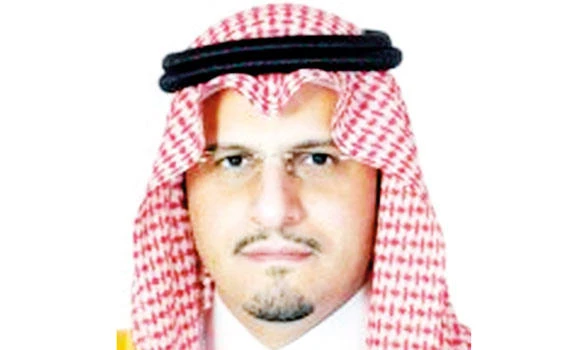
This is the view of businessman and economist Prince Fawaz bin Nasser who believes the recently unveiled 2014 budget would build on this past development spending.
“The 2014 budget carries indications of an outstanding economic and developmental future for the Kingdom. The fruits of the budget will be reaped in the upcoming years,” he told Arab News on Tuesday.
He said the spending allocated by the government after 2015 would focus on the “development and improvement of strategic projects.”
The government’s strategic projects include building up a general cash reserve for future generations. The government has been building up a reserve since 2005 with surplus money from its oil revenue, he said.
The prince said the Kingdom’s economy started to boom in 2006 when the price of oil crossed $50 a barrel.
“So the Kingdom has been enjoying an economic boom for the eighth year in a row since 2006. The 2014 budget is the ninth year of that boom,’’ the prince said.
He said the budgets between the late eighties and 2001 were burdened with debt because oil prices were very low during those years. The budgets from 2002 to 2005 were good but could not be rated as boom budgets.
He said that government projects have taken five to seven years from the time of their budgetary allocation to either starting or completion. For example, the projects commissioned in the 2006 budget were only started in 2011. The projects included in the 2007 budget saw daylight in 2012 and 2013, while the projects to be opened in 2014 and 2015 were envisaged in budgets of about six years ago.
“We started reaping the benefits of the boom from 2011. In other words we have been reaping the results of three boom budgets in 2006, 2007 and 2008, until now,” the prince said.
He said that 2014 and 2015 would see the peak of development projects, which would continue until 2020 and a few years afterwards. “The ambitious projects envisaged in the budgets of 2010, 2011, 2012 and 2013, which were huge in terms of size, quality and geographical distribution, will be ready for commissioning over the next five years.”
He said the developmental projects have spread to every corner of the Kingdom. “For instance the Ministry of Education has received a completed new school building every day for the last two years, while the Ministry of Health has received two health centers a week and a hospital every month, with these figures doubling in 2014 and 2015.”
The same level of development is taking place in all government sectors. The transport ministry has been constructing more roads and bridges each month. This is also the case with utilities such as water and electricity supply, and sewage and floodwater drainage projects, the prince said.
The huge projects in the two holy cities of Makkah and Madinah have already been completed or are underway. Major railway and metro projects are scheduled for completion next year, he said.
The most “spectacular results” would be seen with the construction of new industrial city projects such as Jubail 2 and Ras Al-Khair that will be opened next year, the prince said.
He said there has been “unprecedented growth” in human resources development with millions of students completing school and hundreds of thousands entering higher education or technical education programs.
Optimism follows 2014 budget