

- US chip-maker says Kingdom’s investment in AI infrastructure and industrial technology creates new opportunities for low-power computing solutions
- Sovereign data centers and industrial applications offer biggest growth prospects in Saudi Arabia and wider Middle East, bosses say at Snapdragon Summit in Hawaii
MAUI, Hawaii: As Saudi Arabia accelerates its ambition to become a global hub for artificial intelligence, US tech company Qualcomm Inc. said it sees growing opportunities across the sector in the Kingdom, from sovereign AI data centers and industrial networks to robotics and smart manufacturing.
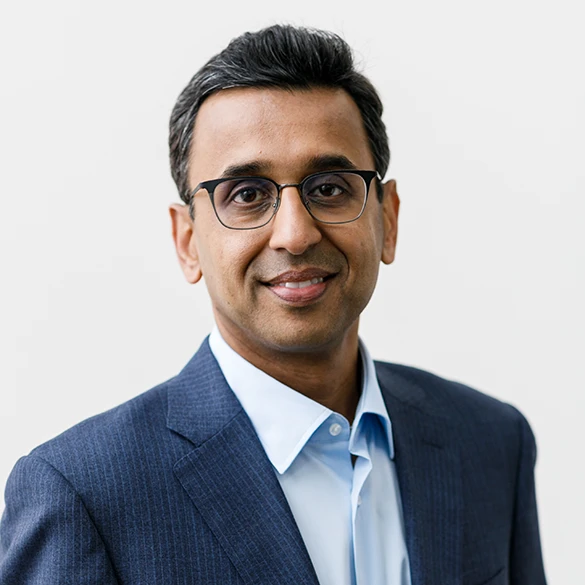
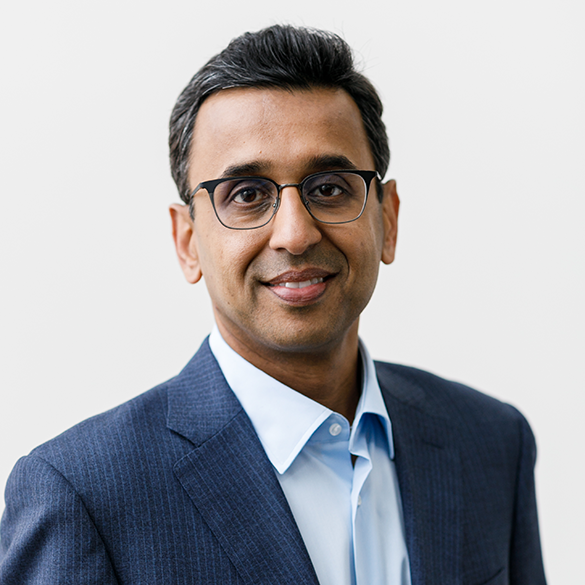
Speaking to Arab News on the sidelines of the Snapdragon Summit in Hawaii, Akash Palkhiwala, the company’s executive vice president, chief financial officer and chief operating officer, said sovereign data centers and industrial applications offered the biggest opportunities for growth identified by the company in Saudi Arabia and the wider Middle East.
“As you’re seeing in our interaction with Humain (Saudi Arabia’s state-backed AI company), there’s a desire from the hyperscaler to have multiple chip options,” he said.
“They also are looking for solutions that are extremely low power, because power is a problem statement in data centers. And then they’re also looking for solutions that really address specific kinds of workloads.”
Qualcomm’s heritage in the design of high-performance, low-power mobile processors means it is well-positioned as countries invest heavily in AI infrastructure, where energy consumption is becoming an increasingly critical challenge, he added.
“I think there’s two key areas in the region where we have large new opportunities,” Palkhiwala said, noting that Qualcomm already reaches the market through its smartphone, PC and automotive activities.
“So independent of anything else, it’s a large market for us but it’s a consumption market rather than a product being sold directly by Qualcomm into those markets.
“I think you’re going to see sovereign data centers across the region, and we have an opportunity to similarly engage with them,” he said, describing the first key area for growth.
“The second is industrial; there are a lot of industrial companies and one of our close partners there is Aramco,” with whom Qualcomm works to provide tech solutions across their products, he explained.
This work with Aramco is an example of the wider industrial opportunities now emerging across the Kingdom, Palkhiwala said. The companies have collaborated, for example, on Aramco Digital’s private industrial 5G network.
“Aramco has built this new wireless network in 450 megahertz, that allows their devices within their oil fields and manufacturing plants and everyone else to be able to communicate on a different frequency than consumer devices,” Palkhiwala explained. “We have enabled that for them, so every device is using Snapdragon (Qualcomm’s on-chip mobile system).”

The partnership has expanded into AI-powered monitoring systems designed to improve safety and security at industrial sites.
“The second area is we are working with them on deploying cameras as a way to enhance security of the different manufacturing facilities,” he added.
The systems can identify incidents that require immediate attention, such as an unauthorized person entering a restricted area or a worker on a construction site without a hard hat.
“Aramco is at the leading edge, very much at the leading edge, of deploying these new technologies, new solutions,” Palkhiwala said.
Saudi Arabia is also central to Qualcomm’s ambitions in the data centers sector, where power consumption has emerged as a major consideration for operators building AI infrastructure.
Tony Pialis, the executive vice president and general manager of Data Center at Qualcomm Technologies Inc., told Arab News that energy efficiency was among the foremost concerns for developers.
“In general, as I speak to those who are building data centers, it’s certainly one of the key issues,” he said.
“What I can do, as a compute infrastructure developer, is to try to build as efficient compute as possible as well. So, number one, draw less power, megawatt or gigawatt, to deliver the desired compute, and to look at as sustainable a power source (as possible) to fuel that compute.”
Speaking during a round-table discussion during the summit, Pialis highlighted the significance of Saudi Arabia and Humain to Qualcomm’s plans.
“There’s no value in me selling my infrastructure if there’s not a workload to run on it,” he said. “And so we are constantly bringing, guiding and steering our customers, wherever we find that workload, to whomever are our partners.
“Obviously Saudi is a keeper; Humain was the anchor customer for this business, and so as I build my plans in terms of new products, obviously I’m going to bring it to the Kingdom.”
Pialis described Qualcomm’s relationship with Saudi Arabia as a long-term partnership, with Humain serving as an anchor customer for the company’s emerging data center business.
This focus within the company on power efficiency was reflected in the product announcements at the Snapdragon Summit, during which Qualcomm unveiled the Snapdragon 8 Elite Gen 6 and Snapdragon 8 Elite Extreme Gen 6 mobile platforms, the Snapdragon Sound Elite Gen 2, and the expansion of its Snapdragon X computing platform onto Chromebook laptops.
The company said the Snapdragon Sound Elite Gen 2 platform consumed up to 40 percent less power than its predecessor while delivering up to twice the on-device AI-processing capability.
“For (a company) like Qualcomm, which has come from this phone heritage where our entire DNA is built around high performance, low power, we could bring that to the data sector, and if we can reduce the power by 20 percent, by 40 percent, it changes the entire economics of what you can build at those locations,” Palkhiwala said.
Looking further ahead, he identified robotics as one of the most promising areas of opportunity in the region for the company over the next few years.
“The robot is one of the devices that needs everything that Qualcomm does well,” Palkhiwala said, listing cameras, wireless connectivity, low-power computing and object-tracking capabilities.
“I think the Middle East is going to be a very interesting place to deploy robotics and humanoids at a very large scale, because of the weather and because of the wealth; when you put those two together, and lack of manual labor, there is an ability to really leverage the robotics in a very significant way.”
Despite Qualcomm’s growing ambitions across AI infrastructure, industrial technology and robotics, Palkhiwala said sustainability remains at the heart of the company’s strategy.
“Qualcomm to me is like a sustainability-focused company before sustainability became fashionable, because the entire premise of the company is building high-performance, low-powered devices and I link low power directly to sustainability,” he said.
“And so in my mind, everything we engage with the Kingdom on, we’re going to be talking about low power as a core capability and that’s where sustainability comes from.”