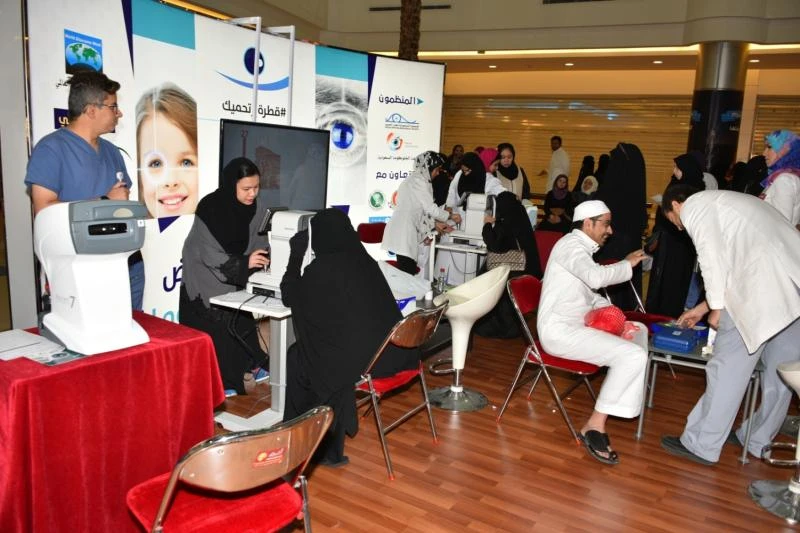
JEDDAH: Saudi Ophthalmological Society (SOS) observed World Glaucoma Week at various eye hospitals and malls in Jeddah from Thursday to Monday.
The weeklong campaign, marked by free checkups, optometry and measurement of intraocular pressure, consultations, eye clinics, lectures and awareness on eye diseases and prevention, and child eye care, was organized by SOS in cooperation with the National Guard Hospital and King Abdullah Medical Complex Eye Hospital through mobile eye clinics.
Dr. Ali bin Mohammed, representative of Saudi Ophthalmological Society, Western Region, said the main aim of the campaign was to spread awareness with lectures, advice by optic experts, distribution of posters and pamphlets about glaucoma, cause of blindness and prevention, especially children’s eye care.
Dr. Mohammed said the charitable efforts of the team also involved the examination of the eyes and publications provided on health education or medical advice for various eye problems and diseases.
He appreciated the continuous support extended by Prince Abdulaziz bin Ahmad, chairman of the organization, who is keen to spread health awareness in general and eye health in particular by addressing issues related to blindness and visual impairment. The prince’s support for national programs like prevention of blindness and the initiative of Vision 2020 is exemplary.
Those who are involved in voluntary services are providing consultation with latest medical devices to facilitate early diagnosis of eye problems, he said, adding that glaucoma is one of the common causes of visual impairment and blindness.
He stressed that glaucoma is a disease that can be avoided if diagnosed early and handled therapeutically.
Glaucoma, an eye condition in which the optic nerve is damaged, is of two types — primary open-angle and acute angle-closure, he said.
“The common type of glaucoma gradually reduces your peripheral vision without other symptoms. Acute angle-closure glaucoma symptoms include eye pain, headaches, halos around lights, dilated pupils, vision loss, red eyes, nausea and vomiting,” he added.
The first sign of glaucoma is often the loss of peripheral or side vision, which can go unnoticed until the disease reaches advanced stages.
SOS observes World Glaucoma Week