- Unanimous presidential statement condemns ‘reckless’ attacks on King Khalid International Airport last weekend that killed 14 people and wounded more than 300
- It marks a clear step up in the council’s response; a presidential statement requires agreement of all 15 members and is read into the formal record at a public meeting
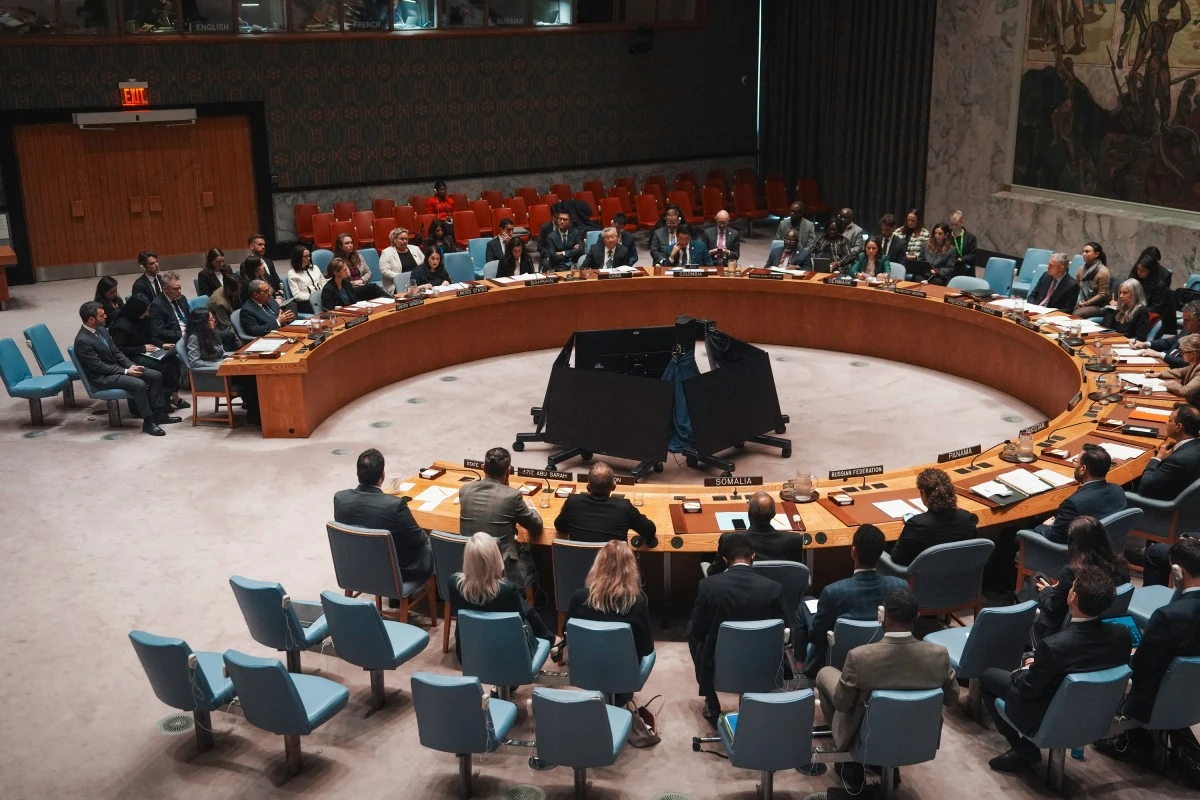
BEIRUT: The UN Security Council on Thursday condemned “in the strongest terms” the escalating Houthi attacks on Saudi Arabia, and affirmed the Kingdom’s “inherent right” to self-defense.
The presidential statement highlighted in particular the deadly strikes against Riyadh’s main airport this month.
Council members condemned “the reckless strikes” on Oct. 10 and 11 targeting King Khalid International Airport, which killed 14 people and wounded more than 300. They also cited “multiple strikes on other airports and Saudi Aramco facilities” across the Kingdom, which they said had hit civilian aviation and energy infrastructure and killed and injured civilians.
The comments marked a clear step up in the Security Council’s response to the crisis. A presidential statement requires the agreement of all 15 members of the council and is read into the formal record at a public meeting. That gives it more weight than the previous press statements issued by the council on Aug. 7 and Sept. 18, which Thursday’s text referenced. Those earlier statements had demanded the Houthis “immediately cease their military escalation” and their attacks on civilians and civilian objects.
In the presidential statement, council members “expressed their solidarity with the Kingdom of Saudi Arabia in the face of attacks impacting civilians and civilian objects on its territory.” In addition, they “affirmed the inherent right of the Kingdom of Saudi Arabia of self-defense in accordance with international law.”
Members offered their “deepest sympathy and condolences” to the families of the victims and to the Saudi government and people, and wished the wounded “a speedy and full recovery.”
They also widened their condemnation to also include the Houthis’ “continued attacks and threats against commercial shipping in the Red Sea and Bab Al-Mandab” Strait.
It stressed the need to ensure the safety of commercial vessels and their crews, called for respect for the UN Convention on the Law of the Sea and for navigational rights and freedoms, and stressed the importance of international humanitarian law.
The council also pressed for full implementation of Resolution 2216, which was adopted in April 2015, detailed a targeted arms embargo on the Houthis, and called for “practical cooperation, including with the Government of Yemen,” to prevent the group from obtaining the weapons, technical assistance, training and financing “necessary to carry out further attacks.” It also reminded all UN member states of their obligations under the embargo.
The council reaffirmed its support for the Yemeni government and its “strong commitment to the unity, sovereignty, independence and territorial integrity of Yemen.” It added that “sustainable peace in Yemen cannot be achieved through violence, coercion or use of force.”
The statement also backed the UN special envoy for Yemen, Hans Grundberg, in his work to help achieve “a negotiated, inclusive, Yemeni-led and Yemeni-owned political settlement” to the conflict.
The strike on King Khalid International Airport on Oct. 10 was the deadliest attack against the Kingdom in more than a decade. A ballistic missile hit the part of the complex that houses terminals 3 and 4. Most of those who were killed came from the Arab world and Global South. They included four Saudis, two Bangladeshis, and one person from each of Egypt, Jordan, Palestine, Syria, Sudan, India and the US. The attack on Oct. 11 killed a Pakistani resident of the Kingdom, and injured 11 people.
On Oct. 8, an attack on the same airport killed three Saudis, including a pilot, and destroyed a Saudia aircraft. Dozens were wounded. On Oct. 6 and 7, A strike on Abha International Airport killed two women, from Algeria and Morocco, and injured 28 people, and an attack on King Khalid International killed a Sudanese national and injured eight people.