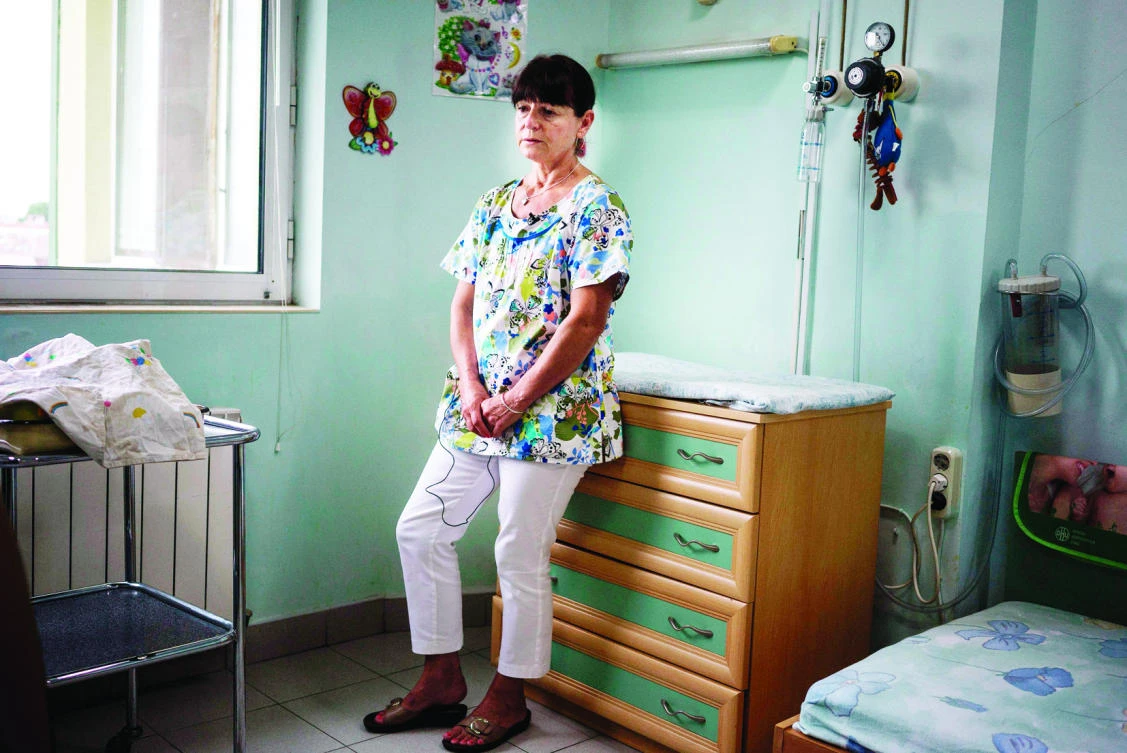
PAZARDIJIK, Bulgaria: Bulgarian nurse Valentina Siropoulo was once condemned to death in Muammar Qaddafi’s Libya. Ten years after she and four colleagues were released and allowed home, appreciation of their freedom overwhelms memories of their harrowing ordeal.
“My busy day-to-day life lets me forget the abuse. I have learnt to better appreciate my health, my freedom, my family,” says the 58-year old.
She has resumed her work at the hospital in Pazardjik, a small town in southern Bulgaria which seems a million miles away from chaos-riven Libya.
The five nurses were jailed in 1999, along with a Palestinian doctor, for allegedly infecting over 400 children with HIV-tainted blood at a paediatric hospital in the eastern city of Benghazi. They were tortured while in detention and twice sentenced to death.
Tripoli only agreed to commute their death sentences to life imprisonment in 2007, after which they were flown back to Bulgaria.
“I was abducted one evening in 1999,” Siropoulo recalls with a shudder.
“Men taped up my mouth, then tortured me for months, with electric shocks, batons and threats of being attacked by dogs. The rest of the time I was lying alone in a cell waiting for death.”
She had enjoyed the work on a paediatric ward, where she was much better paid than back home.
But the foreign medics were held responsible for tainted blood transfusions and accused of deliberately infecting 438 children with HIV.
Their savior came in the form of Cecilia Sarkozy, wife of the then French President Nicolas Sarkozy, who visited Libya twice in July 2007 for talks with Qaddafi.
Despite an official French inquiry, Cecilia’s precise role remains unclear, but the freed medical workers have no doubt she was instrumental in their release.
One of those close to the ordeal is Bulgaria’s former Foreign Minister Solomon Passy, who describes a tangled web of negotiators including British intelligence agents, and UN and EU officials.
“It was a long match played by the international community, then President Sarkozy pops up in the 90th minute to score the winning goal,” Passy tells AFP.
Despite repeated denials of a ransom, a slew of contracts was signed between Paris and Tripoli in the years following the release and Qaddafi made an official visit to France in 2007.
Last November, a French magazine published documents appearing to exonerate the medical workers and suggesting that the children were in fact injected with tainted blood by Libyan intelligence and special forces commanders.
The testimony was found in a diary belonging to Shukri Ghanem, who served as Qaddafi’s prime minister from 2003 until 2006.
The diary, which had reportedly ended up in the custody of French magistrates, suggested the infections were an act of hostility against Benghazi, a stronghold of opponents of the then-Libyan ruler.
“My busy day-to-day life lets me forget the abuse. I have learnt to better appreciate my health, my freedom, my family,” says the 58-year old.
She has resumed her work at the hospital in Pazardjik, a small town in southern Bulgaria which seems a million miles away from chaos-riven Libya.
The five nurses were jailed in 1999, along with a Palestinian doctor, for allegedly infecting over 400 children with HIV-tainted blood at a paediatric hospital in the eastern city of Benghazi. They were tortured while in detention and twice sentenced to death.
Tripoli only agreed to commute their death sentences to life imprisonment in 2007, after which they were flown back to Bulgaria.
“I was abducted one evening in 1999,” Siropoulo recalls with a shudder.
“Men taped up my mouth, then tortured me for months, with electric shocks, batons and threats of being attacked by dogs. The rest of the time I was lying alone in a cell waiting for death.”
She had enjoyed the work on a paediatric ward, where she was much better paid than back home.
But the foreign medics were held responsible for tainted blood transfusions and accused of deliberately infecting 438 children with HIV.
Their savior came in the form of Cecilia Sarkozy, wife of the then French President Nicolas Sarkozy, who visited Libya twice in July 2007 for talks with Qaddafi.
Despite an official French inquiry, Cecilia’s precise role remains unclear, but the freed medical workers have no doubt she was instrumental in their release.
One of those close to the ordeal is Bulgaria’s former Foreign Minister Solomon Passy, who describes a tangled web of negotiators including British intelligence agents, and UN and EU officials.
“It was a long match played by the international community, then President Sarkozy pops up in the 90th minute to score the winning goal,” Passy tells AFP.
Despite repeated denials of a ransom, a slew of contracts was signed between Paris and Tripoli in the years following the release and Qaddafi made an official visit to France in 2007.
Last November, a French magazine published documents appearing to exonerate the medical workers and suggesting that the children were in fact injected with tainted blood by Libyan intelligence and special forces commanders.
The testimony was found in a diary belonging to Shukri Ghanem, who served as Qaddafi’s prime minister from 2003 until 2006.
The diary, which had reportedly ended up in the custody of French magistrates, suggested the infections were an act of hostility against Benghazi, a stronghold of opponents of the then-Libyan ruler.