- With the death toll soaring and the Italian healthcare system fighting to contain the virus, how are Arabs working in the country fairing under lockdown?
Yesterday, the death toll in Italy reached the scary figure of 3,505, surpassing that of China. Italians have reacted to the crisis with strength, determination and a host of creative ways to boost morale. Italy has long attracted workers from the Middle East and North Africa region, particularly from Egypt, Morocco, Tunisia, Algeria, Lebanon, Syria, Libya, Palestine and Iraq. According to the Central Agency for Public Mobilization and Statistics, the official statistical agency of Egypt, there are currently around 560,000 Egyptians living in Italy.
Arab expatriates, far away from their families, are also handling the economic and social impact of the virus in different ways. Yesterday, Italy’s prime minister announced that the quarantine would be extended beyond 3 April, the original end date.
“I am Lebanese. I lived through the civil war; I am used to strange situations,” said industrial designer Sameer Al-Ameen, from Milan. “The scary aspect of the virus is that it is abstract. With war, there are bombs, there is fire, there is something you can hear or see. Here in Milan, it became a ghost town overnight.”
What will be the new normal after this?
“Probably Milan will be the first city to open,” Al-Ameen said. “But how will we go back to work? How will we all survive this economic crash?”
Al-Ameen moved to Milan over seven years ago where he started his own business catering to furniture and product design. While he is well known globally for his cutting-edge products, Al-Ameen says that right now some clients are turning away packages simply because they are coming from Italy.
“I could have left Milan and gone back to Lebanon with all of this, but I worried I could be a carrier and transmit the disease to my mother,” he added.
For other Lebanese citizens, the coronavirus crisis pales in comparison to the current economic predicament in Lebanon.
“Yes, I am affected by what is happening, but I was even more affected by the economic crisis that hit Lebanon during the fall and brought the country to its knees. That is my main concern,” said Italian-Lebanese vintage furniture dealer Nayla Ghazzaoui, whose entire family is in Lebanon.
“I see Italians panicking, but the Lebanese people are dying of hunger,” she added. “With the situation as it is in the country now, we cannot even afford one case, and we already have 150 cases. In Italy, we had to learn our lesson the hard way because we didn’t stay at home from the beginning. To all the other countries that don’t have as many cases yet, please stay at home.”
Mohamed Basheer Takko, 43, is a Syrian from Aleppo who moved to Rome 20 years ago. He runs a small tour company called Italy in Tours, which he opened in 2012. He lives with his wife, two children and his mother.
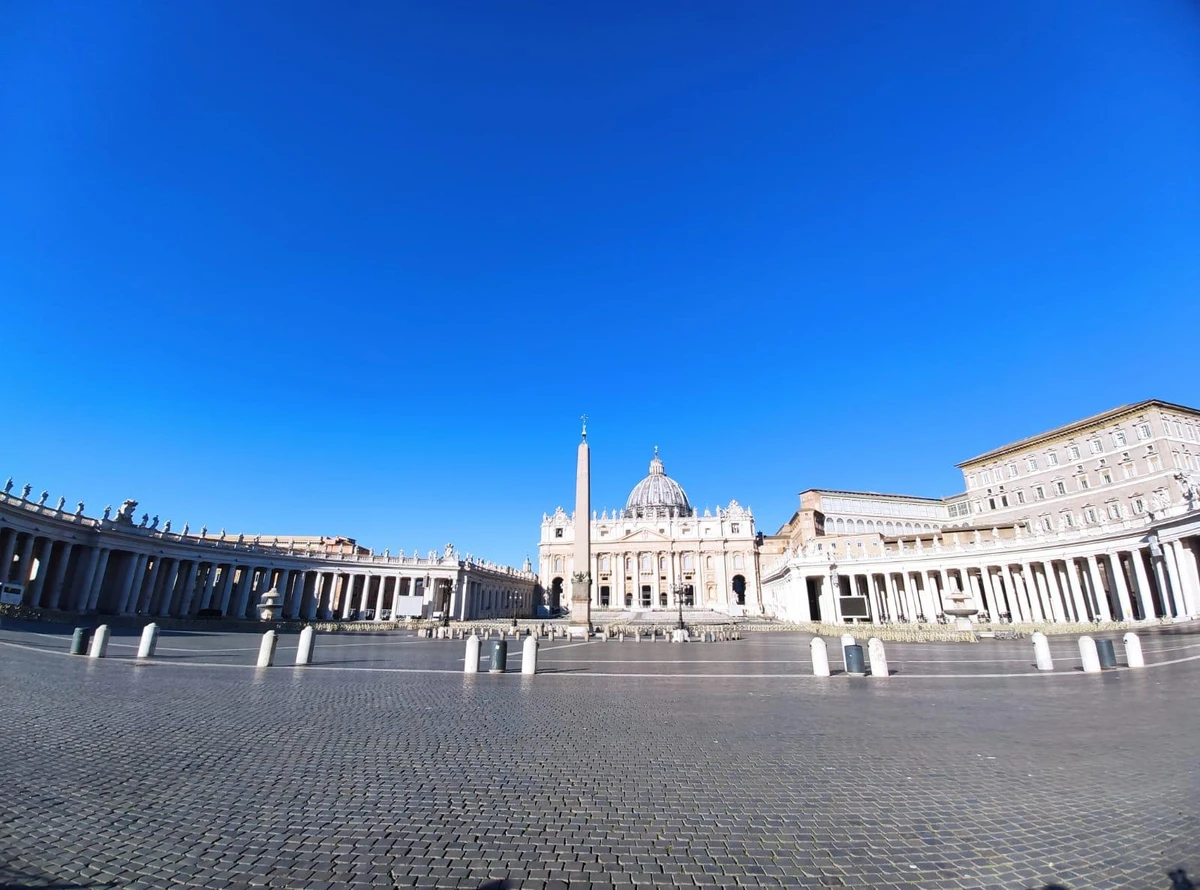
“Most of our reservations for this year have been cancelled,” Takko told Arab News. “The other day I received more than 20 trip cancellations, from May to August. This is one of the worst years I’ve ever had for business. All hotels are closed, the Vatican is closed, the Colosseum is closed, and we don’t know what will happen once the quarantine is finished.”
Takko said that he wanted to go back to Syria, but all the borders are closed.
Rabab Hassan is an Egyptian who has been living in Rome for five years where she works for an international development agency. Her family is based in Egypt.
“I returned to Rome from Cairo at the beginning of March, and we worked normally for 10 days. Then we began working from home, even before the official lockdown,” she said. “My family has been very worried. I am in contact with them all the time.”
Starting 19 March, Egypt temporarily halted all flights until the end of the month in an effort to control the virus.
Egyptian-born Karim Mohamed Ibrahim Aly moved to Rome 15 years ago and manages a restaurant in Piazza Navona.
“When news of the coronavirus started spreading, all our customers disappeared and we had to close on the second of March,” he told Arab News.
While there is no business now, the government announced last week that it would issue as much as 25 billion euros ($28. 3 billion) in stimulus measures to protect the Italian economy.
“We’ve been told the government will pay workers 80 percent of their salary during this period,” added Aly, who lives in the Roman neighborhood of Monteverde.
What is life like at home? For Aly, much of it takes place from the window.
“I hear all sorts of things,” he said. “Screaming, laughing, singing, and lots of music.”