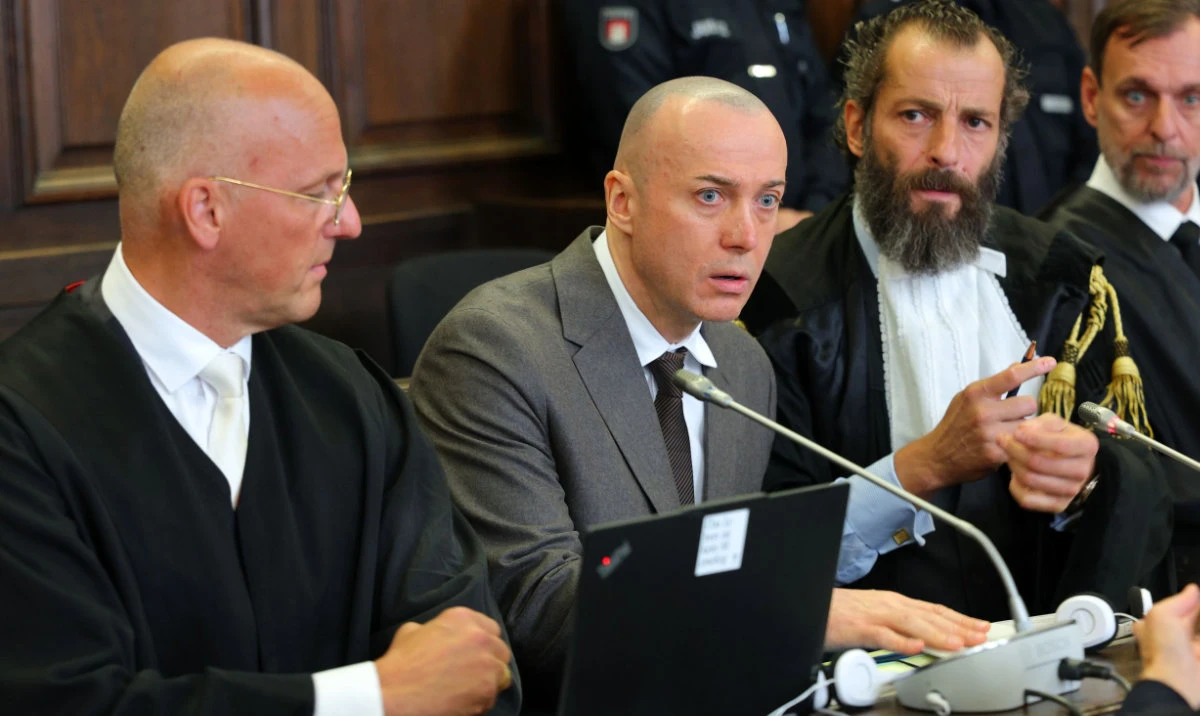
ISLAMABAD: Pakistan has handed a death sentence for blasphemy to a 69-year-old Briton with a history of mental illness, even though his lawyers were barred from the courtroom partway through the trial, the lawyers said on Friday.
Accusations of blasphemy are surging in Pakistan, according to an Islamabad-based think-tank, the Center for Research and Security Studies. Many analysts see the claims as score-settling or a front for property grabs.
The charges are hard to fight because the law does not define what is blasphemous and presenting the evidence can sometimes itself be considered a fresh infringement.
Blasphemy is punishable by death in Muslim-majority Pakistan.
Muhammad Asghar from Edinburgh was sentenced to death on Thursday, the law firm said, citing court officials in the city of Rawalpindi, neighboring the capital.
The firm said it was not present during the judgment because the judge had prevented it from representing Asghar in court since October.
He was arrested in 2010 after writing letters to a lawyer and politician claiming to be a prophet. Though Asghar did not post the letters, a disgruntled tenant whom he was in the process of evicting took them to police, the law firm said.
Asghar has previously been detained under the mental health act in Britain and diagnosed with paranoid schizophrenia, it added.
After the removal of the law firm, Asghar was appointed a state counsel, who did not put his medical history in evidence or call witnesses in his defense, and did not question a state-appointed board that declared him sane, the firm said.
The state counsel could not immediately be reached for comment.
The law firm asked not to be identified for fear of being targeted by extremists. Lawyers defending those accused of blasphemy frequently receive death threats and politicians supporting reform of the law have been killed.
A British doctor, 72-year-old Masood Ahmad, is also in prison in Pakistan, charged with blasphemy after a mullah used a mobile telephone to covertly record a conversation with him in his dispensary.
Bomb attack
victims buries
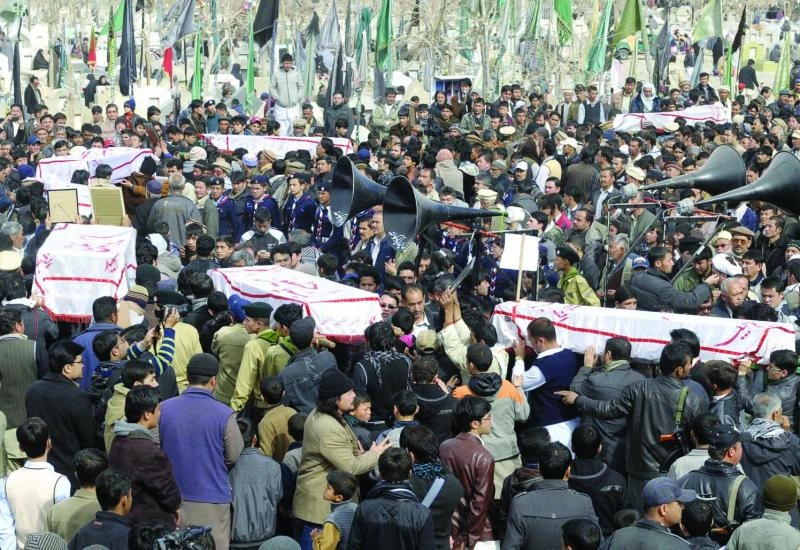
Shiite Muslims in Pakistan’s troubled southwest Friday buried the victims of a recent bomb attack after ending a protest following government assurances that the perpetrators would be hunted down.
Relatives had refused to bury the dead from a roadside blast earlier this week that killed 24 Shiite pilgrims on a bus around 60 kilometers (40 miles) west of Quetta, the capital of southwestern Baluchistan province.
They ended their two-day protest late on Thursday after a government delegation led by Interior Minister Chaudrhy Nisar Ali Khan assured them an operation would be carried out against those responsible.
The government paramilitary Frontier Corps (FC), began an operation in Mastung district, where the attack took place, on Friday morning.
“Around 350 personnel of FC and police commandos are carrying out an operation in Mastung and its surrounding that started at 6am today,” FC spokesman, Wasey Khan said.
He said two helicopters were giving air cover to the personnel.
A senior FC official Col. Muhammad Azam Khan later told reporters the security forces had detained at least 90 suspects, with 73 released after initial interrogations.
He added that “the remaining 17 suspects will be thoroughly interrogated and we hope to be able to trace out sanctuaries of terrorists as a result of our ongoing investigation.”
Meanwhile, FC personnel escorted some 300 Shiite pilgrims from Taftan town, bordering Iran under strict security to Dalbandin town, 400 kilometers west of Quetta, senior FC official Col. Abdul Rehman Arif said.
He said these pilgrims had arrived in seven buses from Iran after the bomb attack, adding that two more buses carrying 100 pilgrims arrived today.
“We airlifted at least 150 pilgrims from Dalbandin to Quetta today while remaining ones will also be airlifted very soon,” he added.
Baluchistan, rich in minerals but volatile and impoverished, has been the focus of growing sectarian violence in Pakistan.
Members of Quetta’s Hazara ethnic community, which is largely Shiite, began their protest on Wednesday and braved freezing temperatures to spend the night in the open.
Refusing to bury bodies is an extreme statement in Islamic society where it is customary to inter the dead as soon as possible.